Recycling industry will be key to building back Michigan economy

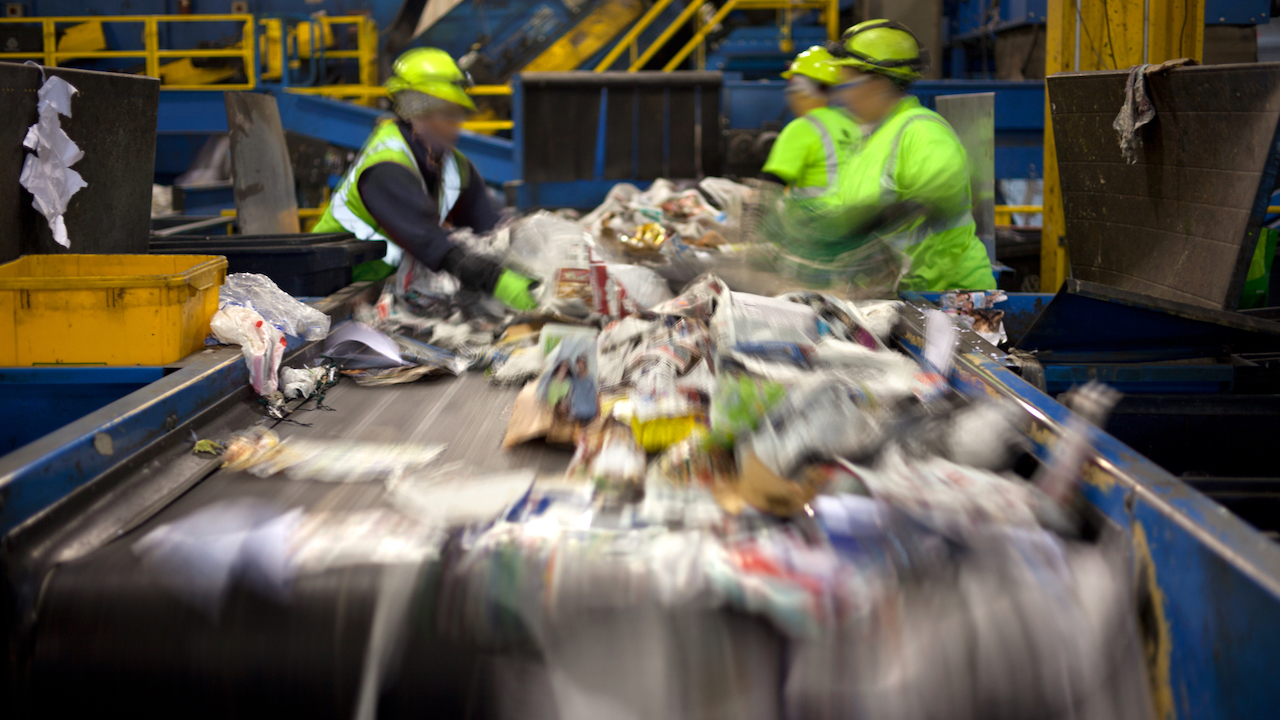
Workers separating paper and plastic on a conveyor belt in a recycling facility

Recycling not only is good for the environment, but it also has a wide-ranging economic impact

The COVID-19 pandemic has magnified the importance of recycling in Michigan and put a greater emphasis on increasing the quality of the state’s recyclable materials for end-market use.

“Recycling has always been environmentally and economically important, but market shifts in the wake of the pandemic have made it even more so,” said Matt Flechter, recycling market development specialist for the Michigan Department of Environment, Great Lakes, and Energy (EGLE). “The consequence of less recycling by businesses is that fewer recyclables are in the supply chain for paper companies to make products such as cardboard boxes and toilet paper.”

Suggestions to achieve high levels of recovery and support robust end markets are outlined in an EGLE report, “Michigan Recycling Impact & Recycled Commodities Market Assessment.” In part, these efforts include education and engagement, policies and public-private coordination.

Ultimately, this is a call to action that will have a wide-ranging economic impact in the state of Michigan.

“When you hear about recycling, you mostly hear about how it’s good for the environment,” Flechter said. “But recycling can boost job growth in Michigan and make us a beacon to attract talent from around the world.”

Bigger than tourism

EGLE’s “Know It Before You Throw It” campaign is aimed at increasing the state’s recycling rate from 15%, currently the lowest in the Great Lakes, to 30% by 2025. The goal is to eventually reach 45%, and according to the report, the economic impact of achieving that would support 138,000 new jobs in Michigan’s recycling, reuse and recovery (RRR) sector. That increase would also provide $9 billion in annual labor income and $33.8 billion in economic output.

Moreover, at that rate, the RRR industry would account for 3.3% of Michigan’s total economic output, overtaking both transportation and tourism volume. Put another way, if all direct or indirect RRR sector jobs were in the same city, they would create the third-largest municipality in the state. And that’s all based on materials that enter the recycling stream rather than go into a landfill.

“It’s important to recognize that the items we discard on a weekly basis from our homes represent resources,” said Mike Csapo, general manager of the Resource Recovery and Recycling Authority of Southwest Oakland County (RRRASOC). “Those materials can be part of an economic equation that feeds a critical supply chain for manufacturing. And that means jobs.”

RRRASOC helps make waste and recycling programs convenient, cost-effective and environmentally responsible for more than a quarter of a million people in its member communities of Farmington, Farmington Hills, Milford, Milford Township, Novi, South Lyon, Southfield, Walled Lake and Wixom. And these programs – which include recycling drop-off centers, curbside collection schedules and household hazardous waste collection events – benefit employment across the state.

“For every job that can be generated by throwing something away, 10 more can be created in the supply chain to repurpose that material,” Csapo said. “When we have systems in place that can treat recyclable items in a way that allows for continued value-added activity, we’re playing an important role in keeping the engines of the economy running.”

Igniting a new workforce pipeline

Recycling doesn’t just mean new jobs – it also offers new pathways into the workforce.

In Muskegon County, for example, the Goodwill LifeLaunch: Ignite Reentry Program recently launched with the aim of introducing new workers to careers in recycling and other manufacturing professions.

The two-year program is a partnership between Goodwill Industries of West Michigan and Padnos Recycling and Scrap Management, and it consists of two parts: recycling certification training for young adults who have had interactions with the criminal justice system, and a more rigorous system of diverting recyclable materials – such as packaging and electronics – from landfills. The goal is to grow the supply of recycled materials for high-demand markets, reduce recycling costs, increase market participation and – crucially – create jobs.

“This program can connect these individuals with marketable skills and give them work experience,” said Dina Butler, program manager at Goodwill of West Michigan. “We want to be able to help them set future goals and give them the skills training to get a good job or continue their education.”

EGLE sparked the Ignite program with a $200,000 Recycling Market Development grant, which served as a catalyst to the more than $820,000 in funding that came from the U.S. Department of Labor’s Employment and Training Administration. The Department of Labor grant is part of a $4.5 million grant that is being shared with Goodwill organizations in Pittsburgh, Atlanta and Louisville. The EGLE and federal money covers 93% of the program’s operating costs, with Goodwill itself contributing the remaining $325,000.

Goodwill, a nonprofit known mostly as a place to sell and purchase used clothing and home furnishings, provides job training, employment placement services and other community-based programs benefiting those who may face barriers to employment. It also has a well-honed recycling program ingrained into its structure.

Butler said Ignite is set to run through December 2022 (with a one-year follow-up period), and although the first batch of cohorts is only four, eventually she sees 100 more being part of the first wave.

“Ultimately, we hope this becomes a self-sustaining program that will continue long after the grant ends,” Butler said.

As part of the program, Muskegon Community College will host a 10-week manufacturing training course, during which participants will also engage in work training at Goodwill. The goal is to give participants “transferrable skills,” such as blueprint reading, manufacturing machinery operation and supply chain management experience. Once training is over, these individuals will then be paired with manufacturing positions around the state where they can put their new abilities to work.

A legacy of recycling benefits

The history of the recycling movement has its origins right here in the Wolverine State – fittingly, in Ann Arbor, the home of the University of Michigan Wolverines. The nation’s very first curbside recycling program got its start there in 1978.

Three years later, a similar program started in New Jersey, and throughout the ’80s curbside programs popped up around the country and the number of drop-off stations grew. However, it wasn’t until 1987, when a shipping vessel loaded with 3,100 tons of trash from New York City was refused by every port it neared, that the United States welcomed a national conversation about waste issues.

“That really helped people visualize the trash problem we were facing, and it led to the creation of recycling programs and legislation that continue to this day,” Flechter said. “This is an environmental issue above, beyond and before an economic issue.”

Investment in innovation continues today with projects like EGLE’s NextCycle Michigan initiative, which aims to develop waste and recycling recovery projects that will grow the state’s recycled materials supply chain and end markets. The initiative recently named 17 inaugural partners who are committed to job creation and industry growth by recovering materials destined for the landfill.

“So we have to really ask ourselves,” Flechter said, “do we want to extract new materials and process them into something and then just put it in a hole in the ground, or do we want to keep using those materials and, in doing so, create jobs right here in Michigan? Recycling is important not just to Michigan’s environment, but also its economy.”

During Michigan’s battle against COVID-19, recycling is more important than ever

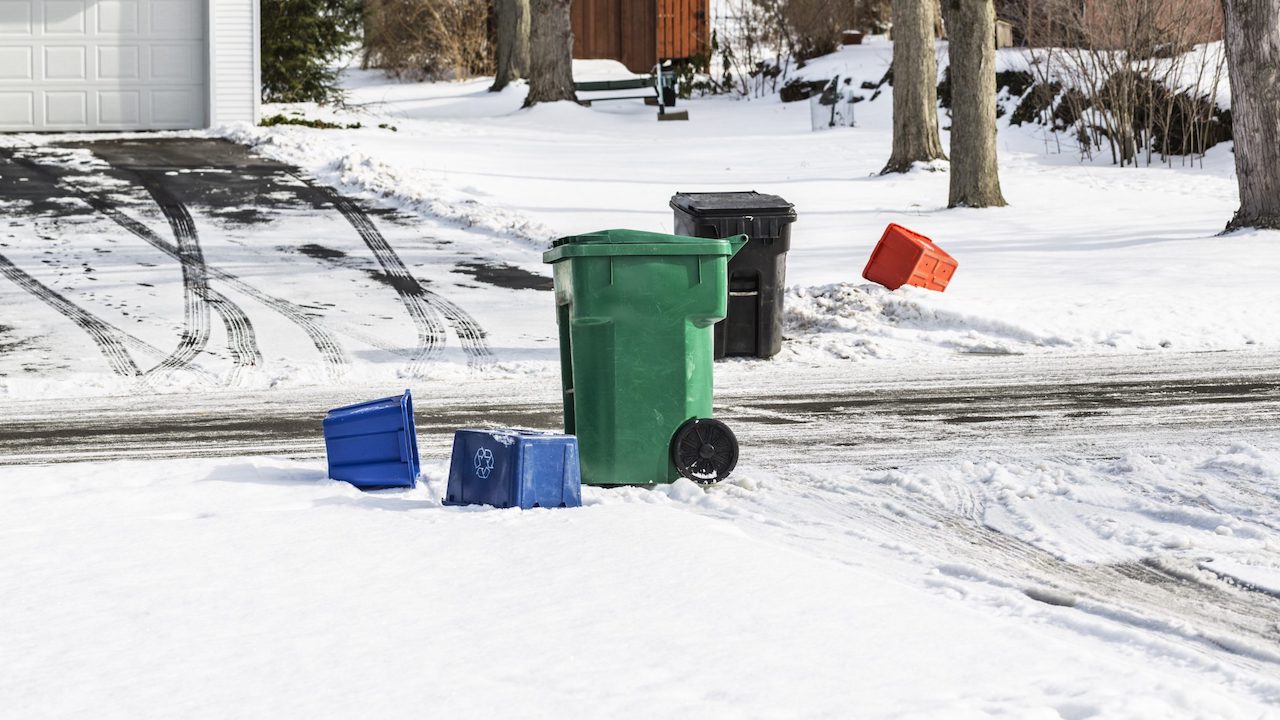
Wheeled garbage and recycling bins left along a snowy suburban street after collection day
With many businesses and offices closed or operating at reduced capacity during the pandemic, manufacturers that use recycled materials to make products such as boxes and toilet paper are relying on residential recyclers to pick up the slack.

Rich Elliott has never felt particularly heroic while placing his bin of recyclables out for collection each week.

“I’ve just always felt that it was basically the right thing to do to help the environment,”

said the Redford resident, 51. “My mom and dad always recycled when I was growing up, and I’ve continued the habit.”

But now, amid the lingering fallout of the COVID-19 pandemic, what Elliott views as a simple routine has taken on added significance, recycling experts say.

One big change: With many offices and businesses closed or operating at diminished capacity, a primary supply of recycled paper and cardboard that toilet paper, box and other manufacturers have long relied on to make new products has dwindled – leaving it to residential recyclers like Elliott to help make up the difference.

“Recycling has always been environmentally and economically important, but market shifts in the wake of the pandemic have made it even more so,” said Matt Flechter, recycling market development specialist for the Michigan Department of Environment, Great Lakes, and Energy (EGLE). “The consequence of less recycling by businesses is that fewer recyclables are in the supply chain for paper companies to make products like cardboard boxes and toilet paper.”

More than 75% of U.S. paper mills use recovered paper from recycling operations for their daily production needs, Flechter said.

“The bottom line: When you recycle properly, you are helping to supply manufacturers with the valuable materials they need,” he said. “At the same time, the new products they make help people who are stuck at home while we all work together to mitigate the spread of the coronavirus.”

Essential service

Virtually all of Michigan’s recycling service providers have continued to operate during the pandemic, though a few suspended operations or changed their processes when the pandemic first hit. Residents are advised to check with their local provider on the current rules in their area. If recycling is temporarily unavailable, EGLE is encouraging households to store their recyclables – including rinsed and emptied metal and plastic containers – in a clean and dry place until service resumes.

But in general, curbside residential recycling has remained available as usual throughout Michigan because it’s considered an essential service.

Production of paper products – including toilet paper and boxes used for shipping – has also kept running in the state and nationwide.

Filling the void

Consider Pratt Industries Inc., a major cardboard box manufacturer with five paper mills in the U.S., including one each in Indiana and Ohio that are both supplied by Michigan recycled paper. In addition, Pratt has box plants in Livonia and Grand Rapids that ship to companies such as Amazon, Ford and General Motors.

Paul England, senior vice president for Pratt’s Midwest region, noted that all of the company’s boxes are made from recycled paper, including corrugated containers, cereal boxes, newspapers, magazines and junk mail.

“That’s our raw material – without that, we can’t make boxes,” he said, adding that demand for Pratt’s products has surged because of increased e-commerce shipments during the pandemic. “Items such as medical supplies, food and personal care items all ship in a box. Anybody that produces a box is just trying to keep up with demand right now.”

At the same time, in the pandemic’s immediate aftermath, recyclable paper supplied to box makers by commercial sources dropped by 30% after businesses started closing because of health and safety concerns, England said.

“What is interesting is that we’ve also seen a pretty significant uptick in curbside recycling as more goods are consumed at home,” he said. “So our advice to Michigan residents is that they can make a positive impact on the economy by continuing to recycle what’s recyclable so that we have the materials to continue making boxes for shipping.”

Know the rules

Residential recycling is also important for toilet paper manufacturers, including Great Lakes Tissue Co. in Cheboygan, which each month uses 2,100 tons of recycled raw material – half of which comes directly from recycling operations across the U.S. and Canada.

In March, toilet paper sales soared 112% nationwide as people stocked up amid the COVID-19 outbreak. The hoarding of toilet paper and paper towels largely eased after a few weeks, although there was another run on paper products when COVID-19 cases surged again in late fall.

As part of its ongoing Know It Before You Throw it statewide recycling education campaign, EGLE encourages Michigan curbside recyclers who want to help keep raw materials flowing through supply chains to check the rules for what recyclables are accepted in local programs.

Best practices statewide generally include:

  • •No need to remove staples, paper clips or plastic windows from envelopes.
  • •Keep it dry and free from liquid contaminants.
  • •Never put COVID-related personal protection equipment (PPE) like masks and gloves into your recycling bin. PPE should go into a trash container for proper disposal.
  • •Paper coffee cups are not usually accepted (the inside is typically coated in plastic to prevent leaks).
  • •Magazines and newspapers are usually recyclable.
  • •Paper towels, tissues, wipes and napkins aren’t usually recyclable and don’t belong in the bin.

Proper plastic practices

While paper has garnered the most attention, the coronavirus crisis has also affected other recyclable materials.

For example, shoppers have stockpiled bottled water and other supplies that come in plastic containers, like hand sanitizer and sanitary wipes.

EGLE notes that, while residents should always check with their local provider and follow its specific rules, those types of plastic bottles and containers are generally recyclable as long as they’re rinsed and emptied.

Plastic bag usage has also increased as consumers have groceries delivered rather than go to the store themselves and haul their items in reusable bags.

While plastic bags – as well as the plastic wrapping that toilet paper and paper towel comes in – is rarely recyclable curbside, retailers such as Meijer, Target and Walmart accept them at in-store drop-off stations. If your local outlet has temporarily halted collections, or you’ve stopped going there in person, EGLE urges you to store them for drop-off when normalcy resumes.

‘Recycling never goes out of style’: Find new uses for your old clothes

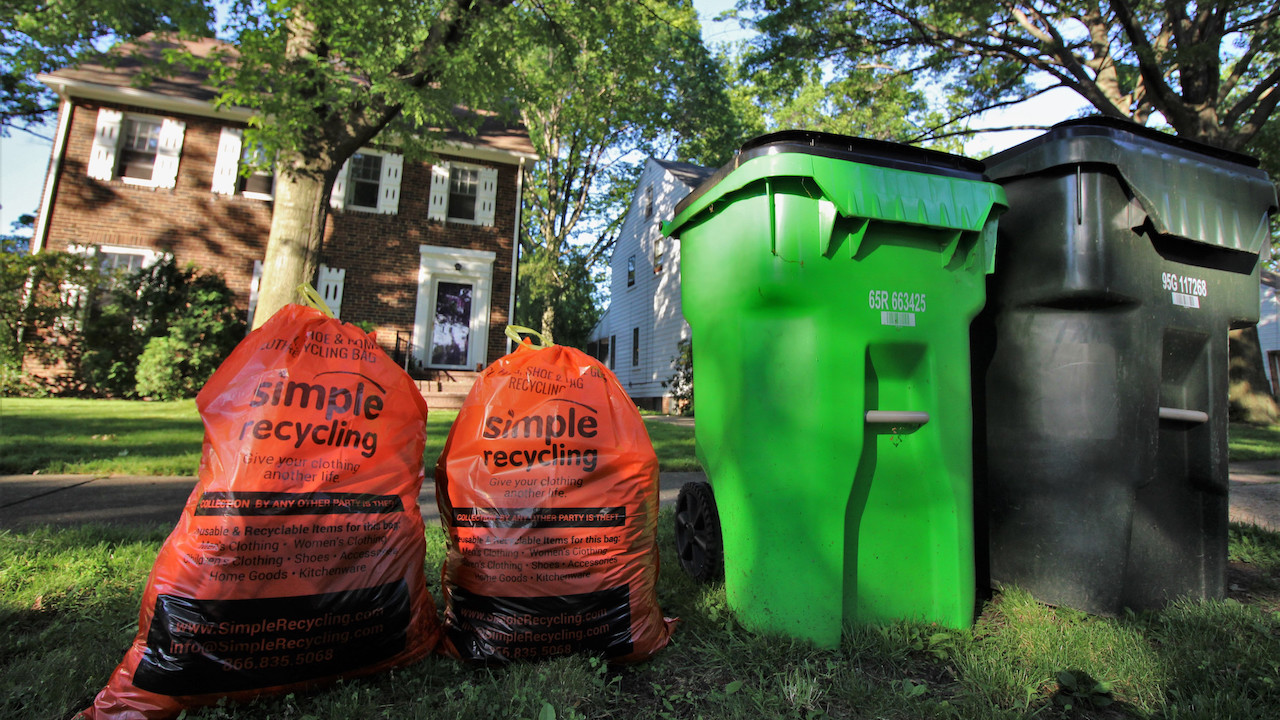
Two orange Simple Recycling bags to the left of a green recycling bin

This story was originally published on the Detroit Free Press.

Behold those pit-stained T-shirts, socks with holes in the heels and out-of-style paisley-patterned dress shirts taking up space in your closet.

If ever there was a scenario where the cliché “one person’s trash is another person’s treasure” was applicable, this is it.

“There is a value for most of even the rattiest of textiles that people tend to discard,” said Michael Csapo, general manager of the Resource Recovery and Recycling Authority of Southwest Oakland County (RRRASOC), which manages recycling programs in nine metro Detroit communities.

Unfortunately, much of that value is never realized, even though charities and other collection organizations can find use for virtually any old piece of clothing, Csapo notes. According to the U.S. Environmental Protection Agency, 85% of textiles end up in landfills, and a 2018 study determined that clothing is one of the world’s fastest-growing waste streams.

Recycling advocates throughout Michigan are working to reverse that trend.

“Fashions might come and go, but reducing the amount of material that enters landfills never goes out of style,” said Emily Freeman, recycling specialist in the Material Management Division of the Michigan Department of Environment, Great Lakes, and Energy (EGLE).

Education is key

In June, EGLE launched “Know It Before You Throw It,” a campaign to improve both the quality and quantity of recycling in Michigan.

With the Recycling Raccoon Squad serving as campaign ambassadors, EGLE aims to inform Michiganders about best recycling practices while doubling the statewide recycling rate to 30% by 2025 and ultimately reaching 45% annually.

Although rules often vary by community, textiles are typically not accepted by traditional curbside recycling services, including RRRASOC.

Old clothing is, however, a welcomed and important revenue stream for Michigan charities that collect donations at drop-off facilities.

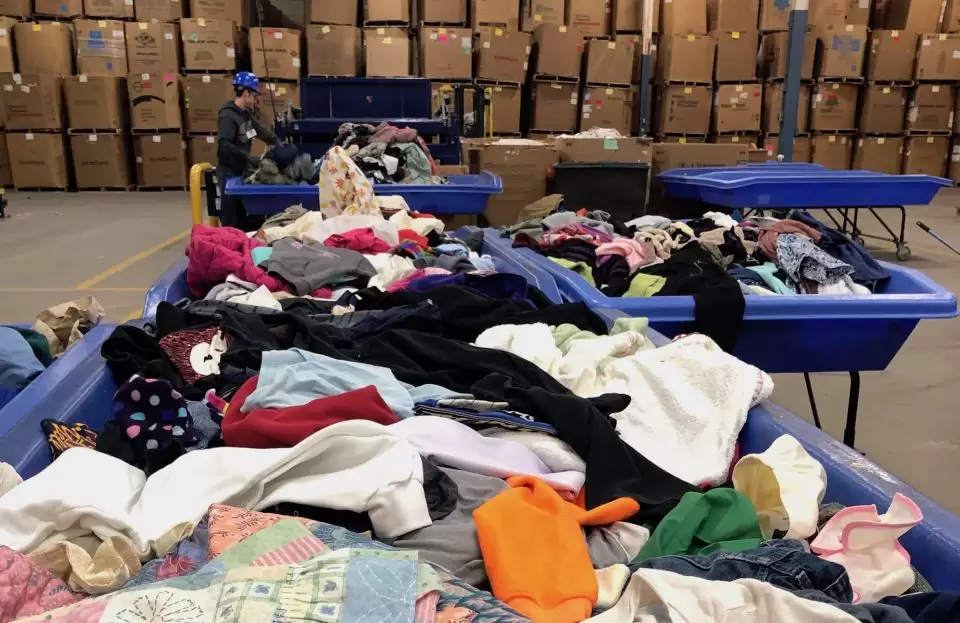
Piles of sorted clothing at Goodwill Industries of Greater Grand Rapids are prepared for recycling

And when it comes to textiles, there’s one overriding message recycling specialists want to deliver: Leave the sorting to us.

While organizations that collect used textiles can’t take items such as gasoline-soaked rags, those holey sweaters and shirts bearing pizza grease stains are perfectly OK.

“The trickiest part is educating people that we really don’t care about the condition of their clothing that they want to give us, as long as it’s clean and dry,” said Nick Carlson, vice president of donated goods operations at Goodwill Industries of Greater Grand Rapids and a director of the Michigan Recycling Coalition. “We ask them not to edit their donations. Trust us to get everything into the proper market.”

Although technology for turning old clothes into new garments is advancing rapidly, at this time it’s more a matter of reusing textiles than technically recycling them.

But like recycling, reusing also offers environmental and economic benefits.

The EPA estimates that textiles — mostly clothing but also items such as carpeting, furniture, sheets and towels — account for 8% of material going into landfills, providing a significant opportunity to conserve space.

“It’s also one of the higher-value items that goes into the waste stream,” said Adam Winfield, founder and president of Simple Recycling, a for-profit Ohio-based company that provides curbside textile collections in 30 Michigan communities — primarily in metro Detroit but also in Lansing and East Lansing.

Goodwill Industries of Greater Grand Rapids, for example, in 2018 turned the 600,000 individual donations it received into $25 million in revenues from sales at its network of retail outlets, Carlson said. The proceeds went toward funding the charity’s various skills training and rehabilitation programs.

There’s also a personal perk to donating clothing. Taxpayers who itemize can claim a charitable deduction on their federal tax returns.

Worldwide market

There are essentially four markets for the used clothing that is collected by Simple Recycling and charities such as Goodwill.

Although figures can fluctuate, typically between 10% and 20% is considered top quality and is resold by American thrift stores.

The vast majority, however, is not resalable in the U.S. and is further sorted for international export or broken down for raw materials.

As much as 45% of the total collected is exported as secondhand clothing. Roughly 30% is converted into wiping rags for industrial or residential use, and around 20% is recycled into post-consumer fiber that goes into products such as home insulation, carpet padding or sound-deadening material for automobiles.

Only about 5% ends up as waste, Winfield said. “So you can see, clothing is a category of material that is highly recyclable and easily repurposed,” he said. “Our slogan is ‘Let your clothing be loved again.’”

Charitable endeavor

It was the lack of love shown to used apparel that gave rise to Simple Recycling, which test-marketed its concept in 2014 in South Lyon and Wixom, members of RRRASOC.

Usually, people must drop off their old garments at collection sites operated by charities or during special events staged by municipalities — an extra step that largely explains why most clothing is simply thrown in the trash, Csapo said.

Winfield figured that more residents would take the time to bundle clothing for reuse or recycling if they were offered the convenience of free curbside pickup — and the numbers have borne that out.

Simple Recycling now serves 250 communities in seven states, and in 2018, it collected 183 tons of material among the nine RRRASOC communities alone, which, beyond South Lyon and Wixom, are Farmington, Farmington Hills, Milford, Milford Township, Novi, Southfield and Walled Lake.

On residents’ standard recycling pickup days, Simple Recycling trucks follow behind RRRASOC vehicles to collect the clothing set out in bags supplied by the company and drop off additional bags for further collections.

“We make it simple and convenient,” Winfield said, adding that the service is free to communities. In fact, for every ton of materials it collects, Simple Recycling pays $20 to municipalities, which also benefit by sending less waste to landfills and therefore paying fewer fees.

Both Winfield and Csapo stress that Simple Recycling is meant to supplement, not replace, charitable giving.

“First and foremost, we want residents to donate clothing to charities,” Csapo said.

Said Winfield: “We’re after that 85% that otherwise would get thrown away, not the 15% that is donated to charities.”

Actually, Csapo said, there’s at least anecdotal evidence that charitable donations of clothing increase in areas where Simple Recycling operates because residents become educated about the market for old textiles.

“Folks see there’s an opportunity to make sure things go back into the value chain instead of into the trash,” he said.

Carlson echoes those sentiments.

“Looking at it as a member of the Michigan Recycling Coalition, anything that improves sustainability, I’m in favor of. But I’d really urge people to first consider donating their old clothes to a local charity because that helps boost the local economy,” he said, adding, “Material donations are the lifeblood of Goodwill.”

Learn how this company uses recycled plastic to make high-quality products

This story was originally published by FOX17 for "Morning Mix".

Plastic. It's in cars, refrigerators, furniture, computers and so many other objects we encounter in our everyday lives.

Recycling plastic is not only important, it has become a competitive market. Getting the best quality recyclable material helps local companies, like Davidson Plyforms, compete.

Todd took a trip to Davidson Plyforms to see what happens to the plastic put in the recycling bin and to learn more about Michigan's efforts to increase the amount the community recycles.

Learn more about Davidson Plyforms and how they're taking advantage of recycled materials on their website.

Also, learn more about the Michigan Department of Environment, Great Lakes, and Energy campaign and get more tips and information on recycling, visit recyclingraccoons.org.

West Michigan craft breweries, Raccoon Squad clear on benefits of glass recycling

An empty beer bottle is a sad sight for some folks.

This story was originally published on MLive Media Group.

But for West Michigan craft beer producers Founders Brewing Co. and Bell’s Brewery, it’s an opportunity to help Mother Nature.

“We focus on trying to use our resources in a way that allows us and future generations to continue to use those resources for a long time,” said Kate Martini, sustainability specialist at Bell’s, the Kalamazoo-based brewery that makes over 20 beers, including the popular Oberon and Two Hearted ales.

Bell’s not only recycles its waste amber glass, but it also recovers cardboard, paper, stretch wrap, green plastic banding, keg caps, wood, electronics, batteries, scrap metal and aluminum used in its production process. In 2018, the brewery recycled 1.5 million pounds of waste that otherwise would have ended up in a landfill.

Founders – the Grand Rapids beer maker that runs neck and neck with Bell’s for the title of largest brewer based in Michigan – is dedicated to increasing its recycling rate and reducing waste sent to landfills.

“Glass is a fundamental part of what we do. That’s why our glass is an average of 40% recycled content:  We’re always striving to be a responsible member of the glass community,” said Elizabeth Wonder, sustainability coordinator for Founders, whose signature beers include All Day IPA and Kentucky Breakfast Stout.

Improving Michigan’s recycling rate

Michigan in 1976 was the first state in the nation to enact a bottle and can deposit law, which tacks an extra dime onto the cost of each carbonated beverage sold in the state, to be redeemed later for a 10-cent refund on containers.

Thanks to the deposit law, returnables account for much of all recycled glass in the state. But returnable containers represent only 15% of all materials Michiganders recycle every year, according to the Container Recycling Institute.

If recycling habits improve, more than half of the state’s municipal solid waste now dumped in landfills could instead be recycled.

Unlike many other materials, glass bottles are endlessly recyclable. That means returning glass containers like that empty queso jar for recycling helps make new glass bottles and jars.

But state leaders say Michigan needs to do a better job recycling its glass – as well as its paper, metal, cardboard, and plastic. The state’s current 15% recycling rate is the lowest in the Great Lakes region and among the lowest nationwide.

That’s why this summer the Michigan Department of Environment, Great Lakes, and Energy, known as EGLE, launched Know It Before You Throw It, a first-of-its-kind statewide education campaign to better inform Michiganders on how to recycle correctly and what can — and cannot — be recycled.

Along with teaching Michiganders “cleaner” recycling practices, EGLE also wants to double the state’s recycling rate to 30% by 2025 and ultimately reach 45% annually.

Cleaner is better

Glass recycling faces several hurdles.

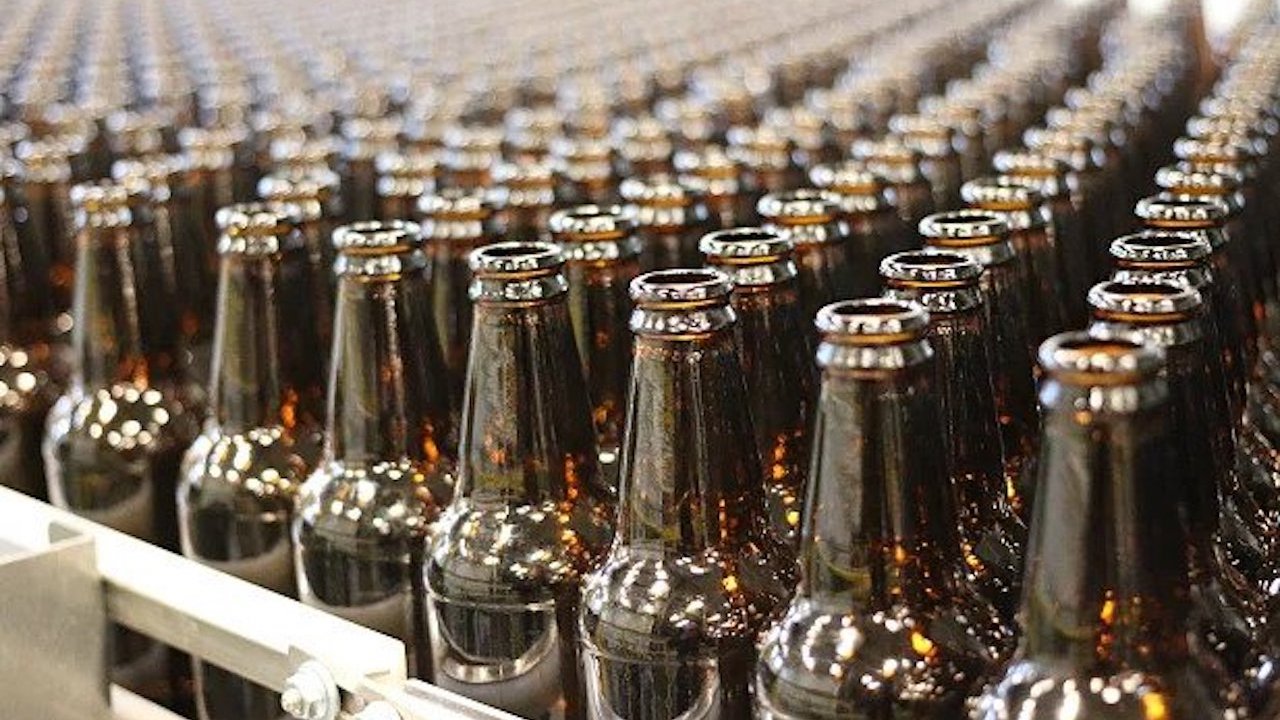
After the glass in your curbside recycling leaves your front yard, it’s taken to a recycling facility where it’s checked for cleanliness and sorted by material type and color. From there, the glass is crushed into pieces ranging in size from gravel and pebbles to sand and powder. Those crushed materials are sold to manufacturers that further melt them down to create new products like beer bottles.

But too often recycling bins are treated as extra garbage cans, with the contents failing to meet processing companies’ cleanliness standards. Contamination – like that little bit of queso you can’t reach at the bottom of the jar – not only ends up ruining the quality of glass being recycled, but it also puts everything else in your curbside bin at risk of being unusable. (If that queso drips on nearby cardboard, for example, the cardboard is no longer fit for recycling.)

EGLE-commissioned research shows that teaching residents how to properly recycle is key. The Know It Before You Throw It campaign features the six-member Recycling Raccoon Squad, recycling champions who serve as EGLE’s education ambassadors.

“By learning a few simple rules, we can elevate our rate of recycling, increase the amount we recycle and help build stronger, more prosperous communities. That’s a win-win-win for everyone,” said EGLE Materials Management Division Assistant Director Elizabeth Browne.

Recycling Raccoons

Clear rules for glass recycling

Gladys Glass, EGLE’s raccoon expert on recycling glass, has a few easy rules to guide Michiganders on her webpage:

  • Rinse and empty all glass before recycling.
  • Clear glass food jars are usually accepted curbside.
  • Check with your local recycler to see if it accepts brown, green and blue glass curbside.
  • Clear, nonfood glass is only rarely accepted curbside, so check with your local recycler.
  • Lids should be removed to be recycled in their respective streams (plastic or metal).
  • The glass used for cooking purposes — such as Pyrex — is not accepted curbside.
  • Lightbulbs are not accepted in curbside recycling programs, but some types of lightbulbs can be recycled at participating retail stores.

Every municipality in Michigan has slightly different rules, though. Certain types of glass accepted in one city aren’t necessarily accepted in another. It’s important to routinely check with local recycling providers about what’s allowed in individual communities.

Bottle-to-bottle recycling

Glass recycling also helps preserve limited natural resources. Making a new bottle from recycled glass, for example, reduces raw material use, is cost-efficient, uses less energy, lessens the carbon footprint and creates jobs.

Achieving EGLE’s 30% recycling goal would produce as many as 12,986 jobs, which translates into $300 million annually for Michigan’s economy, according to the Expanding Recycling in Michigan Report prepared for the Michigan Recycling Partnership.

The Recycling Raccoon campaign is a clear step in the right direction for businesses, residents, municipalities and environmental advocates across Michigan.

“Glass is a core recyclable and residents want to recycle it,” said Jim Nordmeyer of the Glass Recycling Coalition Leadership Committee.

Bell’s is so committed to sustainability that in 2017 it joined the coalition, which works with member organizations in the beverage and recycling industries to encourage glass recycling.

For its part, Founders in 2018 achieved a 90% landfill diversion rate and is shooting for 92% in 2019.

“Founders understands that we must do our best to be good stewards of the environment by reducing and optimizing our use of natural resources,” Wonder said.

The Do’s and Don’ts of Recycling: How to do it properly

This story was originally published by FOX17's Morning Mix for fox17online.com.

Everyone knows recycling materials is good for the planet and reducing the amount of waste that ends up in landfills. It's also good for business as companies that use those recycled materials grow and produce like new products used solely from these materials.

15 percent of Michiganders recycle, but that's the lowest percentage in the Great Lakes region and among the lowest int he nation. Not to mention not all those who recycle do it properly.

The Michigan Department of Environment, Great Lakes, and Energy has kicked off a campaign called "Know It Before You Throw It" to better inform Michiganders what can – and cannot – be recycled, as well as to increase the amount of material recycled statewide.

Scott Dean of the Michigan Department of Environment, Great Lakes, and Energy and Kyle Shoemaker of the Kent County Department of Public Works demonstrate on how to properly recycle.

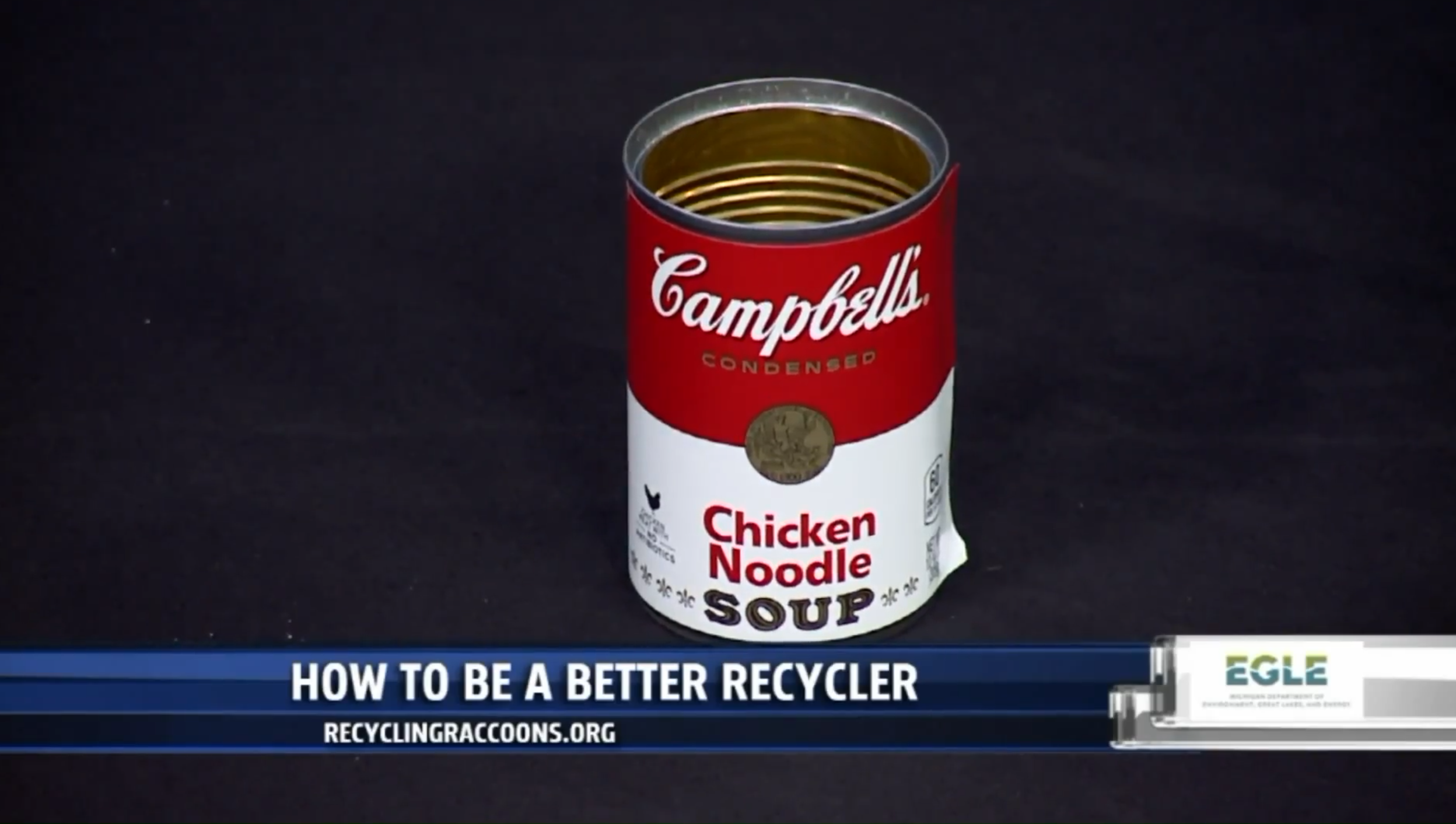
Basic soup cans or tuna cans can be recycled, just remember to rinse and empty before putting into the recycling bin. The lids can also be recycled, but it’s best to pin them in the container to limit the possibility of it being lost in the bin.

Another notable fact about these metal containers is that the paper wrapping does not need to be removed.

Wire hangers are not recyclable curbside as they have a tendency to jam machinery and pose a threat to recycling workers’ safety. Do not place these in curbside containers.

Michigan has a 10-cent deposit on pop cans, but not everyone can have this ability. Aluminum is very recyclable. In fact, 75% of all aluminum produced is still in use today.

Empty aerosol cans are generally recyclable curbside, as long as they didn’t contain something hazardous such as paint or chemicals. Cans empty of the product and the plastic components are taken off, so it’s ready to go in the curbside bin.

To learn more about how to recycle in Kent County visit reimaginetrash.org.

Metal recycling in southeast Michigan takes many shapes — including art

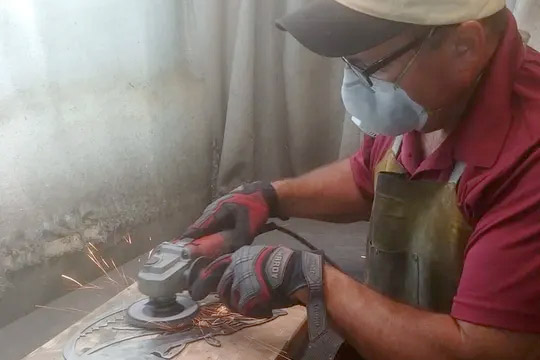
Man creating art from recycled metal

This story was originally published on The Detroit Free Press.

For professional artist Chris Nesbitt, conversations about metal can get heavy, sometimes into the hundreds of pounds.

“The great thing about working with metal is that it’s so durable,” Nesbitt said. “It’s made to last. There’s something satisfying knowing that these works will probably last longer than me.”

Nesbitt is an artist with DunMor Metal Art, a Waterford Township-based full-service decor company specializing in rustic metal art. Founded in 2015 by Nesbitt’s friend Jeremy Macbeth, DunMor makes such products as custom-made art pieces, signs for both the home and business, and Michigan-themed art. Custom DunMor art has been sold around the U.S., as well as internationally.

All work is handmade from raw materials. Mostly, the pieces are crafted from 4-by-10-foot sheets manufactured in Michigan from new metal mixed with metal collected from curbside recycling bins.

“I’m very conscious about the importance of metal recycling,” said Nesbitt, a former chemical engineer. “It’s good to know that metal is getting a second or third life through our art.”

Improving Michigan’s recycling rate

Compared with much of the country, Michigan excels at recycling one type of metal: aluminum. That’s thanks in large part to Michigan’s first-in-the-nation bottle and can deposit law, which tacks an extra 10 cents onto the cost of each carbonated beverage sold in the state, to be redeemed later for a 10-cent refund.

More than 90% of bottles and cans that carry a deposit are recycled, but such returnable containers represent only 15% of all the waste Michiganders recycle every year. Almost 53% of the state’s municipal solid waste that goes to landfills could instead be recycled if done properly.

State leaders say Michigan needs to do a better job recycling its metal — as well as its paper, glass, cardboard and plastic. The state’s current 15% recycling rate is the lowest in the Great Lakes region and ranks among the lowest nationwide.

That’s why this summer, the Michigan Department of Environment, Great Lakes, and Energy, known as EGLE, launched Know It Before You Throw It, a first-of-its-kind statewide education campaign to better inform Michiganders on how to recycle correctly and what can — and cannot — be recycled.

‘A win-win-win for everyone’

EGLE’s goal is to promote awareness of cleaner recycling practices to reduce the amount of contaminated materials improperly going into recycling bins. The state also wants to double Michigan’s recycling rate to 30% by 2025 and ultimately reach 45% annually.

Achieving EGLE’s 30% recycling goal would produce a total of as many as 12,986 jobs, which translates into an economic impact of up to $300 million annually, according to the Expanding Recycling in Michigan Report prepared for the Michigan Recycling Partnership.

The Know It Before You Throw It campaign features the Recycling Raccoon Squad, a six-member team of recycling champions who serve as EGLE’s education ambassadors. EGLE-commissioned research shows that education is key in order for residents to learn how to properly recycle.

“By learning a few simple rules, we can elevate our rate of recycling, expand the amount we recycle and help build stronger, more prosperous communities, which is a win-win-win for everyone,” said EGLE Materials Management Division Assistant Director Elizabeth Browne.

Knowing the rules of recycling

It’s easy to remember many of the tips suggested by EGLE’s raccoon expert on recycling metal — Precious Metale — on her webpage:

— Rinse and empty all metal containers. This means rinsing out containers so they are completely empty of food scraps, such as soup, prior to tossing them into the recycling bin.

— Aluminum, steel and tin materials should be clean before recycling.

— It’s OK to leave labels on metal containers.

— Empty aerosol cans are generally recyclable curbside, as long as they didn’t contain something hazardous, such as paint or chemicals.

Every municipality in Michigan has slightly different rules, though. Certain types of metal accepted in one city aren’t necessarily accepted in another. It’s important to routinely check with local recycling providers about what’s permissible in individual communities.

Those certain types of metal products that are not accepted curbside in most places can often be recycled at a drop-off location or special recycling event. Products of that sort include:

— Scrap metal.

— Kitchen pots and pans.

— Wire hangers, which jam recycling facility machines.

— Construction materials such as screws or nails, which are too small and fall through the recycling machines.

— Medical sharps such as needles and syringes, which are dangerous to recycling facility workers.

Developing good recycling habits

The campaign is a breath of fresh air for Michigan’s recycling leaders.

“People get excited because they have those big recycling carts with all that room, but when you’re throwing scrap metal or batteries in there, you can contaminate an entire batch,” said Galen Hardy, spokesman for the community organization Zero Waste Detroit.

Zero Waste Detroit works with the Detroit Department of Public Works to promote healthy methods of waste diversion, including keeping materials from being incinerated. Hardy said the city’s current recycling rate is only about 4%, a number he’d like to see get up to at least 30%.

“The Know It Before You Throw it campaign is smart, because it’s really good at encouraging the public to develop good recycling habits,” he said.

What happens to plastic bottles when you recycle them?

This story was originally published by Live in the D for clickondetroit.com/web/wdiv/live-in-the-d.

Every day, you likely use all kinds of plastic - everything from water bottles to containers, and you may be recycling them, but are you doing it right? You've probably seen the new commercial campaign with the Recycling Raccoon Squad. It's part of a new effort to show people how to recycle correctly by our friends at the Michigan Department of Environment, Great Lakes and Energy-- or EGLE.

Jill Greenberg joined us to tell us more about the new effort. She says that the "Know it Before You Throw It" campaign aims to educate the public about best practices for recycling. The most important thing to know is to empty and clean the product before you recycle it. When you take those extra steps, it helps improve our recycling stream. Currently, in Michigan, we recycle 15% of plastic, and their goal is to raise it to 30% by 2020. "In fact, 15% is really low for the Great Lakes region," said Greenberg.

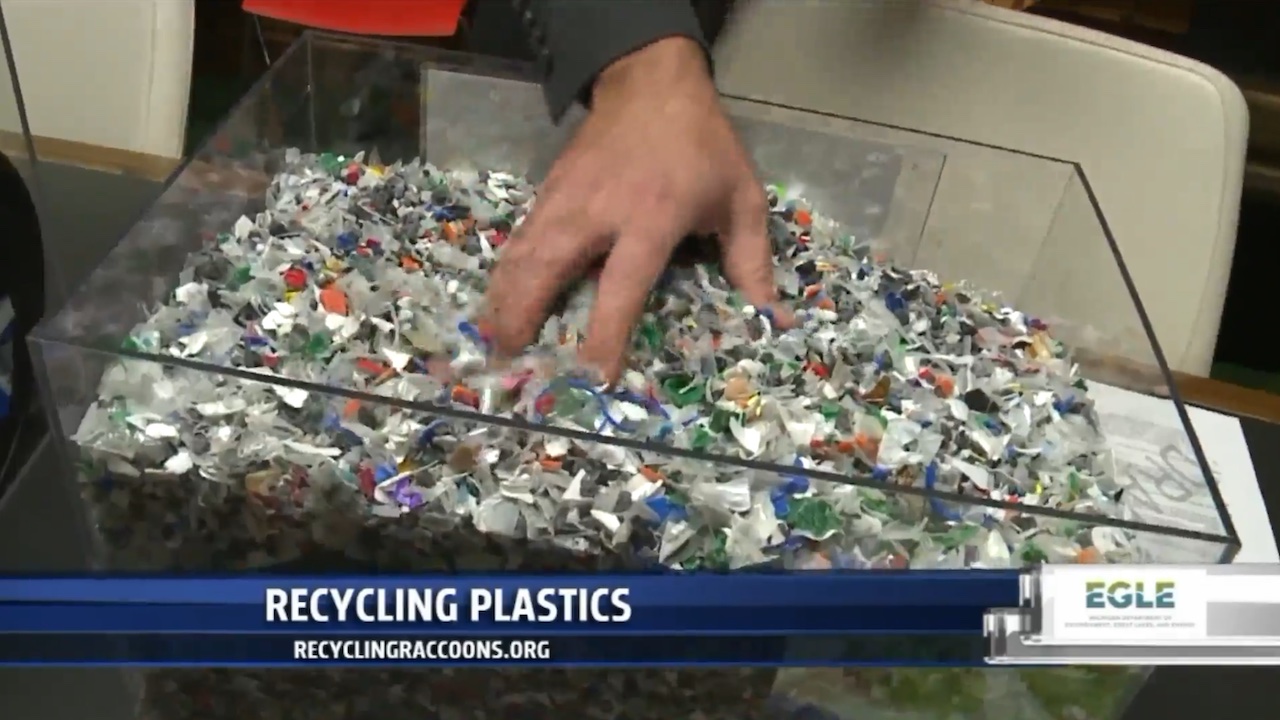
Karl Hattopp also joined us from Clean Tech Recycling to show us what happens when we recycle correctly. Hattopp says that Clean Tech Recycling takes the recycled bottles such as laundry detergent bottles and water bottles and they turn them into pellets that are eventually turned back into bottles.

To learn more about Clean Tech Recycling, visit cleantechrecycling.com, and to learn more about the new EGLE campaign and get more tips and information on recycling, visit recyclingraccoons.org.

Meet the furry faces of Michigan’s new recycling campaign

Two kids in front of kiddie pool
Boomer the raccoon in character as Nyla P. Lastic, as actors Russell Sullins (left) & Yuna Sullins (right) look on at the Recycling Raccoons video shoot on May 17.

Ideas kept getting dumped into the proverbial trash bin for weeks.

But leaders of the Michigan Department of Environment, Great Lakes, and Energy (EGLE) knew immediately when they had finally recruited the perfect spokesperson for the state’s first-ever “Know It Before You Throw It” campaign to increase and improve recycling.

Turns out, the best person for the job of promoting the Know It Before You Throw It campaign isn’t a person at all.

It’s a raccoon – six of them, to be precise.

“As soon as we saw these adorable little creatures, we recognized instantly we had discovered the messengers to best help us educate the Michigan public on the do’s and don’ts of recycling,” said EGLE Director Liesl Clark.

The Michigan Recycling Raccoon Squad features six “talking” raccoons that each focus on a particular recyclable:

  • Nyla P. Lastic (plastic)
  • Carlos Cardboard (cardboard)
  • Precious Metale (metal)
  • Paper MacKay (paper)
  • Gladys Glass (glass)
  • Frank (everything else)

The raccoons’ “personalities” match their specialties – reflected by the purple mohawk on Precious, for example – and their goal is to help Michigan residents grow knowledge and improve their recycling habits.

“The current recycling rate in Michigan is just 15% – that’s the lowest rate in the Great Lakes, and among the lowest in the country,” said EGLE Materials Management Division Director Jack Schinderle.

“Our objective is for Michigan to reach a rate of 30% by 2025, and to ultimately reach 45% annually. The Know It Before You Throw It campaign is key to getting the word out about good recycling practices.”

A few simple rules
The Know It Before You Throw It campaign is part of a statewide recycling education and engagement initiative designed to increase both the quantity and quality of material that is recycled in Michigan.

Beyond preserving the environment, reducing energy use and conserving landfill space, improved recycling in Michigan can bring important economic benefits, according to the “Expanding Recycling in Michigan” report prepared for the Michigan Recycling Partnership.

Achieving EGLE’s 30% recycling goal would produce as many as 12,986 jobs, which translates into an economic impact of up to $300 million annually.

“By learning a few simple rules, we can elevate our rate of recycling, expand the amount we recycle and help build stronger, more prosperous communities, which is a win-win-win for everyone,” Schinderle said.

It’s easy to remember many of the tips suggested by EGLE’s raccoon expert on recycling plastics – Nyla P. Lastic – on her webpage:

  • Rinse and empty all plastic containers. This means rinsing out containers so they are completely empty of food scraps, such as leftover yogurt, or such liquids as unused milk in a jug prior to tossing them in the recycling bin.
  • Check for the number on your plastic item to make sure it’s accepted where you live (1 and 2 are the most widely accepted).
  • Plastic food storage bags cannot be recycled.
  • Plastic straws are not accepted.
  • Never put recyclables in plastic bags – in most places plastic bags are not recyclable, but you can usually recycle them at grocery retailers such as Meijer, Kroger or Target.

Every municipality in Michigan has slightly different rules, however. Certain types of plastic accepted in one city aren’t necessarily accepted in another, so it’s important to routinely check with local officials about what’s permissible in individual communities.

Lights. Cameras. Raccoons.
One of the Know It Before You Throw It campaign’s highlights is a TV commercial featuring the Recycling Raccoons educating a homeowner on her recycling habits.

The 30-second ad quickly became a social media favorite after it was introduced June 24 to Michigan audiences, generating nearly 4,000 positive reactions and 2,500 Facebook shares over its opening two weeks.

“The popularity of Michigan’s Recycling Raccoon Squad is far surpassing EGLE’s expectations,” Schinderle said.

The ad has also inspired civic organizations and environmental advocacy groups across the state to invite EGLE representatives to bring the Know It Before You Throw It mascots’ message to their communities. EGLE staff members are receiving more Know It Before You Throw It event requests than they can schedule this summer, so they’re booking presentations through the fall, Schinderle noted.

The commercial was filmed on a makeshift set at a Lansing-area home with two professional raccoon “actors” – George and Boomer – EGLE hired to play the roles of all six squad members.

“Boomer is very laid-back, so he was picked to play Nyla because he didn’t mind sitting in a plastic pool on an inflatable raft,” said Greg SmithAldridge, who served as animal wrangler for the shoot. Wranglers direct animal-actors to perform certain actions according to the script, similar to the duties of a movie director.

‘It’s easy to improve’

“It’s all about making it fun for the animal and making sure they want to be there,” said SmithAldridge, who has previously worked on such Hollywood film productions as “John Wick: Chapter 3 – Parabellum” and is currently engaged on a TV ad to sell season tickets for pro football’s Baltimore Ravens.

“You can’t convince a raccoon to do something if he doesn’t want to do it. At some point, he’s going to be just like, ‘OK, I’m done wearing these sunglasses.’”

SmithAldridge didn’t just help the raccoons with their behavior. He got a dose of positive recycling behavior modification himself and was surprised to learn plastic bags can clog the machines that sort recyclables.

“Just from looking at the script and being on set, I realized how bad my recycling habits were,” he said. “I’d been putting all my recyclables in plastic bags for years, but I didn’t know that was wrong. Since this Recycling Raccoons shoot, I’ve really changed up the way I do stuff at home and I realize that it’s really easy to improve.”

To learn more about the rules of recycling and meet the rest of the Recycling Raccoon Squad, visit RecyclingRaccoons.org.

Join the Squad!

Help Michigan become a leader in recycling again. Join the squad today. You don't need to be a raccoon – you just need to sign up!

After signing up for recycling news, you will receive occasional updates. We will not sell your email address to any third party at any time. View our privacy policy.

    © Copyright 2026, EGLE. All Rights Reserved.

    This website uses cookies

    We use cookies to personalize ads, to provide social media features, and to analyze our traffic. We also share information about your use of our site with our social media advertising and analytics partners who may combine it with other information that you’ve provided to them or that they’ve collected from your use of their services. You consent to our cookies if you continue to use our website.