This story was originally published by WSYM for "Morning Blend".
Jill Greenberg, Spokeswoman, and Paper McKay, Recycling Raccoon, Michigan Dept of Environment, Great Lakes & Energy, talk about their Know It Before You Throw It initiative and how they are trying to educate the public about the benefits of recycling and exactly what can be recycled. For more information, please visit www.recyclingracoons.org .
Want to check out other Morning Blend segments? Visit the FOX47News Website.
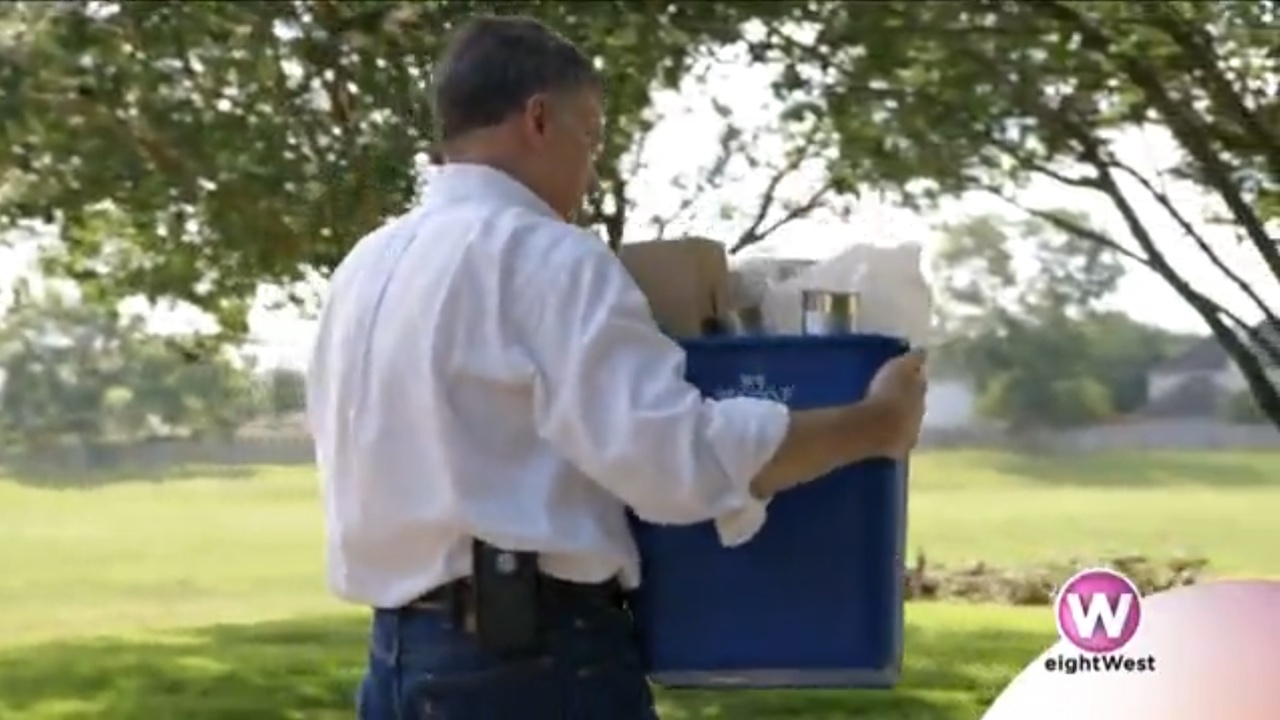
This story was originally published by WOOD-TV for "eightWest".
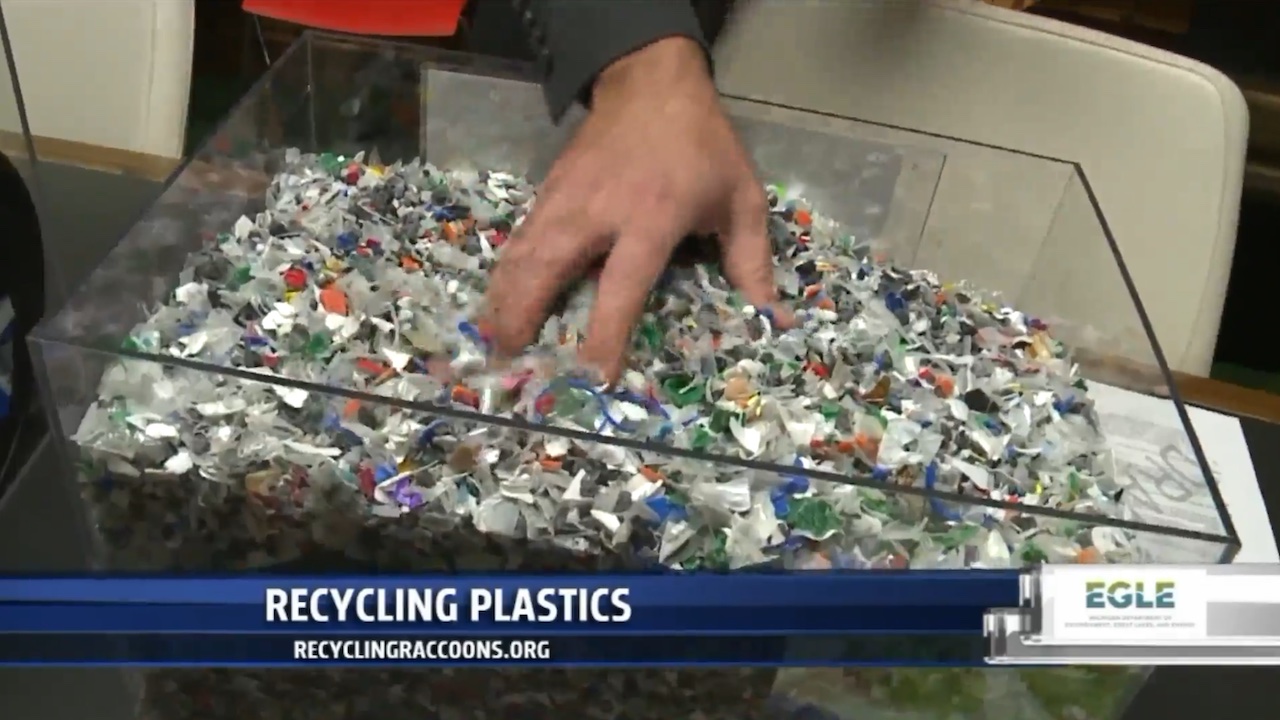
For all the great natural resources we have in Michigan, it might surprise you to know, our state is among one of the lowest recycling states in the nation! Recycling has a wide range of environmental and economic benefits, plus there are so many materials that can be recycled like metal, paper, and plastic. Today, we’re going to focus on recycling plastic, how to do it and how some really useful products are being made locally from recycled plastic.
We all know recycling is good for the environment but many people don’t realize the number of local jobs that come from recycling, more than landfills.
For instance, Padnos has more than 700 team members at locations throughout the state and they offer extensive training and benefits like helping employees pay for a large portion of their college tuition. And lots of products are made from recycled plastic — automotive parts, office chairs, recycling bins, that’s a real bonus too!
To learn more about Padnos, you can visit padnos.com.
This story was originally published by FOX17 for "Morning Mix".
Plastic. It's in cars, refrigerators, furniture, computers and so many other objects we encounter in our everyday lives.
Recycling plastic is not only important, it has become a competitive market. Getting the best quality recyclable material helps local companies, like Davidson Plyforms, compete.
Todd took a trip to Davidson Plyforms to see what happens to the plastic put in the recycling bin and to learn more about Michigan's efforts to increase the amount the community recycles.
Learn more about Davidson Plyforms and how they're taking advantage of recycled materials on their website.
Also, learn more about the Michigan Department of Environment, Great Lakes, and Energy campaign and get more tips and information on recycling, visit recyclingraccoons.org.
This story was originally published by WDIV Channel 4 for Live in the D.
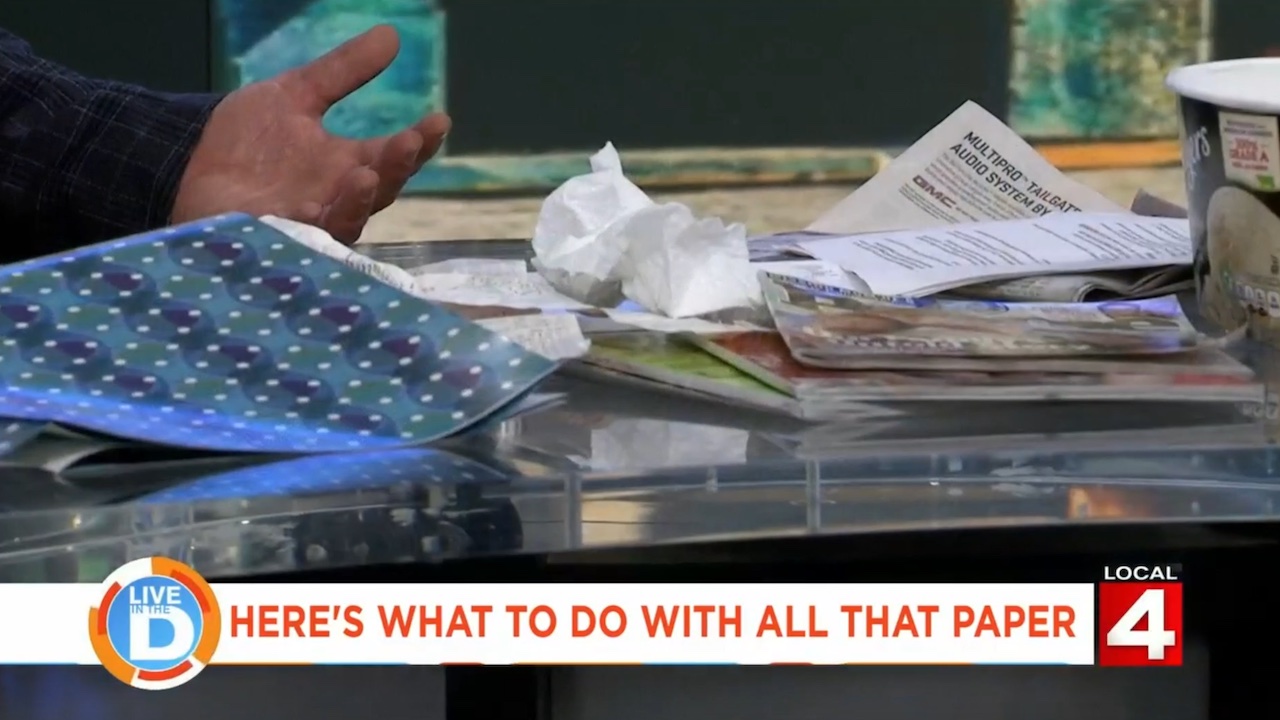
The holidays are approaching us fast! If you plan to wrap gifts or open gifts there will be lots of paper involved. But not all paper is recyclable. The Michigan Department of Environmental, Great Lakes & Energy or EGLE is aimed at encouraging people to recycle the right way and have some guidelines to share about recycling paper.
Host, Jason Carr had a chat with Hugh McDiarmid with EGLE and Natalie Jakub with Green Living Science about what type of paper is recyclable. Types of paper like receipts and wrapping paper cannot be recycled. Things to look out for are glossy or wax coating paper that must be thrown in the trash.
Watch this video to learn what types of paper can be recycled.
For more information about recycling, visit recyclingraccoons.org. To learn more about Green Living Science programs or volunteer opportunities visit greenlivingscience.org.
The following can be recycled as long as they are clean and don't have any food residue or grease stains on them:
Paper with staples/clips
Magazines and newspapers
Envelopes with plastic windows
Wrapping paper without glitter or foil
These types of paper cannot be recycled:
Used paper towels, tissues or napkins
Cash register receipts
When the improper materials are put in the curbside bin, it contaminates the proper materials already inside. If the materials are contaminated, the entire bin is thrown out and cannot be recycled.
Learn more about EGLE's new campaign, get more tips and information on recycling by visiting recyclingraccoons.org.
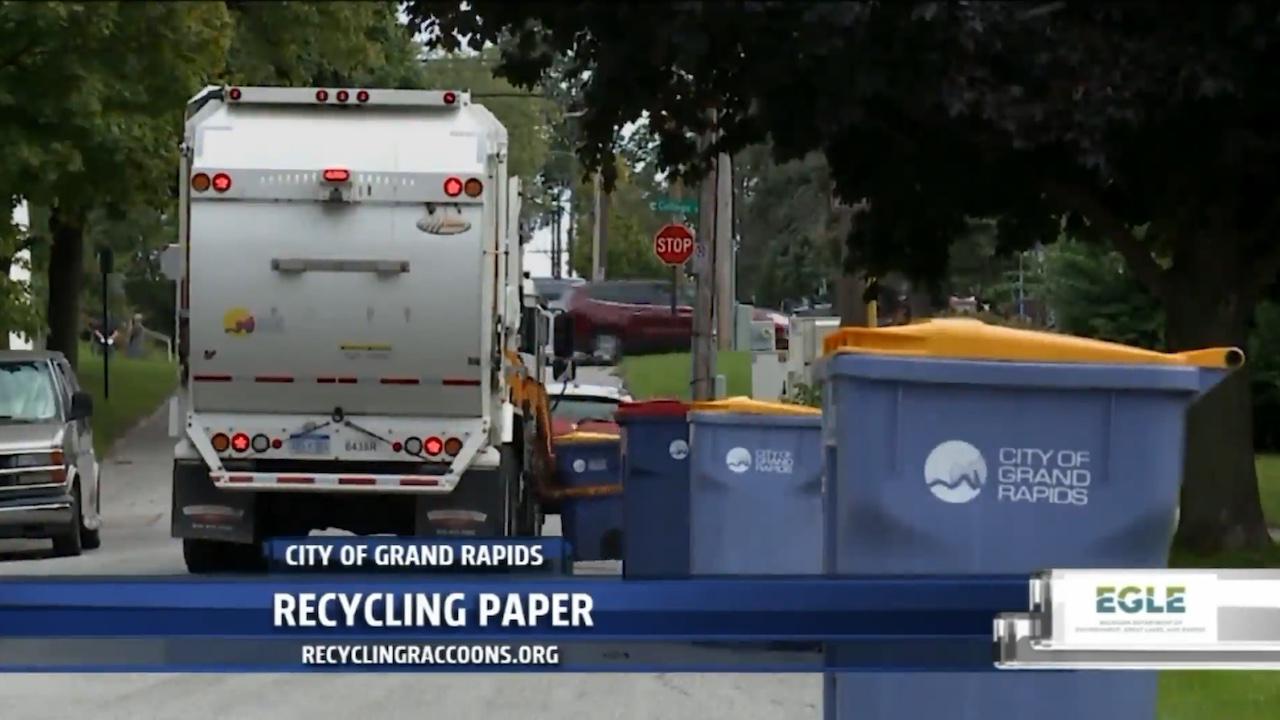
Also, learn more about what the City of Grand Rapids is doing to improve recycling efforts at grandrapidsmi.gov.
This story was originally published by WOOD-TV for "eightWest".
When you think about it, we have a lot of paper surrounding us on a daily basis, the books we read, letters we receive in the mail and at work and school, we use a lot of paper! That’s why it’s so important that we recycle, it not only reduces landfills but recycling paper saves energy and trees. We wanted to learn more about recycling paper, how to do it properly and how it can be turned into useful products. So, we partnered up with Michigan Department of Environment, Great Lakes and Energy, take a look!
We’ve partnered up with the Department of Energy, Great Lakes and Environment to talk about recycling many materials cardboard, plastic, metal and more. Even as a person who’s recycling for years, there’s so much to learn about how and what we should be recycling.
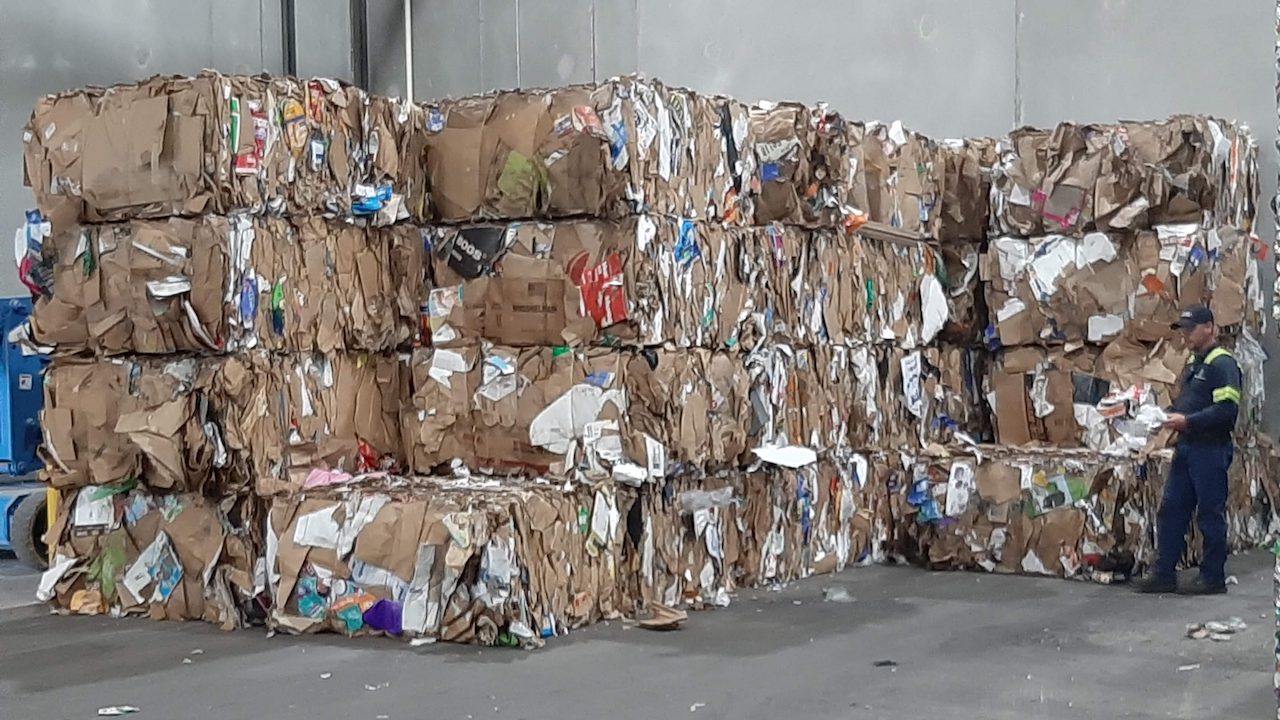
Think about it, these days, we have a lot of things delivered to us through the mail. While it’s convenient, it also uses a lot of cardboard! Cardboard boxes and packaging can be big and bulky, so we definitely want to find a good place for it. What we should be doing is recycling it. The Michigan Department of Environment, Great Lakes and Energy wants to encourage and educate everyone on how to do that best, so take a look!
When it comes to cardboard, one thing you want to do, is remove the tape, foam, and other packing materials before you recycle it, because these items get stuck in the recycling machines and can cause a lot havoc. With the holiday season coming up, this is really important!
After the last piece of pizza has been eaten, and the clothes from your online shopping spree have been hung with care, what do you do with all of those cardboard boxes? Our partners at TheMichigan Department or Environment, Great Lakes and Energy, or EGLE, are spreading the word on how we can recycle correctly.
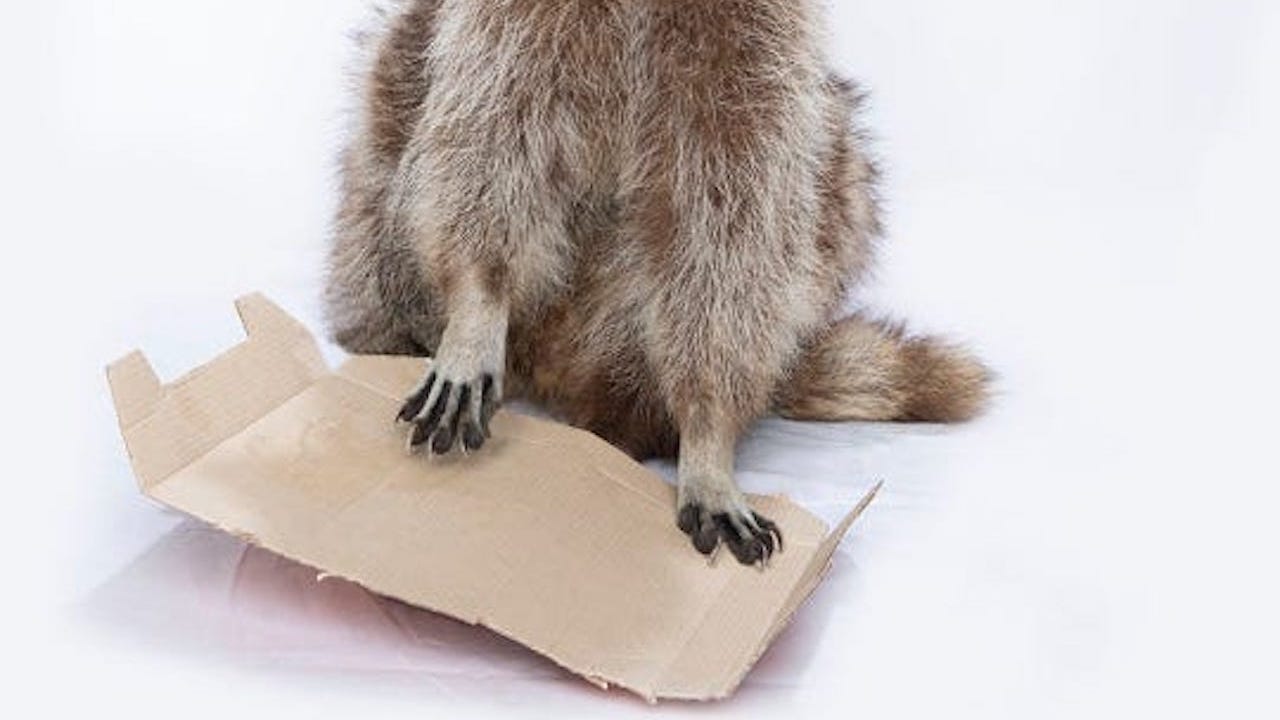
We've seen the cute recycling raccoons tell us how to take proper care of our plastics and glass, but they also have rules for cardboard. For instance, all cardboard boxes should be broken down and flattened when stored in the recycling container. Doing this makes transporting them easier, and helps the entire recycling process flow smoothly.
When it comes to pizza boxes, if the container is saturated with grease and debris, it is not recyclable. However, if the box is pretty clean, remove and throw away the pizza plate that comes on the bottom of the box, then break down the rest, and send it to the recycling center.
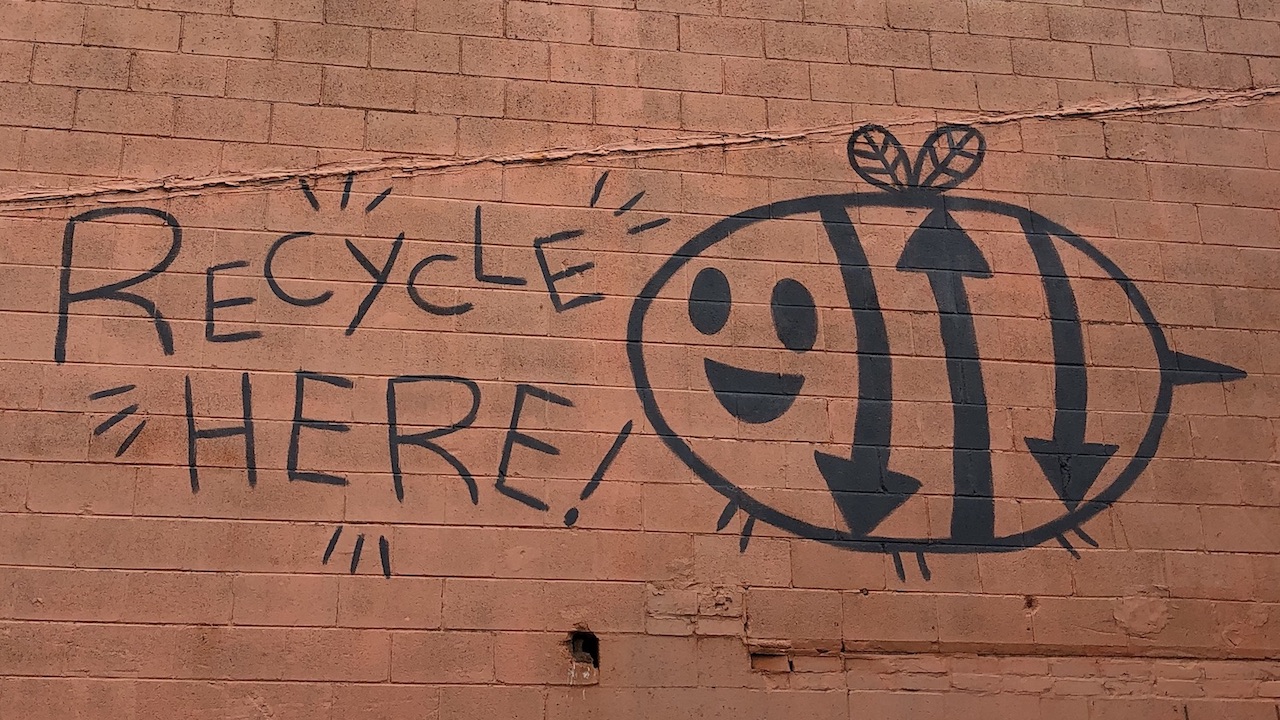
One center that is working with EGLE to teach people how to recycle, and to do it properly, is Recycle Here! Detroit. This center not only takes most items that you didn't or wouldn't think are recyclable, but they take the time to explain how to clean, break down and store it.
To learn more about Recycle Here! Detroit's recycling center, visit recyclehere.net.
If you want to improve your recycling habits, it’s best to listen to the experts.
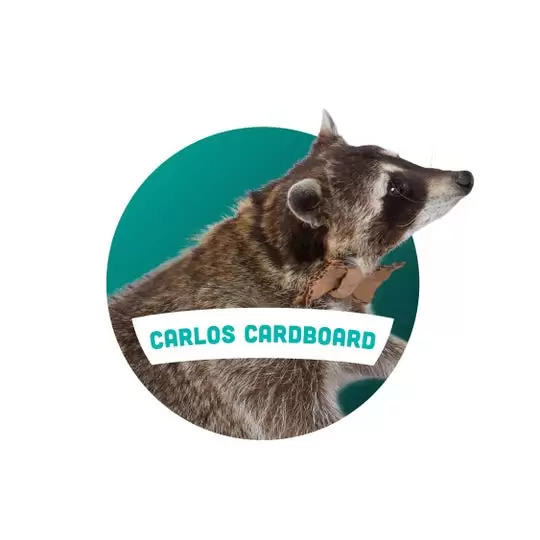
That’s why we asked Carlos Cardboard to sit down with us and clarify some of the most confounding cardboard questions. Carlos is part of the six-member Michigan Recycling Raccoon Squad, whose mission is to teach Michiganders what can — and cannot — be recycled.
These furry recycling champions are part of the Michigan Department of Environment, Great Lakes, and Energy’s (EGLE) Know It Before You Throw It education campaign, which kicked off this summer in every corner of the state.
EGLE’s goal is to double the state’s recycling rate to 30% by 2025 and ultimately reach 45%. Right now, Michigan’s 15% recycling rate is the lowest in the Great Lakes states region and ranks among the lowest in the nation.
Carlos is a cardboard connoisseur and obsessed with flattening. A snappy dresser, he has a bow tie for every day of the week. Most of all, he loves sharing best practices for recycling cardboard.
What kinds of cardboard are OK to recycle?
Great question! I reaaaallly love recycling cardboard, don’t you? It’s so … well … boxy! My favorites are tissue boxes, paper towel and toilet paper rolls, cardboard packaging and food boxes that you’d keep in the pantry – those are all good to go in the recycling bin. So, go for it!
Can I recycle my freezer food boxes?
Boxed containers made for refrigerator and freezer foods have added chemicals to keep the boxes from getting soggy and wet. That makes them difficult to recycle – but not impossible. I’d suggest checking with your local recycling provider to see if it accepts them.
Should I stack my boxes inside one another as a do-it-yourself recycling bin?
No. Boxes are bulky and take up extra room in the trucks that pick them up; flattening them saves space and makes the sorting process easier. Like I always say, “Flattery will get you nowhere, but flattening will!”
Are empty juice cartons recyclable?
Many communities accept cartons in their curbside recycling program, but not all. That’s because juice and milk cartons are actually made of two or three layers of paper, plastic and aluminum, which makes them trickier to recycle.
Should I peel off labels and tape from boxes before I recycle them?
Best recycling practice is to take the tape off. So, while you don’t have to remove them, your recycler would love it if you did.
Why doesn’t my recycler accept pizza boxes?
Grease and stuck-on food on pizza boxes ruins the cardboard for recycling. It can also ruin the other items in your recycling bin by getting them dirty and greasy. Want my secret? If the pizza box top is clean, I rip it off and recycle that portion. Then I eat all that gooey cheese left in the box and throw that part in the trash.
Should I remove staples from cardboard?
Nope! Staples are OK to leave in. Just make sure that cardboard is flat – just how I like it!
Overall, it’s important to keep in mind that every community has different rules about recycling. So be sure to check with your local provider to find out what’s accepted in your area.
Live in the D's Kila Peeples ventured to the Michigan Department of Environment, Great Lakes, and Energy (EGLE) to learn more about how to recycle glass correctly.
The "Know it Before you Throw It" campaign is helping people recycle glass the right way.
Here are the rules for recycling glass containers.
1) Rinse your container before throwing it in the recycle bin
2) Separate tops and lids from the jars
Kila also visited the Schupan recycling plant to see how the recycled glass is processed.
Here is the process after you recycle your glass:
Schupan's process for glass is very thorough. The glass comes from the retailer to the processing plant. Then it's separated by green, brown and clear. Next it proceeds up to the glass crushers. After that the glass is sent to glass recyclers in Dearborn.
Over 140 million pounds of glass is recycled per year at Schupan Recycling in Wixom. Because of Michigan's deposit law, Michiganders have a 90% recycling rate, one of the best in the country.
Remember, recycling clean materials leads to successful recycling!
To learn more about the Schupan recycling company visit, schupan.com.
Join the Squad!
Help Michigan become a leader in recycling again. Join the squad today. You don't need to be a raccoon – you just need to sign up!
After signing up for recycling news, you will receive occasional updates. We will not sell your email address to any third party at any time. View our privacy policy.
We use cookies to personalize ads, to provide social media features, and to analyze our traffic. We also share information about your use of our site with our social media advertising and analytics partners who may combine it with other information that you’ve provided to them or that they’ve collected from your use of their services. You consent to our cookies if you continue to use our website.