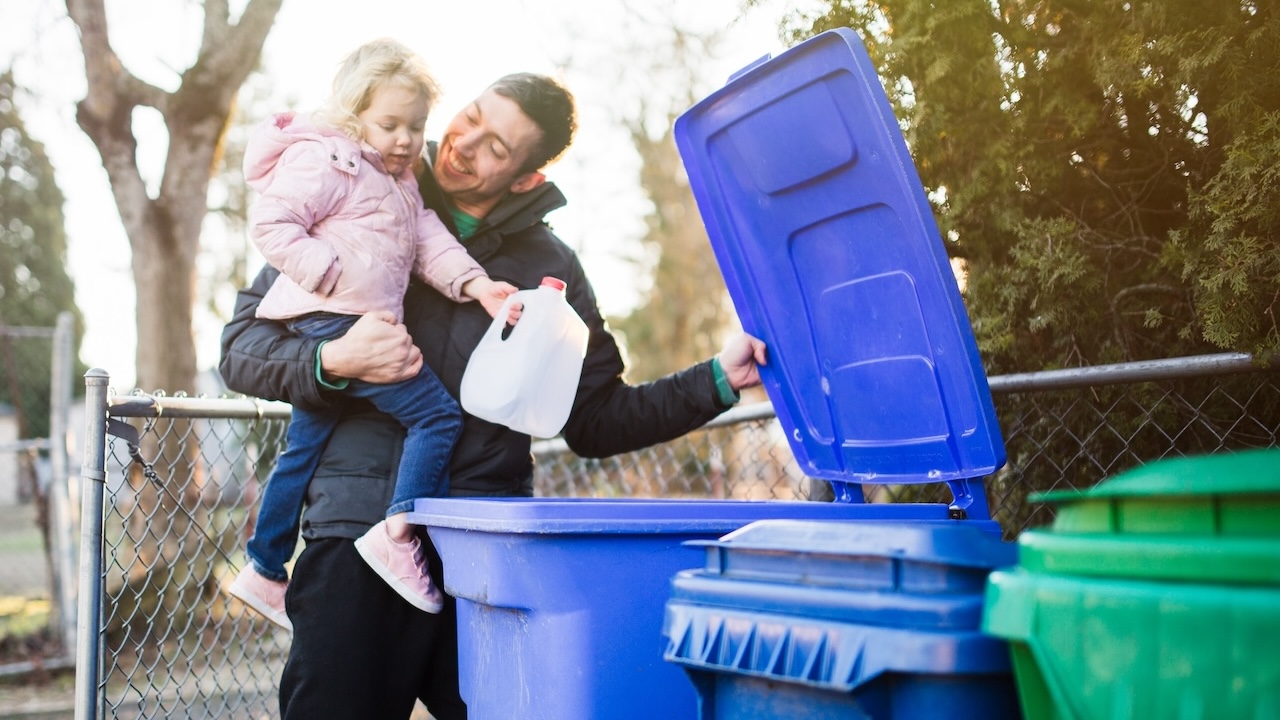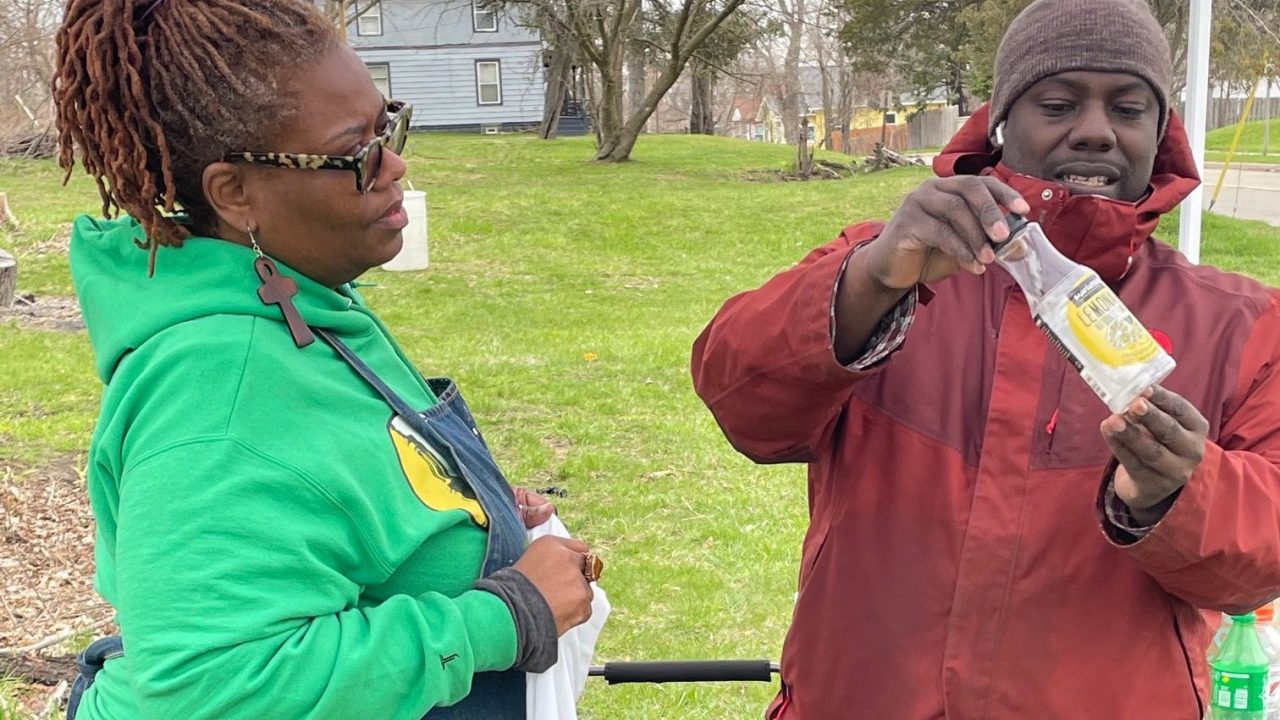
Watch two Michigan neighbors go head-to-head – and recycling bin to recycling bin – as they battle for the title of Recycling Champion in this riveting debut game show! For more information about recycling rules specific to your area, contact your local recycling provider.
Category: News
Announcements and press releases.
Recycled plastics gain new use
Recycling in Michigan is at an all-time high, but Michigan’s business and environmental leaders say the state can’t afford to rest on its laurels.
Now more than ever, companies in the Great Lakes State are desperately seeking to include recyclables in the manufacturing of new products, especially recycled plastics.
The challenge? Convincing Michiganders the materials they put into their curbside bins are actually being recycled and not dumped in a landfill.
“There’s a lot of misinformation out there about what really happens in recycling,” said Matt Flechter, recycling market development specialist with the Michigan Department of Energy, Great Lakes, and Energy (EGLE).
“We need people to know recycling does make a difference and that their choices matter,” Flechter said.
Brian Miller, regional sales manager for Cascade Engineering, based outside Grand Rapids, is well aware of just how big of a difference recycled items, particularly plastics, can make for companies that rely on them as raw materials to fashion into new products.
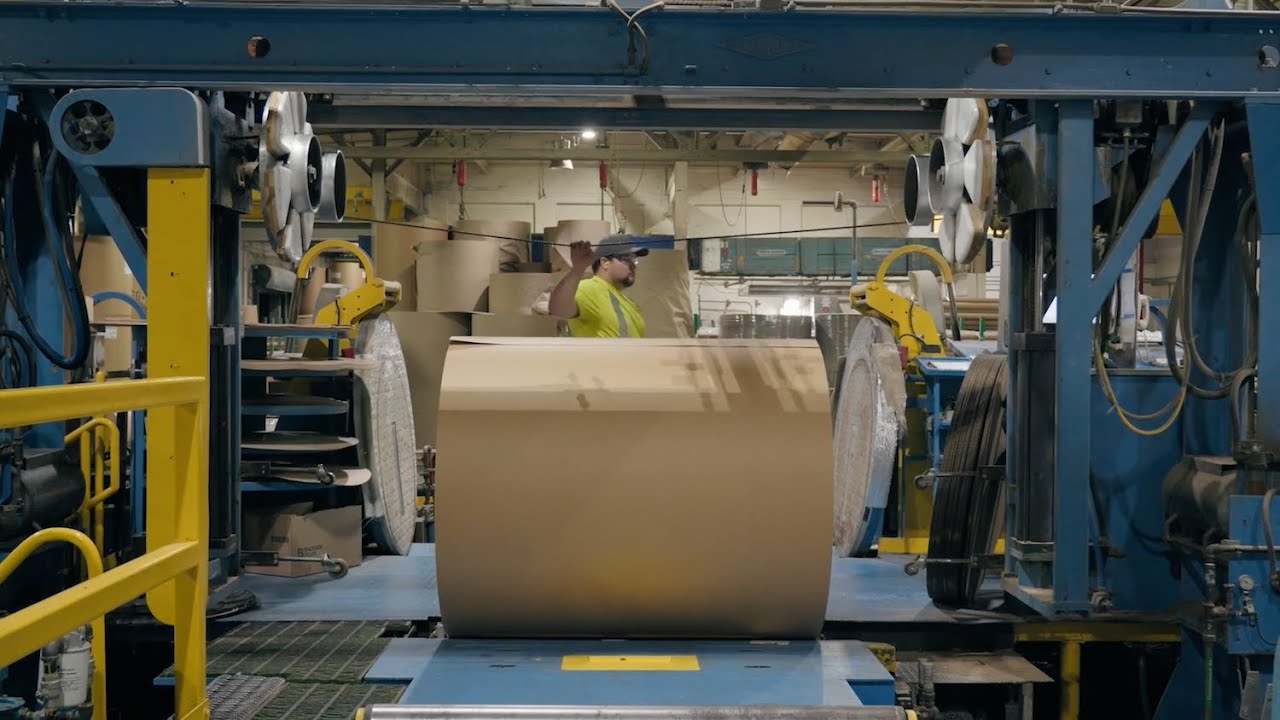
In 2022, Cascade was able to use 3 million pounds of material recovered through curbside programs. Half of that total came from curbside materials that were used in production of its EcoCart, a curbside waste and recycling cart that is made partly with bulky rigid plastic taken directly from recycling programs and partners who contribute recyclable plastics from the automotive, furniture and custom compounding industries.
“And the reason it’s only 50% is because we can’t get enough (recycled) materials,” Miller said.
“If we had enough materials, we could go to 100% curbside materials in the production of our wheels, our carts and dash mats in our automotive plants,” he added. “We wouldn’t have to go to other sources. We can keep this material in the state of Michigan and utilize it in products manufactured here in Michigan.”
“In my 25 years, I’ve definitely seen an increase in recycled materials, so much that we’re putting it in silos now,” said Ronald Hoppa Jr., Cascade Engineering plant manager. “This way uses millions of pounds of recycled material a year.”
Recycling can also make a different in individual workers’ lives. Just ask Horace Cheney, a Cascade Engineering material handler.
“It’s a good place to work for and they give everybody the opportunity to learn and move up and progress — and impact the environment too,” he said.
Recycling in Michigan is at an all-time high
Recycling in Michigan is at an all-time high, state environmental leaders announced today during ‘Recycling State of the State’ virtual press conference coinciding with Earth Week

Materials Michiganders recycled last year would fill the football stadiums at Ford Field, Michigan State University’s Spartan Stadium and the Big House at the University of Michigan
EGLE also announced today record-setting $15.6 million in recycling infrastructure grants to communities, non-profits and businesses across the state, including funding support for major new projects on tap in Detroit, Flint, Greater Grand Rapids and Alpena
Lansing, Mich. – Recycling in the Great Lakes State is now at an all-time high, leaders with the Michigan Department of Environment, Great Lakes, and Energy (EGLE) announced during a virtual “Recycling State of the State” press conference that coincides with today’s start of Earth Week 2023 (April 17-22).
The total amount of residential recycled materials being reported for fiscal year (FY) 2022 was 620,494 tons – that’s over 66,000 tons more than the previous new record set the year prior. Materials Michiganders recycled last year would fill the football stadiums at Ford Field, Michigan State University’s Spartan Stadium and the Big House at the University of Michigan. Michiganders recycled over 339,000 tons of paper and paper products during FY 2022, more than 154,000 tons of metals, more than 71,000 tons of glass, and over 45,000 tons of plastics and plastic products.
“We can all be proud that Michiganders are recycling now more than ever before,” EGLE Environmental Justice Public Advocate Regina Strong said this morning. “This equates to every person in Michigan recycling 124 pounds each year of cardboard boxes, milk cartons, soup cans, plastic bottles, glass bottles and jars, food waste, and other recyclable materials.”
In addition, EGLE today announced a record-setting combined total of nearly $16 million in grants through public-private partnerships including funding support for recycling infrastructure investments to help advance projects in Detroit, Flint, Grand Rapids and Alpena.
Strong was joined at the online news conference by Flint Mayor Sheldon Neeley; WM (formerly “Waste Management”) Great Lakes Area Vice President Aaron Johnson; Kent County Department of Public Works Director Darwin Baas; Detroit-based VMX International Founder and CEO Vickie Lewis; Alpena Mayor Pro-Tem and Northeast Michigan Materials Management Authority Chair Cindy Johnson; and, EGLE Recycling Market Development Specialist Matt Flechter.
“This tremendous accomplishment in our recycling activities and infrastructure investments represent a bipartisan effort in a historic partnership with Gov. Gretchen Whitmer and the Michigan Legislature in combination with the nonprofit sector and business community that Michigan has never seen happen before,” Strong said.
“Equally important, EGLE and the Whitmer administration are introducing new opportunities to promote recycling, help support our climate change goals, and create new jobs in communities that have been historically underserved by our state,” she said.
EGLE data show more Michiganders than ever – 75% of the state’s population – have access to recycling services. Since 2021, EGLE in collaboration with national nonprofit The Recycling Partnership have rolled out 48,468 new curbside recycling carts to communities around the state.
The expanded access is helping Michigan to steadily increase its recycling rate from what was historically the lowest in the Great Lakes region. The rate has risen from 14.25% prior to 2019, to 19.3% last year and now exceeds 21%, based on EGLE’s new 2023 analysis.
EGLE’s total allocation of $15.6 million in 2023 grants across the state is more than Michigan has ever invested in recycling infrastructure and technology, more than doubling last year’s record $7 million of investments. Recycling, reuse, and remanufacturing industries in Michigan create 72,500 jobs and contribute more than $17 billion to the state’s total economic output, EGLE data shows.
The funding is part of EGLE’s strategy to support recycling infrastructure, improve the quality of recyclable materials, and promote market development using the Renew Michigan Fund, which the Legislature created in 2019 to bolster the state’s recycling efforts. Gov. Whitmer and the state Legislature are committed to raising Michigan’s recycling rate to 30% by 2029 and, ultimately raise it to 45%, exceeding the national recycling rate of 32%.
EGLE’s 2023 data analysis reflects the state’s improved recycling performance is helping Michigan advance toward the goals of the MI Healthy Climate Plan, commissioned by Gov. Whitmer as a broad-based roadmap to a sustainable, carbon-neutral Michigan economy by 2050. Carbon neutrality is the global science-based benchmark for reducing greenhouse gas emissions to avoid the most devastating and costly impacts of climate change.
“These strategic investments by EGLE reflect the commitment of communities across Michigan to finding modern and scalable solutions across our entire recycling system,” EGLE’s Flechter said.
“It’s critical that EGLE continue to work together with the Michigan Chamber of Commerce, our partners in the Michigan Legislature, the private sector, nonprofits like The Recycling Partnership, and at the federal and local levels to ensure we achieve our state’s goals for sustainable operations,” Flechter said.
Recycling infrastructure projects EGLE touted during today’s press conference include:
- The new, state-of-the-art $35 million recycling processing facility WM (formerly known as Waste Management) is planning in Detroit, which has received a $465,000 EGLE grant. WM-commissioned research shows Detroit is one of five cities in North America that need capacity expansion and there is growing demand. WM plans to process up to 40 tons per hour and expects to receive recycled materials from residential, industrial and commercial properties. Upon completion, the WM facility in Detroit will be the largest of its kind in Michigan. This is a true hub and spoke model intended to open new opportunities for recycling across Michigan. Once opened, WM’s next steps will be to activate existing transload facilities in places like Traverse City, Kalamazoo, Tawas, Saginaw, Lansing, which will unlock the potential for curbside single stream recycling for residents. Outside the major metropolitan areas in Michigan today, most businesses only have the option for cardboard recycling. With WM’s new hub and spoke approach, all businesses will have the option for single-stream recycling.
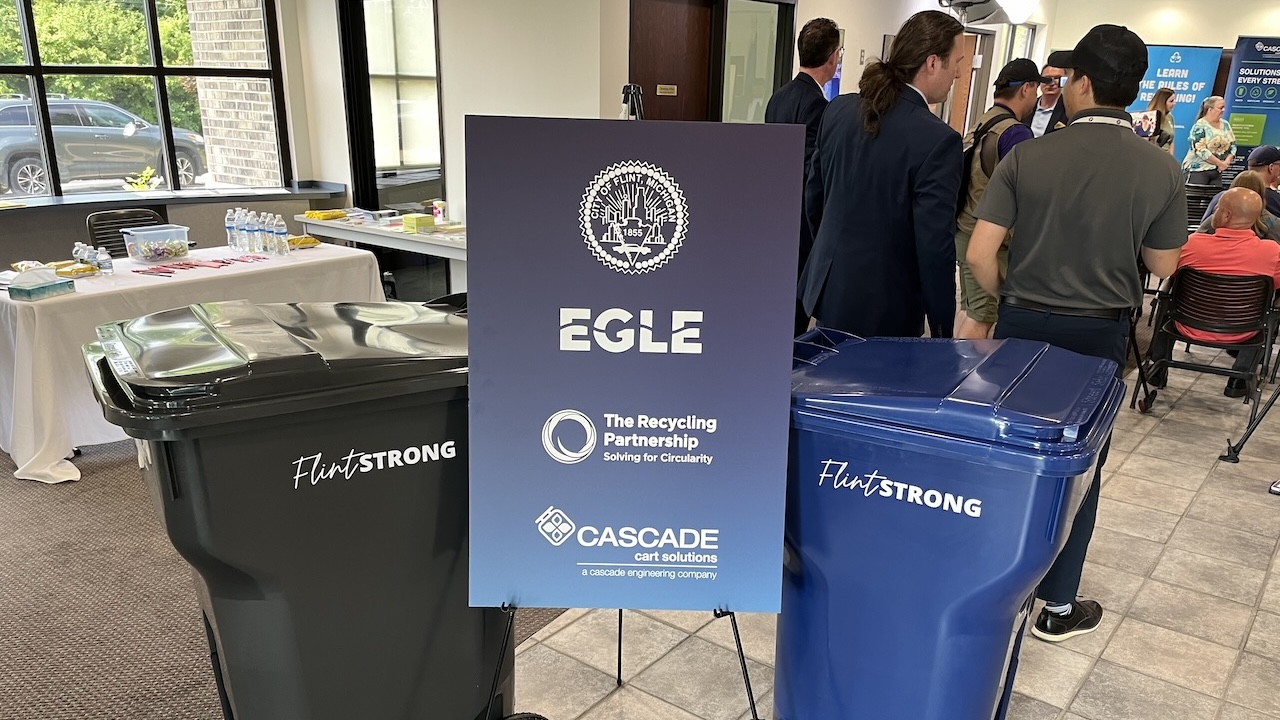
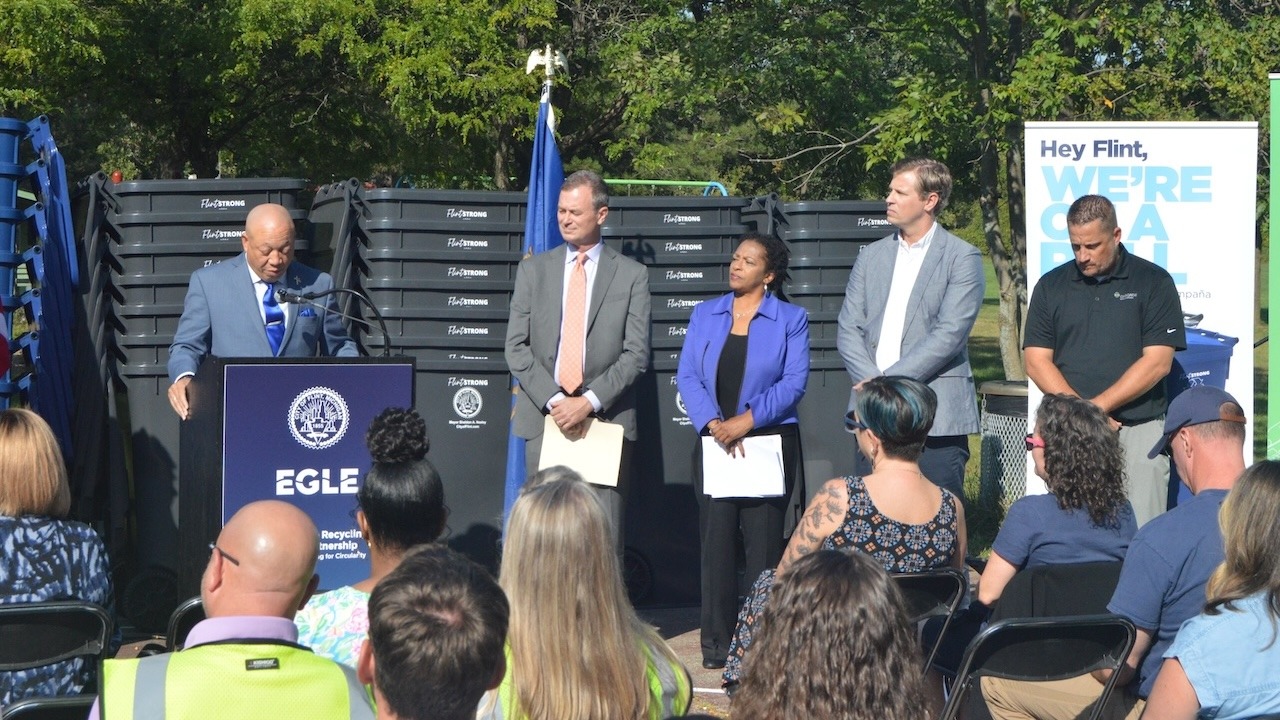
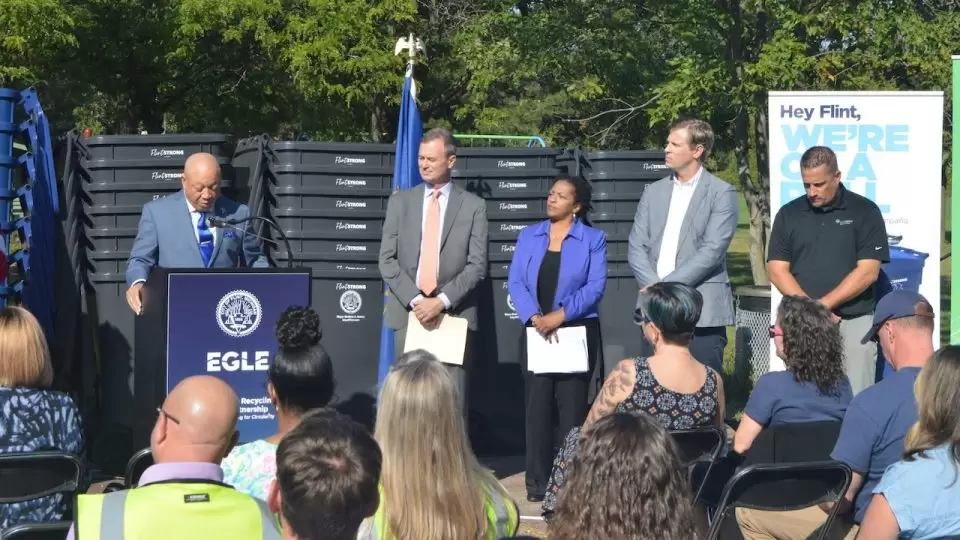
- The City of Flint is receiving a $1 million EGLE grant that Flint Mayor Sheldon Neeley says will go toward providing all 34,000 households in the city with a free 96-gallon recycling cart. The national nonprofit The Recycling Partnership is also pledging to support the new cart project with a grant of up to $3.3 million in additional funding for Flint. The city’s current recycling program requires the resident to provide their own bin to contain recyclable material at the curbside. Currently, most of the bins being used in Flint do not have lids and the fly-away material is a concern for a city that is fighting blight. The new carts are projected to increase the amount of materials recycled in Flint from 624 tons per-year to 5,400 tons per year, as well as improve resident participation and enhance safety for sanitation workers.
- The Kent County Department of Public Works (DPW) $350 million future Sustainable Business Park in Kent and Allegan County. The Sustainable Business Park, planned for 250 acres adjacent to the South Kent Landfill in Byron Center will be built on land initially purchased by Kent County to create a new landfill. The $4 million in EGLE funding will go toward infrastructure improvements such as utilities, roads and stormwater to prepare it for tenants.
- The Kent County DPW also received a $499,999 EGLE grant to purchase baler equipment to direct-bale old corrugated cardboard at its North Kent Transfer Station. That will eliminate the cost of transporting the old cardboard to be processed. The DPW is leveraging EGLE’s grant with $385,001 in federal funds to complete the $885,000 acquisition and installation in the existing transfer station building that is being converted to a recycling dropoff facility. The new dropoff site will improve recycling access, reduce double-handling of residential recyclables and reduce operational costs for residential and commercial recycling at the North Kent Station.
- And, the Kent County DPW was awarded a $406,000 EGLE grant to help buy new robotic sorting equipment to automate line sorting at its Recycling & Education Center, which processes recyclable materials from the greater West Michigan area. Kent County’s DPW is leveraging the EGLE grant with $174,000 in federal funding to complete the $580,000 purchase. The state-of-the-art technology will address both chronic staffing shortages and the rising cost of temporary labor as well as improve workplace safety and enable DPW staff to more efficiently process residential recyclables. DPW projects the return on investment and cost savings will effectively pay for itself within 12 months or less.
- Alpena County has received a new $2.7 million federal grant supported by EGLE and championed by U.S. Sen. Debbie Stabenow that will help fund its proposed new $5.4 million regional dual-stream material recovery facility (MRF). The new facility will process recyclables from Alpena County and Northeast Michigan. Proponents say the project, which received a $1 million EGLE grant last year, will serve as a model for rural recycling throughout Michigan and the United States. The new MRF will provide the capacity and capability of bringing materials from a six-county area, the majority of which is destined for landfill, to a processing facility where recyclable material will be sorted and sold to Michigan manufacturers for use as recycled content in their packaging or products.
- Detroit-based VMX International is the recipient of a $100,000 small business development grant from EGLE. VMX is an environmental firm headquartered in Detroit that works with businesses across the nation to properly recycle and dispose of items ranging from office paper to batteries. The EGLE grant will support VMX’s plan to build a new $50 million lithium-ion battery recycling facility headquartered in the City of Detroit. VMX expects to create 50-75 new high-paying, high-tech jobs and the building is tentatively slated to open in 18-24 months. The state-of-the-art facility will separate, dismantle and shred materials utilizing innovative technology to recycle lithium-ion batteries by separating out the rare earth materials from the old batteries VMX collects to be brought back into the loop for manufacturing new lithium-ion batteries, creating a circular economy.
The results announced today come from a more than four-year review of statewide data by EGLE researchers that aligns with the 2019 launch of EGLE’s national award-winning “Know It Before You Throw It” recycling education campaign featuring the Recycling Raccoon Squad. The campaign’s aim is to increase recycling and promote best practices to reduce contamination of materials with unsuitable or non-recyclable items in recycling bins and at drop-off sites. EGLE data show four in five Michiganders report taking action and changing their recycling behavior for the better following EGLE’s campaign.
Flint Mayor Neeley, Genesee County state legislators and Flint business leaders celebrate grand opening of new recycled plastics processing facility

Flint-based company will become Michigan’s largest plastic film recycler and is looking to hire Flint workers to fill 25-30 good-paying jobs starting in May 2023
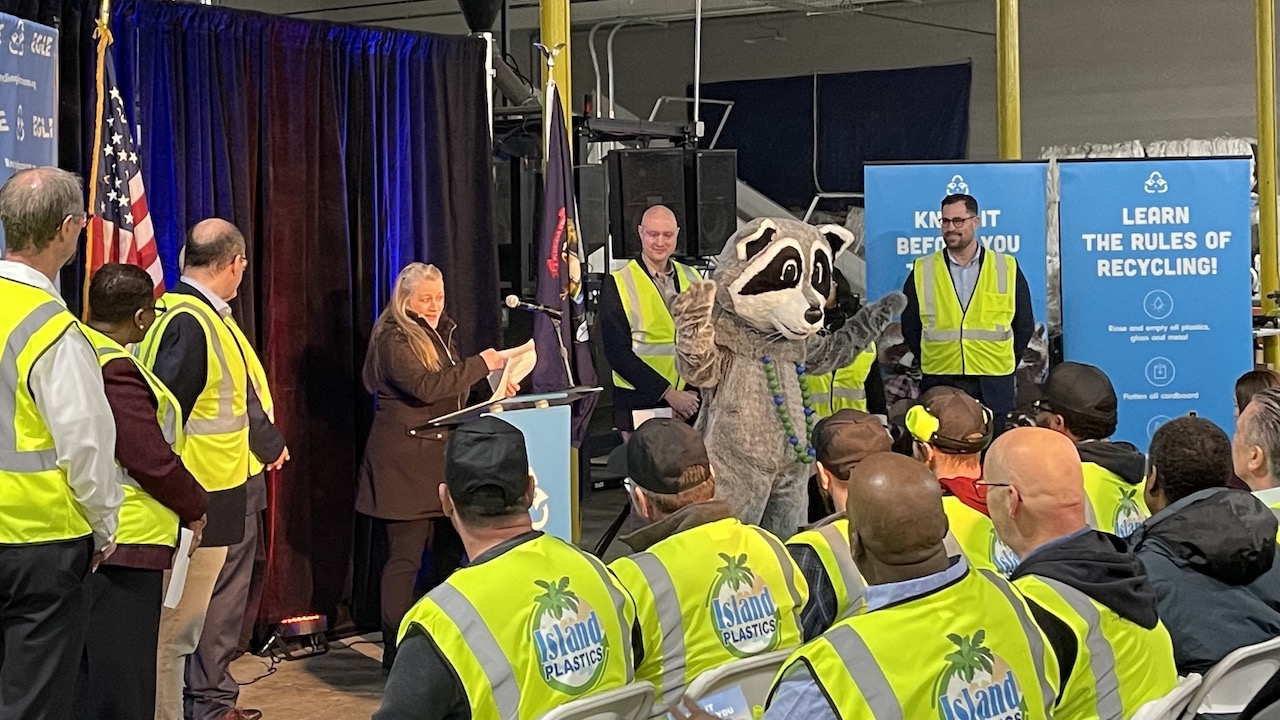
FLINT, Mich. – Officials with the Michigan Dept. of Environment, Great Lakes, and Energy (EGLE) today joined with Flint Mayor Sheldon Neeley as well as Genesee County state legislators and business leaders to unveil Flint-based ACI Plastics new $10 million-plus plastics recycling facility.
“We are proud to welcome ACI Plastics’ new facility and congratulate their entire team on this milestone achievement,” Mayor Neeley said this morning during a press conference at the plant, located at 2000 Bagwell St. in Flint, between Lapeer St. and Lippincott Blvd.
“The company’s installation of state-of-the-art processing and cleaning technology will make ACI Plastics the largest processor of post-consumer recycled plastic film in Michigan,” Neeley said.
The firm is partnering with Luxembourg-based Ravago – the world’s largest distributor of plastic resins serving more than 55 countries across the globe – to ship its recycled plastic pellets to business customers throughout the United States. The plastic film, such as shrink wrap and bags used in product packaging, comes from companies such as Meijer, Amazon and Walmart.
The recycled pellets from ACI Plastics will be shipped and turned into new products by Michigan-based consumer goods and automotive companies, including Petoskey Plastics and Grand Rapids-based manufacturer Cascade Cart Solutions, which makes plastic recycling carts and bins.
“We like going to sleep every night knowing that you’re not only doing something to help the environment but also providing a good living for many employees while enjoying a successful business,” said ACI Plastics President Scott Melton.
ACI Plastics employs about 120 workers at its four locales (two in Flint and one each in South Carolina and Nebraska). The company has received funding support for its investment through a $300,000 Renew Michigan EGLEinfrastructure grant and a $150,000 Business Development Program performance-based grant from the Michigan Economic Development Corporation. Flint, Michigan was chosen for the project over a competing site in Ohio.
The Renew Michigan funding is part of EGLE’s strategy to support recycling infrastructure, improve the quality of recyclable materials, and promote market development using the Renew Michigan Fund, which the Legislature created in 2019 to bolster the state’s recycling efforts. Gov. Gretchen Whitmer and the state Legislature are committed to raising Michigan’s recycling rate to 30% by 2025 and 45% by 2030, exceeding the national recycling rate of 32%.
“Michiganders are recycling now more than ever before, and it’s because of the technological advances and tremendous work being done by companies like ACI Plastics,” EGLE Acting Director Dan Eichinger said during the news conference.
“This progress represents a bipartisan effort in a historic partnership with the Michigan Legislature in combination with the nonprofit sector and business community that Michigan has never seen happen before,” Eichinger said.
Added EGLEEnvironmental Justice Public Advocate Regina Strong:“Equally important, EGLE and the Whitmer administration are introducing new opportunities to promote recycling, help support our climate change goals, and create new jobs in communities that have been historically underserved by our state, including Flint, as well as Detroit, Pontiac and Grand Rapids.”
At its peak later this year, ACI Plastics innovative recycling system will process 24 million pounds of post-consumer plastic film each year with the ability to increase capacity another 24 million pounds per-year if demand warrants.
ACI Plastics also is announcing it will create 25-30 new jobs to operate the plant with wages from $15-$20 per hour. The company is looking to hire its new employees beginning in May 2023 and is committed to prioritizing applications from City of Flint residents.
“I am extremely impressed by what we’re seeing happen here at ACI Plastics in Flint and across Michigan with regard to increasing investments in recycling,” said state Rep. Cynthia Neeley (D-Flint). “By helping to build out domestic markets for recycled goods, we help to support key Michigan industries like automotive, construction materials, and paper product manufacturing, while also preserving the environment for the next generation.”
ACI Plastics’ cutting-edge wash line will allow for the recycling of Michigan-produced recycled plastic content to be kept in the State of Michigan for reuse rather than be landfilled or shipped to other states/countries for recycling.
Maintaining the quality of recycled materials so that they can be used in manufacturing of new products is a persistent challenge. This challenge is being addressed by the investment of ACI plastics with the support of funds from EGLE and MEDC.
“I welcome public investment in businesses like ACI Plastics that divert materials from Michigan landfills, boost local economies, and support the largest push in state history to promote recycling activities,”said state Sen. John Cherry(D-Flint).
Each year, more than 380 million tons of plastics are produced globally. Less than 10% of these plastics are reused or recycled, leading to significant accumulation and waste as products are incinerated, dumped in landfills or lost in the environment. Investments like this to support a circular economy for plastics is a key part of Michigan’s work to reduce climate change and work toward the 45% recycling goal identified in the MI Healthy Climate Plan, the broad-based roadmap to a sustainable, carbon-neutral Michigan economy by 2050.
Many companies have made commitments to drastically increase their use of recycled content in their packaging or products including Coca-Cola Co., PepsiCo, Keurig Dr. Pepper, Danone and Unilever. Using recycled content in packaging reduces life-cycle environmental impacts and helps to create markets for the material that Michigan residents recycle at the curb.
Here’s the challenge: There’s not enough plastic recycled for companies to meet mandates or their public commitments. That is why Michigan is investing in the NextCycle Michigan Initiative to attract innovative businesses to the state and form partnerships such as its collaboration with ACI Plastics to connect the recycled content supply chain – from the curb to new products made in Michigan.
The recycling process also helps ensure a steady supply of material for manufacturers to work with. ACI Plastics’ new approach will reduce carbon emissions and pollution by using waste plastic as a new source of raw material and transforming it into pellets that can be recycled repeatedly without loss of quality.
ACI Plastics represents the kind of business growth that helps Flint and Genesee County succeed, noted Flint & Genesee Economic Alliance Executive Director Tyler Rossmaessler.
“This project is an exciting win for Flint and for the entire state and underscores our region’s continued commitment to building a cleaner future. We are grateful that ACI Plastics has chosen to expand operations in Flint,” said Rossmaessler. “The Flint & Genesee Economic Alliance will continue to work side by side with our government partners and companies like ACI Plastics to see Flint and Genesee County grow.”
Recycling in Michigan has reached a new all-time high, up 35.4% from pre-2019 levels, according to a 2022 EGLE analysis. This equates to Michigan now capturing over 500,000 more tons of cardboard boxes, milk cartons, plastic bottles, organic material, and other recyclables, equating to more than 110 pounds per person each year.
Since 2019, the state has nearly doubled the number of households with available curbside recycling carts and drop-off sites. Nearly 3 million households — three-quarters of the state’s population — now have access to recycling in their communities.
EGLE statewide and regional data show Michiganders’ understanding of recycling best habits has increased in every corner of the state. EGLE leaders attribute much of Michigan’s improved recycling success to the state’s Know It Before You Throw It awareness push featuring the Recycling Raccoons that launched in 2019. The campaign was honored as the 2019 national “Campaign of the Year” by industry trade publication Waste Divemagazine.
Proper recycling practices protect the environment — and recycling workers
Proper recycling practices — as encouraged by the Michigan Department of Environment, Great Lakes, and Energy (EGLE) through its “Know It Before You Throw It” education campaign — are not only good for the environment and economy.
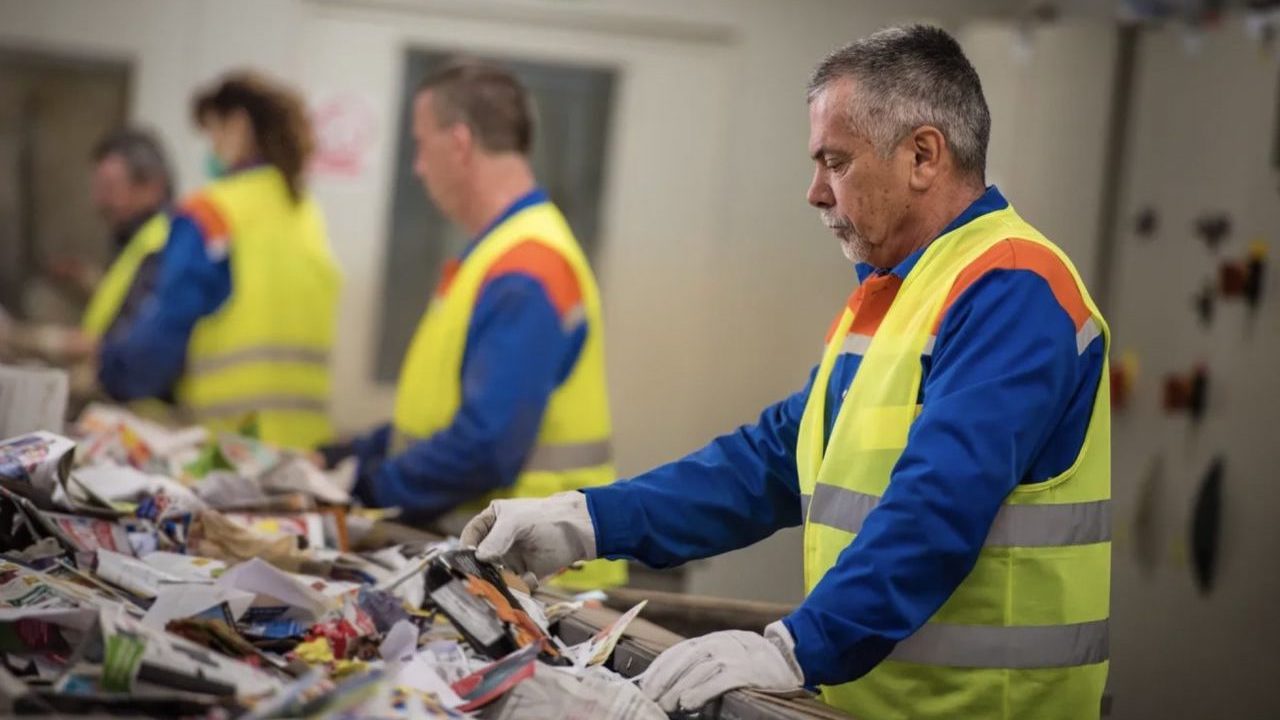
They’re also important for the safety of people who work at any materials recovery facility (MRF) throughout the state where items placed in recycling bins are sorted.
Just ask Matt Van Benten, operations supervisor at the Resource Recovery and Recycling Authority of Southwest Oakland County (RRRASOC) MRF in Southfield.
“Safety is huge here — it’s our No. 1 concern, and it’s our No. 1 problem,” Van Benten said as he sorted through a box of potentially dangerous items that were pulled from the MRF’s conveyor line, including a bladed instrument, scissors and a cellphone.
“These are the kinds of things we don’t want to see,” he said. “There are homes for these, but your local recycling bin is not it.”
The dangers posed by sharp objects such as blades and scissors are obvious — they can injure workers who are sorting items moving down the MRF’s conveyor line. They’re particularly troublesome because they’re often hidden among material such as paper and plastic, Van Benten said.
“You don’t know where it is,” he said.
Electronic devices such as cellphones and old laptops are a no-no because they’re powered by lithium-ion batteries, which can explode when crushed or shaken.
“We’ve had explosions and fires here caused by things like this,” Van Benten said. “We’d like to have the message out there … this is not how you deal with that. Please, do it the right way.”
Information on proper disposal of hazardous waste is available on the EGLE website.
Check out the accompanying video for more advice from Van Benten on how to help keep recycling workers safe.
Recycling and Romance Blooms in Metro Detroit
PONTIAC — Since they met for the first time at a church — and as they laughingly admit were instantly “smitten” — you could say the union of Damany Head and Shanell Weatherspoon was a match made in heaven.

So it’s no surprise that their love for the environment and running the successful minority-owned recycling company they co-founded together continues to fuel their romance.
But the dynamic duo who created Essential Recycling in Pontiac isn’t content to expand recycling opportunities in commercial sectors of Southeast Michigan by educating the construction and skilled trades industries on the value of returning materials beyond metal to the supply chain for reuse as new products.
They’re also improving the lives of metro Detroit’s Black youth by introducing graduating high school seniors to potential careers in the recycling industry.
‘Recycling Is Essential‘
Essential Recycling contracts with HVAC distributors, contractors, scrappers and property management companies to capture refrigerant, scrap metal, cardboard, wood pallets and other materials for recycling in Wayne, Oakland and Macomb counties.

“We’ve defined pretty clearly our niche in the industry based on our belief that recycling is essential to building better communities,” said Head, who has a bachelor’s degree in mechanical engineering from Ohio Northern University and worked as an engineer for General Motors in Pontiac before he and Weatherspoon started their firm in 2008.
“Small-business owners, especially in the HVAC market, don’t necessarily have enough labor resources to take care of the back end of their businesses,” Head said.
“We provide them with a unique solution to recycle their materials, which saves them and their employees a significant amount of time and gives back to communities by improving the environment so it doesn’t go to a landfill,” added Head, who serves on the Pontiac Regional Chamber of Commerce board of directors.
New Life for Old HVAC Units
Essential Recycling crews began collecting recyclable material from heating, ventilation and air conditioning contractors and distributors in 2009.
Many HVAC parts can be recycled. Recyclable components include coils, motors, sheet metal, compressors, cardboard boxes, wood and plastic pallets, furnaces, copper tubing, brass fittings and metal ductwork.
It’s illegal to leave old residential or commercial HVAC systems in the trash because they contain chemicals that can harm the environment. Leftover refrigerant, for example, can deplete the ozone layer if allowed to evaporate. When installing a new system, responsible heating and air conditioning contractors will not only remove the old equipment but also haul it away from homes and workplaces.
All HVAC system materials require separating and sorting before going into individual bins for recycling and/or transporting to recycling centers. That’s a painstaking chore which represents unproductive time and energy by skilled HVAC installers who could better spend their time in service to more clients.
That’s why environmentally friendly HVAC companies reach out to Essential Recycling to take over, explained Weatherspoon, who has a bachelor’s from Michigan State University and a master’s from the University of Michigan-Flint and who worked for General Motors from 2000 until 2019 before taking on more responsibilities at the family business.
“Our goal is to recycle or dispose these items with the planet in mind,” said Weatherspoon, adding that she experienced an “awakening” about protecting the environment when she was pregnant in 2008 with the first of the couple’s three children while living in Pontiac.
“I looked around my community and I did not see a lot of people recycling and that got me thinking about what we could do to save the planet for our child,” she said. “Damany and I started having conversations about our obligation to the earth, and that sparked our passion for recycling and sustainability.”
Metro Detroit, the most densely packed region of Michigan, has almost 2 million single-family homes and condominiums. With the HVAC sector slated to grow an estimated 6% over the next few years, Essential Recycling is poised to support an industry that is lacking a strong and diverse workforce pipeline.
“Damany and Shanell are rising stars in the recycling world,” said Matt Flechter, a recycling market development specialist with the Michigan Department of Environment, Great Lakes, and Energy (EGLE), who coordinates the state’s effort to ensure materials put at the curb make their way into new products made in Michigan.
“They are bringing the knowledge, experience and perspective necessary to help Michigan reach new heights,” Flechter said.
“They also know that growing a diverse workforce is helping to create job opportunities from HVAC wastes that once were buried in the ground but now, because of their work, are creating value in Michigan’s economy.”
Promoting Recycling Workforce Diversity
Achieving diversity in the waste and recycling industry is no easy task.

The most precise data available from the Equal Employment Opportunity Commission — which covers the broader “waste management and remediation services” category — estimates 81% of the overall workforce is male and nearly 74% of executives or senior managers are white males. This compares with 52% and 59%, respectively, across the U.S. private sector workforce based on EEOC data.
The lack of diversity isn’t lost on the founders of Essential Recycling.
They’ve teamed with the Pontiac United Education Coalition, Oakland County Michigan Works! Pontiac, Goodwill Industries of Greater Detroit,the Pontiac Chamber and the Talent Development Coalition in Pontiac to work collaboratively with metro Detroit high schools to provide paid internships in recycling and to provide training and soft skills development for adults to obtain employment in the burgeoning recycling field.
“Recycling creates jobs by keeping materials once thought of as waste circulating in the economy, and it’s important to continue to grow these jobs in all communities, for all Michigan residents,” said Othalene Lawrence, EGLE’s Equity and Inclusion Officer.
“Shanell and Damany are making a positive difference in the lives of the students they mentor by showing them that they, and Michigan, can prosper by actively working to reduce waste, save resources and protect the climate,” Lawrence said.
The Essential Recycling initiative is supported with a $135,000 EGLE grant. The push to promote recycling education aligns with the goals of EGLE’s national award-winning Know It Before You Throw It recycling awareness campaign featuring the Recycling Raccoons.
“As a Black-owned company, living and operating in a legacy city like Pontiac, we are attempting to demonstrate the viability of participating in an accelerating growth industry such as recycling,” Head said.
“We have invested a tremendous amount of time, money and resources into training and providing services to people of color over the last 10 years,” he added. “The investment in environmental justice around recycling has long been missing and people of color have not received equitable funding or technical assistance to build successful, scalable businesses that serve legacy cities.”
Hope for the Future
Dante Thomas, 21, a Pontiac native and 2019 graduate of West Bloomfield High School, is an emerging Essential Recycling trailblazer who credits Head for inspiring him to consider a career in recycling.

“Damany has been a very good role model for me and is helping me learn major key skills for life,” said Thomas, who has worked for the company since 2020 as a recycling specialist hauling and separating recyclable materials from HVAC companies, medical facilities and multifamily housing complexes.
“It’s funny, because growing up I was one of those kids who threw everything away even though we had recycling bins at school and at home,” Thomas said. “But once you get the hang of it, it’s easy to recycle and you’re helping the planet. I really plan on staying for a while at Essential.”
The Talent Development Coalition has about 65 high school students from across metro Detroit who are pursuing employment in skilled trades. Many are expressing interest in the recycling industry thanks to Head’s role as a mentor and business leader, according to Carlton Jones, a program coordinator.
“Damany and Essential Recycling have been instrumental in supporting our effort to help people understand the hiring needs of the recycling industry,” Jones said.
“Most people, not just young people but also adults, don’t understand the opportunities that exist in the recycling profession,” he said. “Once we begin to educate them and they hear about all the exciting possibilities from Damany, you can see that lightbulb come on and they say, ‘Yeah, I can see myself doing that.’”
Ann Arbor’s new ‘SamurAI sorting robot’ is a plastics recycling game-changer
ANN ARBOR — Michigan is now one of the nation’s three best states for recycling plastics, according to a recent Wise Voter study.
And in Ann Arbor, recycling plastics is about to get easier thanks to the pending arrival of a state-of-the-art SamurAI sorting robot that will enable the city’s recycling agency to process and sell more plastic than ever before.
“This is a big, exciting deal — our new robot is a technological marvel that’s going to be a game-changer for how we can more safely recycle certain types of plastics in greater amounts and with more efficiency than we’ve ever previously experienced,” said Ukena, the CEO of Recycle Ann Arbor (RAA), a nationally acclaimed nonprofit credited with creating Michigan’s first curbside recycling program in 1978.
“At the same time, as more and more communities begin utilizing these SamurAI Sorting Robots moving forward, we can help address our nation’s plastics pollution crisis,” Ukena said.
RAA is already revitalizing recycling in Southeast Michigan with a new materials recovery facility (MRF) that ensures recyclable materials are sorted and sold to manufacturers for use in new products.
The MRF opened Dec. 1, 2021, at 4150 Platt Road in Ann Arbor, after 12 months of construction to complete a $7.25 million overhaul of the facility, which had been defunct since 2016. Its physical redesign and operating strategy are both driven by a zero-waste ethic with the aim of supporting an effective, sustainable recycling system.
Flying With EGLE

The MRF construction project was supported by the Michigan Department of Environment, Great Lakes, and Energy (EGLE) with an $800,000 grant. It aligns with the goals of EGLE’s national award-winning Know It Before You Throw It recycling education campaign featuring the Recycling Raccoons that adorn street corner recycling bins throughout Ann Arbor.
As a regional hub designed to process 34,000 tons annually with a single shift, the MRF provides much-needed recycling infrastructure in Southeast Michigan.
In addition to serving the city of Ann Arbor under a 10-year contract, RAA is processing materials from the city of Ypsilanti and the surrounding area. These cities had previously shipped recyclables out of state for sorting. Ann Arbor is saving $640,000 annually compared with the previous contract, under which materials were shipped long distances for processing. The RAA team anticipates the savings from processing materials on-site will continue to grow as the market for recyclables improves.
Despite the overwhelming success of the new MRF, determining how to improve its plastics recycling performance remained a major obstacle that confronted RAA and continues to vex recyclers across the nation.
Problem Plastics

Plastic is a synthetic material that is cheap, strong and resistant. While its characteristics make it an appealing material for production and consumption, those same characteristics are problematic for the environment — mainly because it does not easily decompose and ends up in the ocean, landfills or littering streets.
At the Ann Arbor MRF, plastics are sorted into separate piles based on their melting temperatures. Historically, RAA staff has manually sorted certain plastics for recycling but because they are hard to identify as they speed by on a conveyor belt, too much of their plastics ended up going to a landfill.
Enter the SamurAI sorting robot manufactured by Machinex Technologies.
The SamurAI Solution

The machine is an adaptive robot powered by artificial intelligence to more accurately and efficiently identify specific types of plastics and other materials for safe, fast and effective sorting, especially in identifying and selecting polypropylene (PP) plastics. PP is the type of plastic labeled No. 5 on packaging for such grocery items as yogurt, cottage cheese, sour cream and butter containers.
Now, with the introduction of its SamurAI robot, RAA is looking to increase its recycling capacity of PP to at least 360 tons annually and divert it from landfills.
Recycled PP is commonly used by manufacturers to make caps, cups, automotive parts, paint cans, transport packaging, housewares and other products. PP has been collected for recycling for less than a decade. But collection and sorting is growing, with MRFs across Michigan making major investments, some fueled by support from EGLE, national nonprofit The Recycling Partnership and other entities.
RAA’s SamurAI acquisition was funded through a $200,000 grant from EGLE and an additional $186,000 from the Polypropylene Recycling Coalition, an initiative of The Recycling Partnership.
Benefits of RAA’s SamurAI solution include its capabilities to:
- Identify distinguishing features on recyclables in the same way as the human eye.
- Recognize recyclable material in dirty, tangled and constantly changing conditions, including the introduction of new packaging and designs.
- Continually improve and learn from operating experience.
- Reach up to 70 processing “picks” per minute, which nearly doubles the average speed of a person who separates items by hand at a recycling processing center.
- Remove small and light materials using a unique integrated suction system which reduces RAA’s daily operation costs.
- Protect workers from handling dangerous items, such as batteries, needles, and household chemicals.
SamurAI’s Safety ROI
The importance of improved employee safety and better working conditions at the Ann Arbor MRF is especially significant, Ukena noted.
The U.S. Bureau of Labor Statistics’ 2020 Employer-Reported Workplace Injuries and Illness report showed the rate of injuries and illnesses per 100 full-time workers at materials recovery facilities rose from 3.6 in 2019 to 5.1in 2020.
“Processing recycled materials by hand is a dangerous profession for humans — you can get hepatitis from a needle stick, abrasions and cuts are common, hands get caught in the baling process and on conveyer belts. In many ways, it’s more dangerous work than being a firefighter,” Ukena said.
“It’s also important to know our SamurAI robot won’t replace workers. It just improves quality control and reduces safety risk in the workplace,” he added.
Profit Potential
Approximately 3.5 billion pounds of rigid polypropylene packaging is sold every year nationally, but only a very small fraction is recycled. RAA hopes to improve the recycling of PP at its new facility when the SamurAI robot becomes operable this fall.
“There is strong national growth in the sale and use of polypropylene, because it is a polymer
of choice for food service and packaging due to its positive health profile and potential for
recycling collection and recycled content,” said Matt Flechter, an EGLE recycling market development specialist.
Major retailers, dairy brands and quick-service restaurants are shifting from polystyrene – commonly referred to as Styrofoam – to PP, particularly in food and food service applications, because they seek a material that can be sorted by local MRFs.
RAA projects the SamurAI’s faster sorting speed will result in increased revenue from RAA’s sale of its recycled plastics. As a result, it expects to provide an average of $72,000 annually to city of Ann Arbor coffers and generate a new funding source for all its Washtenaw County municipality partners.
“We are confident there is going to be a high demand for recycled polypropylene for the foreseeable future, because being able to put that on a product label signals a commitment by name-brand companies that they’re using recycled materials in their product lines,” Ukena said.
How and what you can recycle depends on where you live and what you are trying to recycle. To learn more about recycling in Michigan, visitwww.RecyclingRaccoons.org.
Here’s a ’dirty’ secret about the benefits of composting in Michigan

BAY CITY – Former high school science teacher, current online educator and avid gardener/composter Emily Piper recently moved from Phoenix to Bay City to be closer to her parents.
Piper unabashedly professes she is “wildly passionate” in her dedication to improving the environment and reducing, recovering and recycling wasted food while diverting those materials from landfills to prevent climate change.
“I grew up in the 1990s when everything was love the earth and conservation,” laughs Piper, who works as a content manager for Cambium Learning Group.
So she was eager to discover whether she could find the same top-quality composting and recycling convenience in Michigan she’d found while living in major metropolises around the U.S.
Turns out, Piper had nothing to worry about.
She learned about a new pilot food scrap collection program open to residents of Bay City and Saginaw created by Sarah Archer, the CEO of Iris Waste Diversion Specialists, Inc., with support from the Michigan Department of Environment, Great Lakes, and Energy (EGLE).
“I want to live in a sustainable way and reduce my impact on the environment,” Piper said.
“Composting conserves resources. I have big dreams and a small back yard that my dogs pretty much own, but I eventually plan to build a green house where I’ll grow vegetables, lettuce and other greens, all with compost that I’ll receive from Iris.”
How It Works

It’s easy and fast for Bay City and Saginaw residents to enroll in Iris’s food scrap collection program.
Iris also has a commercial food scrap collection in Genesee and Saginaw counties, where they currently travel onsite to retrieve food scraps from four businesses inside the Flint Farmers Market (Willow’s Garden Juice Bar, Penny’s Café, Flint Food Works, and Sweet Peaces Veggie Bistro), as well as the Flint Crepe Company, The Grafted Root in Grand Blanc and the House of Fortune in Saginaw.
“We’ve tried to make this experience simple, affordable and hassle-free,” Archer said. “We’re thrilled by the outpouring of support and sign-ups we’re getting from folks for both our commercial and residential food scrap collection services.”
Residential subscribers in Bay City and Saginaw can start by calling 855-2GO-ZERO (855-246-9376) or emailing info@iriswds.com to sign up. You can also visit www.iriswds.com for more details. Your personal information will remain confidential and will never be shared, Archer pledges. The monthly fee is $20.
Iris provides subscribers with two containers for managing food scraps. A kitchen pail is designed for countertop use when preparing food. When it’s full, you empty the contents of the kitchen pail into a 5-gallon bucket.
The 5-gallon bucket is to store food scraps between collection days. An easy-to-use lid is included with each bucket. The 5-gallon bucket is the container to set out on your pickup day, when Archer and her team arrive at your house or garage every week. Subscribers are responsible for maintaining the buckets’ cleanliness, but Iris also offers a swap-out service where they bring clean buckets for an extra $8 a month.
The scraps are delivered to 5Heart Earthworm Farm in Birch Run where Archer’s husband, Darrell Reed, processes the materials into worm castings, or manure. The worm castings are a natural alternative to fertilizer that improves soil health and boosts plant growth.

Subscribers agree to participate in three surveys providing feedback about the service through the duration of the pilot campaign, which ends Feb. 28, 2023.
And, as a “thank-you” for completing the surveys, subscribers will receive 30 pounds of worm castings in a 5-gallon bucket at the program’s conclusion. The worm castings can be safely used on all plants, trees, shrubs and lawns. Instructions are included. You also have the option of designating your bucket of castings to your city parks department.
Food for Thought
There are many ways for Michiganders to compost that are applicable beyond the Iris service footprint.
Among the tips that Archer recommends to all composters is storing scrap food buckets in a low-light, dry location to reduce odors. To absorb liquids and make bucket cleaning easier, place a sheet of newspaper at the bottom of the bucket before adding scraps. And to keep insects out of the bucket, always keep the lid on when not in use.
Types of food scraps that are ideal for composting include raw fruits and vegetables, coffee grounds and filters, tea leaves and natural tea bags, banana peels, eggshells and outdated leftovers — all with produce stickers, rubber bands and twist ties, which are nonrecyclable, removed. Meat, dairy, fats, oils and grease, as well as salty foods, should go in the garbage, not into food scrap bins.
In addition, by visiting EGLE’s Home Composting Guide, Michiganders can quickly become do-it-yourselfers and learn how to compost in their own backyard. They can also contact local municipal offices to find if there is a community garden nearby that takes food scraps and organic materials.
The idea of starting a compost pile at home or the workplace can be a little intimidating to newcomers, Archer concedes. That’s why the compost advocacy experts at Iris are so valuable.
“The most common mistakes we see are non-compostable materials like plastic bags and plastic knives and forks getting mixed in with the food scraps,” Archer said. “The beauty of subscribing to Iris is that if you’re still unsure about how to compost, you can store your organic materials until we pick them up each week and ensure that they find a better use than just sending it to the landfill.”
‘It’s Cool to Compost’
Before this year, residential food scrap diversion programs were non-existent in the largely rural Great Lakes Bay Region.
EGLE announced a $194,000 grant to Iris Waste Diversion Specialists in early 2022 to help expand its food scrap collection infrastructure and processing capabilities while establishing the residential pickup service in partnership with the cities of Saginaw and Bay City and with approval from the Mid-Michigan Waste Authority Board.
“This pilot project is a labor of love – we’re really excited to expand composting in the Great Lakes Bay region,” Archer said. “Our vision is to help people learn it’s cool to compost.”
Established in 2004, Archer’s company has achieved national certification as a Women’s Business Enterprise and as a woman-owned small business through the Women’s Business Enterprise National Council, the nation’s largest third-party certifier of businesses owned and operated by women in the U.S.
The Iris grant is part of EGLE’s strategy to promote composting as a way to prevent food waste such as kitchen scraps, leftovers and other organic materials from going into Michigan landfills.
Michigan saw a total of 51.1 million cubic yards of solid waste enter the 67 landfills across the state in 2021, according to the annual solid waste report EGLE released in May. Food waste represents roughly 30% of that total — about 15 million cubic yards — that could find a better use like composting.
Composting produces what gardeners call “black gold,” a nutrient-rich soil supplement that holds moisture and helps gardens grow. The activity is especially good for the environment. Unlike landfills that can release methane, a greenhouse gas that contributes to climate change, composting breaks down organic material without sending methane into the atmosphere.
"We're going to try to increase awareness about our program all summer," Archer said. "Not just our program, but composting in your backyard, if that's a better option for you.
“Our goal is to fill in the gap for people who can't compost outdoors. Not everyone can compost in their own yard. Someone who lives in a retirement home or an apartment complex may not have a yard, or may not have a yard where its conducive to composting. Our service provides them with an option to sustainably manage their food scraps."
Pingree Detroit prioritizes people, planet and profits
Company hires veterans to fashion products out of automotive material destined for landfill

All Jarret Schlaff really wanted to do was create meaningful employment for Detroit military veterans.
He accomplished that with Pingree Detroit, the company he founded in 2015, but he also wound up creating something that helps the environment.
“We’re a social impact cooperative,” Schlaff said of his business, which keeps automobile materials such as leather, seat belts and airbags out of landfills. “We prioritize people, planet and profit.”
Pingree Detroit, now based at 15707 Livernois, initially made tote bags with repurposed car leather while sharing space with Anew Life Prosthetics in Detroit in 2017. Eventually, seat belts and airbags were added to the raw material mix, expanding Pingree’s product line. It now also handcrafts home goods, sneakers, dog leashes, backpacks and wallets.
“We’re a worker-owned design and manufacturing company that’s zero waste and carbon negative,” Schlaff explained. “And we share 77% of the profit with the workers and the neighborhood where we’re based.”
Pingree is also earning praise from Michigan environmental officials. They cite the company as a shining example of how household and other types of recycling not only help the planet by reducing waste and greenhouse gas emissions that cause climate change, but also boost the economy.
“It can be much more efficient and cost-effective for manufacturers to reuse materials that have already been made than to start from scratch,” said Tracy Purrenhage, recycling specialist for the Michigan Department of Environment, Great Lakes, and Energy (EGLE).
“For example, it takes far less energy to melt down and reuse a glass bottle than it would to make a whole new glass product out of sand. That makes the economy more efficient and allows manufacturers to keep the price of their products as low as possible.”
EGLE was so impressed by Pingree’s business model that it awarded the company a $10,000 Recycling Market Development Grant. Pingree also was accepted into the EGLE-led NextCycle Michigan program, which supports companies in their recycling, recovery and reuse initiatives.
Creating American jobs
Pingree’s products are fashioned from the scrap that automakers and suppliers have left over from their production and research-and-development activities. The material is either donated to Pingree or sold to the company at below-wholesale prices, Schlaff said.
“These are world-class materials designed for performance, longevity and to be lightweight,” he said. “They’re everything you want in a material.”
Schlaff, who grew up in Waterford and Pontiac, has lived in Detroit since graduating in 2010 from Oakland University, where he earned a bachelor’s degree in public administration and public policy while also pursuing environmental and business studies.
But despite his environmental background, which also included interning for a year in what was then called Michigan’s Office of Pollution Prevention, he wasn’t necessarily looking to start a recycling-based business when he formed Pingree.
Rather, he was primarily trying to assist Detroit veterans after randomly having conversations with a couple of them who were facing adversity.
“I didn’t start the company with a product in mind,” Schlaff said. “I started it with wanting to make an impact. These guys were about my age, and I told my buddy that someone should do something about this. Then it dawned on me that that someone could be me.”
He then had a series of conversations with people in the community about how best to aid veterans.
“The answer to those questions was that folks were looking for gainful, living-wage work where they could work with their hands and be part of a purpose-driven environment again,” he said.
And thus, after further consideration of exactly what the company should make, Pingree Detroit was born.
“Once we landed on a product, the immediate question was, how can we make something sustainable that changes the conversation?” Schlaff said. “My passion is offering sustainable solutions. That’s my purpose for being here. And so when we landed on a product, immediately the mind went to, what waste stream can we use, and how can we offer something in the market?”
The company’s 10-person workforce consists of Detroit residents, including veterans, some of whom live within five blocks of its manufacturing facility.
For those new to the trades, Pingree underwrites the cost of an eight-week training program in either industrial sewing, leather crafting or shoemaking.
Every product comes with a “maker tag” bearing the name and picture of the veteran or Detroiter who handmade that Pingree piece. Every worker also gets a share of every dollar of profit.
Pingree products are available for purchase on its website, pingreedetroit.com, which also lists retailers that stock them.
So far, Pingree’s products have diverted 17 tons of car seat and steering wheel leather from landfills.
“If we can avoid the economic costs of contributing to climate change while creating jobs and creating American-made alternatives to those that are made in China from nonrecyclable materials,” Schlaff said, “we just see that as a winning strategy.”
West Michigan composting king turns ‘worm poop’ into ‘black gold’

GRAND RAPIDS — Luis Chen is Grand Rapids’ self-proclaimed “worm poop” king, and he couldn’t be more proud of the title.
Chen is the owner of Wormies, a composting business that specializes in vermicomposting (composting with worms) and serves more than 300 households and businesses in Michigan’s second-largest city.
Key to Chen’s operation is the production of “castings” — yes, worm manure — that are combined with food scraps to create organic, microbe-rich fertilizer and soil for farmers, gardeners and Michigan’s emerging industry of cannabis home-growers. He’s recently launched a new venture with the state’s legalized cannabis industry to provide enriched soil mixes and sustainable solutions for growers.
“My team’s mission is to change the way Greater Grand Rapids manages organic waste by achieving 100% diversion from landfills,” said the 42-year-old, who started Wormies in 2017 with help from family, friends and city government approval.
“Our vision is to see Wormies composting in every Grand Rapids neighborhood,” Chen said. “We want Grand Rapids to set the standard as the best stewards for responsible waste management in the United States.”
Food for Thought

Wormies’ approach to composting is unique. While many large composting companies use only one or two raw inputs, like cow manure from large farms or yard waste, Wormies carefully sources its inputs to avoid pesticides, herbicides, antibiotics and microplastics.
Chen’s select choice of soil ingredients range from food scraps, worm castings and other various animal manures to spent brewery grain and common mushroom substrates such as straw, hardwood sawdust and coffee grounds.
“Our process is painstakingly detailed and requires many steps,” Chen said. “It’s like making wine — the longer it takes, the better it gets.”
His firm has become so successful that Chen is looking to expand in 2022 from a current 1/4-acre location in Jenison to a new, 13-acre site in Cascade Township that will feature a state-of-the-art regenerative natural ecosystem farm, pollinator gardens and a biodiversity pond that will increase production of its highly sought-after premium soil product line.
Leaders of the Michigan Department of Environment, Great Lakes, and Energy (EGLE) are so impressed with the quality of Chen’s work they awarded him a $275,000 Renew Michigan infrastructure grant this year to support his move to the new facility. In addition, EGLE’s NextCycle Michigan initiative provided private sector volunteer coaches and mentors who helped Wormies design the new site and began the process of getting local government building permit approval.
The NextCycle Michigan initiative and Renew Michigan infrastructure grants to Wormies and other Michigan recycling companies totaling a record-setting $7.3 million in 2022 mark the largest push in state history to promote activities that divert materials from Michigan landfills, boosts local economies, supports businesses owned by minorities, women, veterans and people with disabilities, and promotes Governor Whitmer’s climate change priorities through reductions in greenhouse gas emissions.
Wormies’ efforts to inform and educate West Michigan residents about the benefits of composting align with EGLE’s Know It Before You Throw It awareness campaign featuring the Recycling Raccoons that highlights recycling best practices.
“Michigan is trending toward becoming more environmentally responsible,” said Aaron Hiday, EGLE’s Compost Program coordinator. “That’s because Michiganders are getting more knowledgeable about the importance of recycling properly and reducing the amount of food we routinely toss in the garbage instead of diverting or recycling for a better purpose.”
EGLE’s grant to Wormies is part of the state’s strategy to promote composting as a way to prevent food waste such as kitchen scraps, leftovers and other organic materials from going into Michigan landfills.
Michigan saw a total of 51.1 million cubic yards of solid waste enter the 67 landfills across the state in 2021, according to the annual solid waste report EGLE released in May. Food waste represents roughly 30% of that total — about 15 million cubic yards — that could find a better use like composting, Hiday noted.
Composting produces what gardeners call “black gold,” a nutrient-rich soil supplement that holds moisture and helps gardens grow. The activity is especially good for the environment. Unlike landfills that can release methane, a greenhouse gas that contributes to climate change, composting breaks down organic material without sending methane into the atmosphere.
Keeping It Simple

There are many ways to compost. By visiting EGLE’s Home Composting Guide, Michiganders can quickly become do-it-yourselfers and learn how to compost in their own backyard. They can also contact local municipal offices to find if there is a community garden nearby that takes food scraps and organic materials.
The idea of starting a compost pile at home or the workplace can be a little intimidating to newcomers, Hiday concedes. That’s why compost advocacy experts such as Chen are so valuable.
“Luis is a really good communicator, especially about tutoring people on what needs to go in and what should not go into their composting pile,” Hiday said. “Non-compostable materials like plastic bags and plastic knives and forks are the most common mistakes we see.
“People should feel confident that if they have a backyard or outdoor space, they can do it themselves. But the beauty of a business like Wormies is that if you’re still unsure about how to compost, you can send your organic materials to their professional composters to ensure that they find a better use than just sending it to the landfill.”
Wormies Works Wonders
“We understand it can be difficult for residents or businesses to compost in urban areas, and that is how this idea for Wormies was born,” Chen said. “Our goal is to make composting easy and convenient.”
He introduced a subscription service where members sign up for Wormies to arrive at homes and businesses and deliver a 5-gallon bucket that is used for collecting food scraps while cooking or for depositing uneaten food after a meal. Wormies then returns for a weekly or biweekly food scrap collection and brings the material back to its farm, where it feeds it to worms.
“The worms eat our scraps and their poop is used to make what we like to call ‘bio-intelligent soil,’” Chen said. “It’s soil that is composed of a wide range of microorganisms and nutrients, so it contains protozoa, nematodes, beneficial bacteria and fungi that are great for growing healthy produce.”
The composting service costs $8 for each pickup. Subscribers receive four 24-ounce bags of worm castings for every eight pickups. Customers also can choose, if they aren’t going to use their bag, to donate it to local organizations that partner with Wormies, including Our Kitchen Table, Dwelling Place, MLK Freedom School, New City Neighbors and many others.
In addition, Wormies provides expertise to the DIYers in Grand Rapids by offering consulting for households and businesses to help make waste streams clean and sustainable, ranging from designing a personalized compost bin for residential use that prevents stagnant piles to hosting workshops for employers, employees and clientele to learn about composting.
“We need to provide education on what good food is, increase access to growing your own food and create access to growing your own food with local soil and compost,” Chen said.
“When we buy soil from local garden stores, the soil we get is often shipped from outside Michigan. We need every Michigander to get on board and buy locally made soil from Michigan farmers and companies such as Wormies.”