Michiganders’ recycling rate up 35.4% to all-time high as access grows, new EGLE analysis shows

To continue the momentum of the national award-winning “Know It Before You Throw It” campaign, and coinciding with the start ofEarth Week (April 18-22), EGLE also announced a record $7 million-plus in infrastructure and NextCycle Michigan grants in the largest-ever push to improve recycling opportunities across the state during 2022, particularly impacting Detroit, Pontiac, Flint, Grand Rapids, Alpena and the U.P.

LANSING – Recycling in Michigan has reached a new all-time high, up 35.4% from pre-2019 levels, according to a new analysis released today by the Michigan Department of Environment, Great Lakes, and Energy (EGLE).

EGLE also announced today more Michiganders than ever have access to recycling services. Since 2019, the state has nearly doubled the number of households with available curbside recycling carts and drop-off sites. Nearly 3 million households – three-quarters of the state’s population – now have access to recycling in their communities.

In addition, EGLE has announced grants to business and local government partners in communities across the state totaling over $7 million, more than Michigan has ever invested in recycling infrastructure and technology and far surpassing last year’s record $4.7 million. Among the communities benefitting from EGLE’s newest investments are Detroit, Pontiac, Flint, Grand Rapids, Alpena, Marquette and two Upper Peninsula townships.

“Michiganders are recycling now more than ever before,” EGLE Director Liesl Clark said during a virtual news conference this morning. “This tremendous accomplishment represents a bipartisan effort in a historic partnership with the Michigan Legislature in combination with the nonprofit sector and business community that Michigan has never seen happen before.

“Equally important, EGLE and the Whitmer administration are introducing new opportunities to promote recycling, help support our climate change goals, and create new jobs in communities that have been historically underserved by our state, including Detroit, Flint, Pontiac, and Grand Rapids,” Clark said.

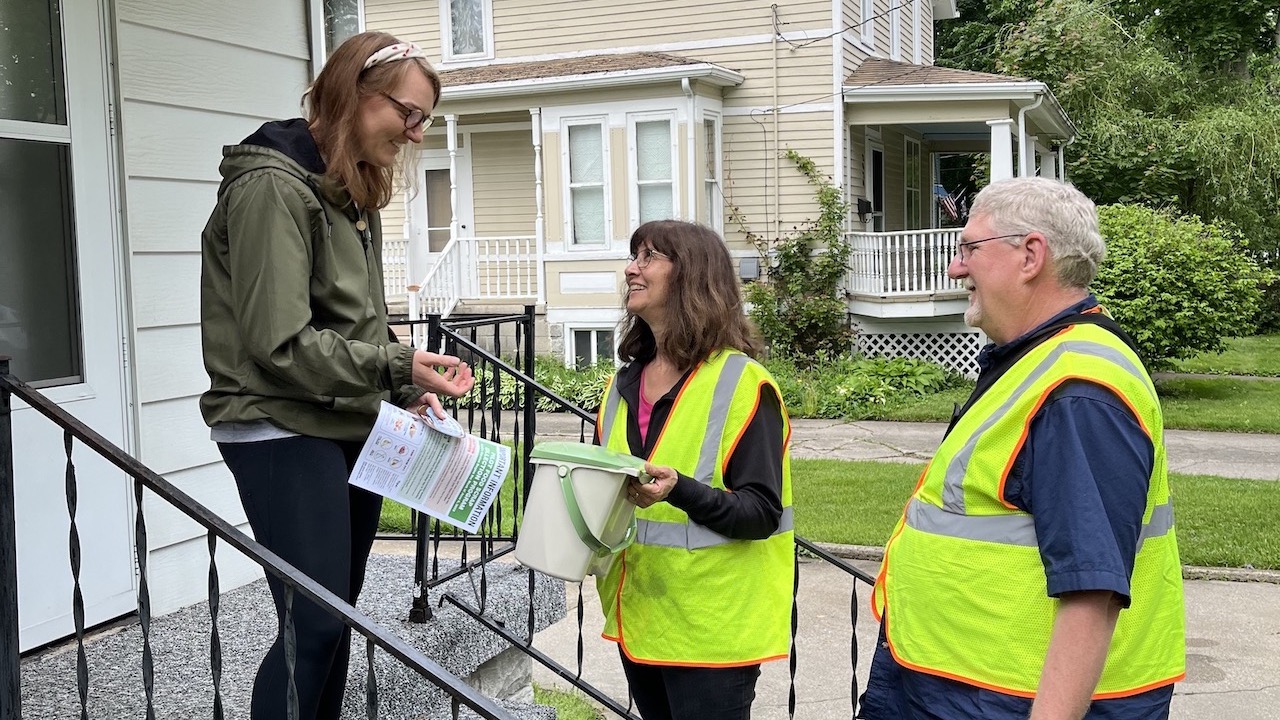
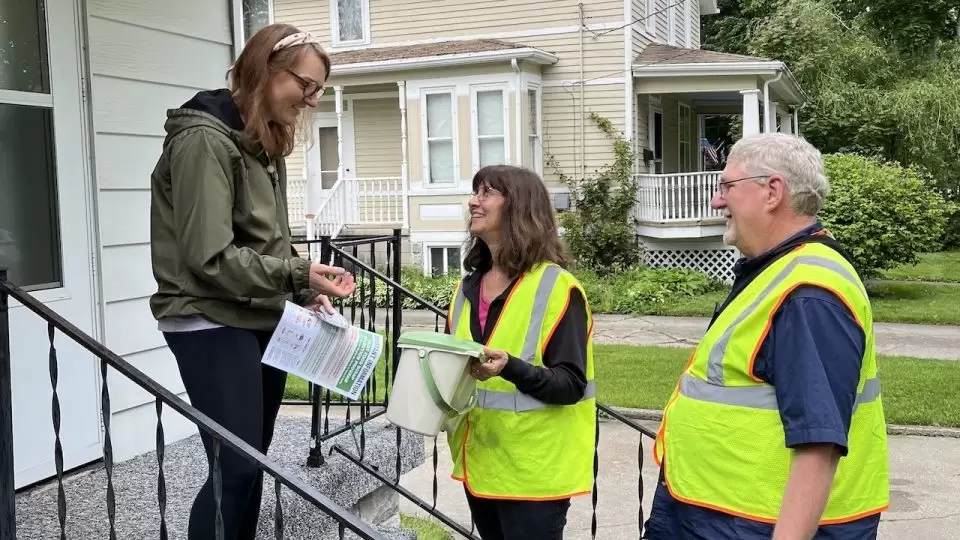
The results come from a more than three-year review of statewide data by EGLE researchers that coincided with the launch of EGLE’s national award-winning “Know It Before You Throw It” recycling education campaign featuring the Recycling Raccoon Squad. The aim of the campaign that began in 2019 is to increase recycling and promote best practices to reduce contamination of materials with unsuitable or nonrecyclable items in recycling bins and at drop-off sites.

The data released today shows:

  • Michigan has steadily increased its recycling rate from what was historically the lowest in the Great Lakes region. The rate has risen 35.4%, from 14.25% prior to 2019 (a newly revised EGLE estimate from previous projections of 15%), and peaking to 19.3% now, based on the EGLE analysis.
  • This equates to Michigan now capturing over 500,000 more tons of cardboard boxes, milk cartons, plastic bottles, organic material and other recyclables equating to over 110 pounds per-person each year.
  • Michigan’s recycling industry is now processing 440,828 tons of material annually (not including organic materials, e.g. that explains the 60,000 ton discrepancy from the previous bullet) which Michigan businesses are using to put back into local economies. Sorted recyclable material from Michigan households and businesses feed into new more environmentally friendly products and support business models which are based on the use of recycled materials.
  • More Michiganders than ever have access to recycling opportunities. Roughly 75% of Michigan residents – approximately 2.9 million households – now have curbside recycling access or drop-off sites available.
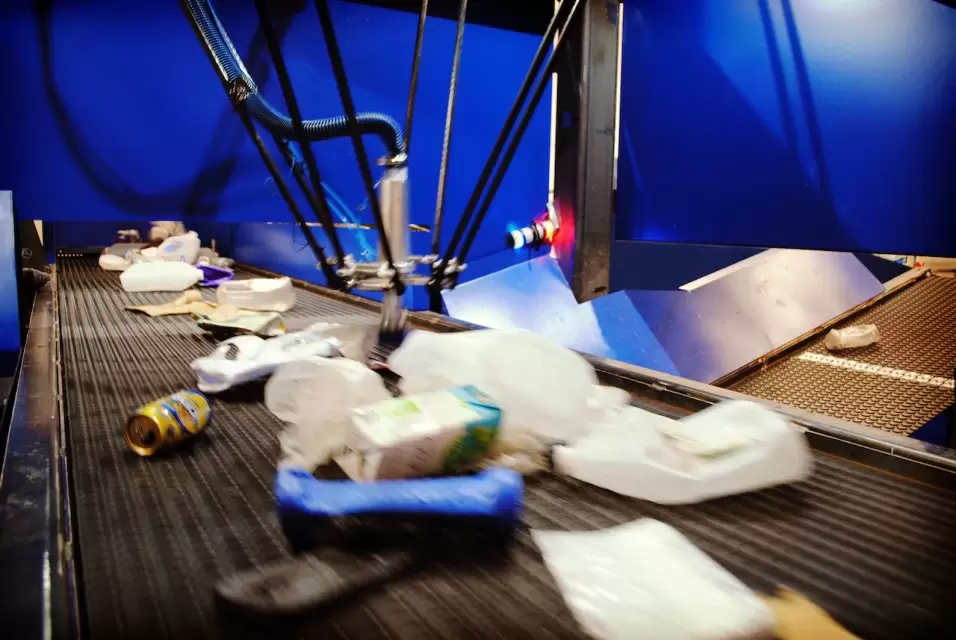
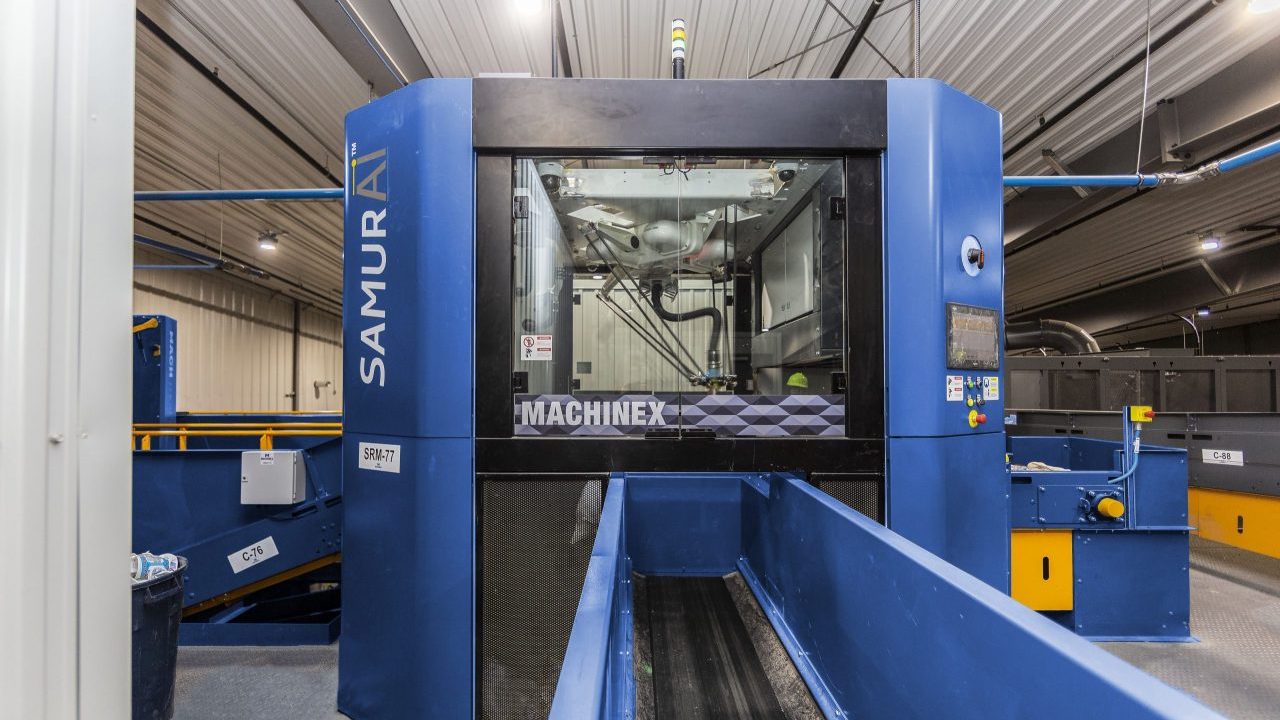
  • More than $460 million has been invested in recycling for new technology, robotics with artificial intelligence, fleet maintenance improvements, equipment upgrades, and hiring new employees since 2019, with nearly 80% of that investment coming from local government, nonprofits, and businesses across the state.
  • For every $1 that EGLE provides in grants from its Renew Michigan and NextCycle Michigan recycling initiatives, the return on investment in additional spending by private businesses, local governments, and nonprofits is $10, which combined is helping drive Michigan’s plan to develop markets that will capture an ever-increasing stream of recycled content.

“The NextCycle Michigan and Renew Michigan grants announced today mark the largest push in state history to promote recycling activities that divert materials from Michigan landfills, boost local economies, and support Gov. Whitmer’s climate change priorities through reductions in greenhouse gas emissions,” said EGLE Materials Management Division Director Liz Browne.

The funding is part of EGLE’s strategy to support recycling infrastructure, improve the quality of recyclable materials, and promote market development using the Renew Michigan Fund, which the Legislature created in 2019 to bolster the state’s recycling efforts. Gov. Gretchen Whitmer and the state Legislature are committed to raising Michigan’s recycling rate to 30% by 2025 and 45% by 2030, exceeding the national recycling rate of 32%.

Today’s announcement by EGLE comes in advance of the release on Thursday, April 21, of the MI Healthy Climate Plan, commissioned by Gov. Whitmer as a broad-based roadmap to a sustainable, carbon-neutral Michigan economy by 2050. Carbon neutrality is the global science-based benchmark for reducing greenhouse gas emissions to avoid the most devastating and costly impacts of climate change.

“State decision-makers wisely understood that partnering with Michigan’s nonprofit sector and business community to help develop market-driven solutions was critical to improving Michigan’s waste and materials management processes and advancing its climate change goals,” said Jill Martin, director of community programs for The Recycling Partnership, the national nonprofit teaming with EGLE and Michigan communities this year on recycling initiatives across the state.

“The Next Cycle initiative and Renew Michigan infrastructure grants are an important piece of accomplishing those goals,” Martin said. “We’re tremendously impressed by what we’re seeing happen in Michigan with regard to increasing its investment in recycling. By helping to build out domestic markets for recycled goods, we help to support key Michigan industries like automotive, construction materials, and paper product manufacturing, while also preserving the environment for the next generation.”

Highlights of the grants announced by EGLE today include:

  • Flint: A $300,000 Renew Michigan grant to support an $8 million project by Flint-based ACI Plastics to build a recycling system that will process 25 million pounds of postconsumer plastic film each year and create 25-30 new jobs to operate the plant with wages from $17-$20 per hour when it launches in 2023.
  • Detroit: A $202,000 Renew Michigan grant to make it easier than ever to recycle at all City of Detroit parks and some neighborhoods beginning this spring. It’s part of a roughly $300,000 effort by the City of Detroit to continue to expand its residential recycling program by providing 64-gallon curbside carts, and to boost recycling opportunities in public parks. The project will support environmental justice by benefitting an underserved community and provide increased access to recycling for all visitors at Detroit’s city parks and via expanded curbside collection for city residents.
  • Southeast Michigan: A $135,000 Renew Michigan grant to support a project that will expand recycling in commercial sectors of Oakland, Macomb and Wayne counties. This grant will enable minority-owned, Pontiac-based Essential Recycling to increase collection and tracking of recycled material recovered across the three counties. Educating the construction and skilled trades industries on the value of recycling is an important component of what Essential Recycling aims to achieve. Essential Recycling is partnering with the Pontiac United Education Coalition, Pontiac Chamber of Commerce, City of Pontiac, Oakland County, local governments in the tri-county region, and Michigan Works! to provide graduating high school seniors with career opportunities in the recycling industry.
  • Upper Peninsula: A $251,000 Renew Michigan grant that helps fund the largest expansion of residential recycling in the Upper Peninsula in 2022. The grant helps fund a total project budget of nearly $500,000 for the City of Marquette to provide 96-gallon curbside recycling carts to all single-family residences (6,100 households and 100 businesses), in place of the resident-provided containers currently in use. Residents in Ely Township and Michigamme Township also will receive 64-gallon curbside recycling carts with EGLE grants. Those three communities and EGLE will partner with The Recycling Partnership, a national nonprofit, which will provide additional funding for carts and promote an education campaign.
  • Alpena: The Alpena Resource Recovery Board of Directors and the Northeast Michigan Council of Governments (NEMCOG) will be receiving a $1 million EGLE grant through Renew Michigan to support construction of a more than $5 million new recycling center near the Alpena County Regional Airport on Airport Road. Local stakeholders are now in discussions for a $1 million-$3 million loan request from national nonprofit Closed Loop Fund that, if approved, will leverage Closed Loop Fund’s support to capture committed match funding from national trade association leaders Carton Council of North America and the Food Packaging Institute that will finalize financing for the project.
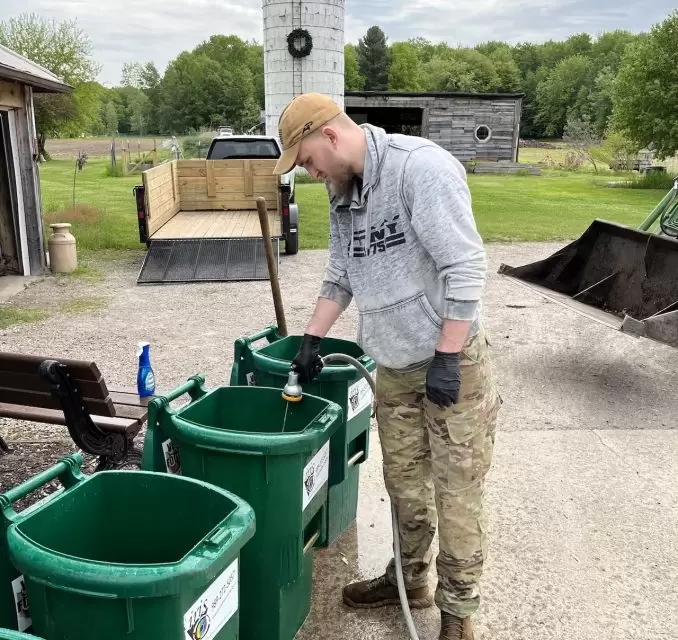
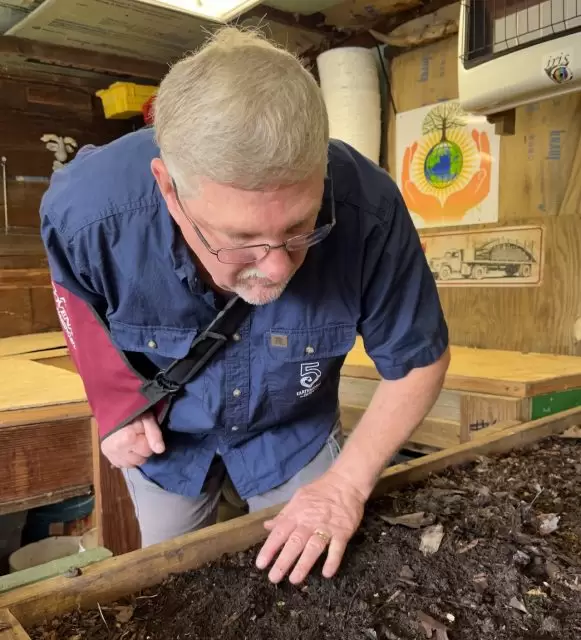
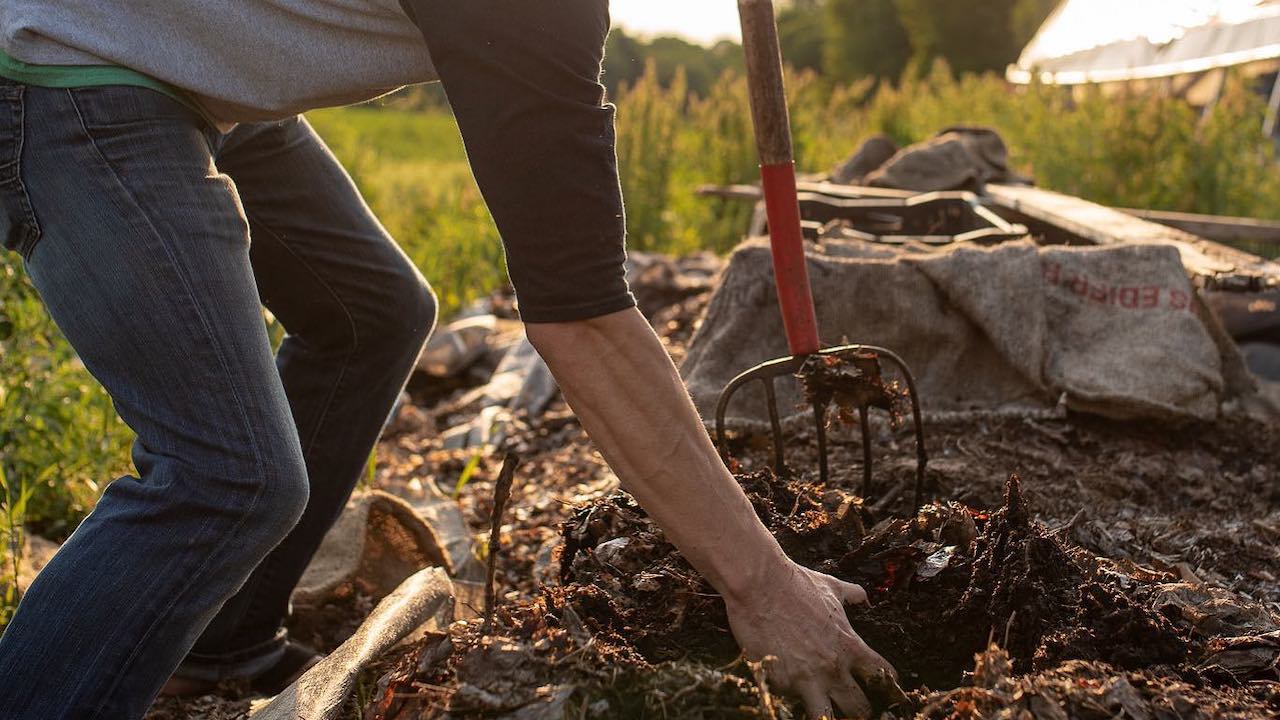
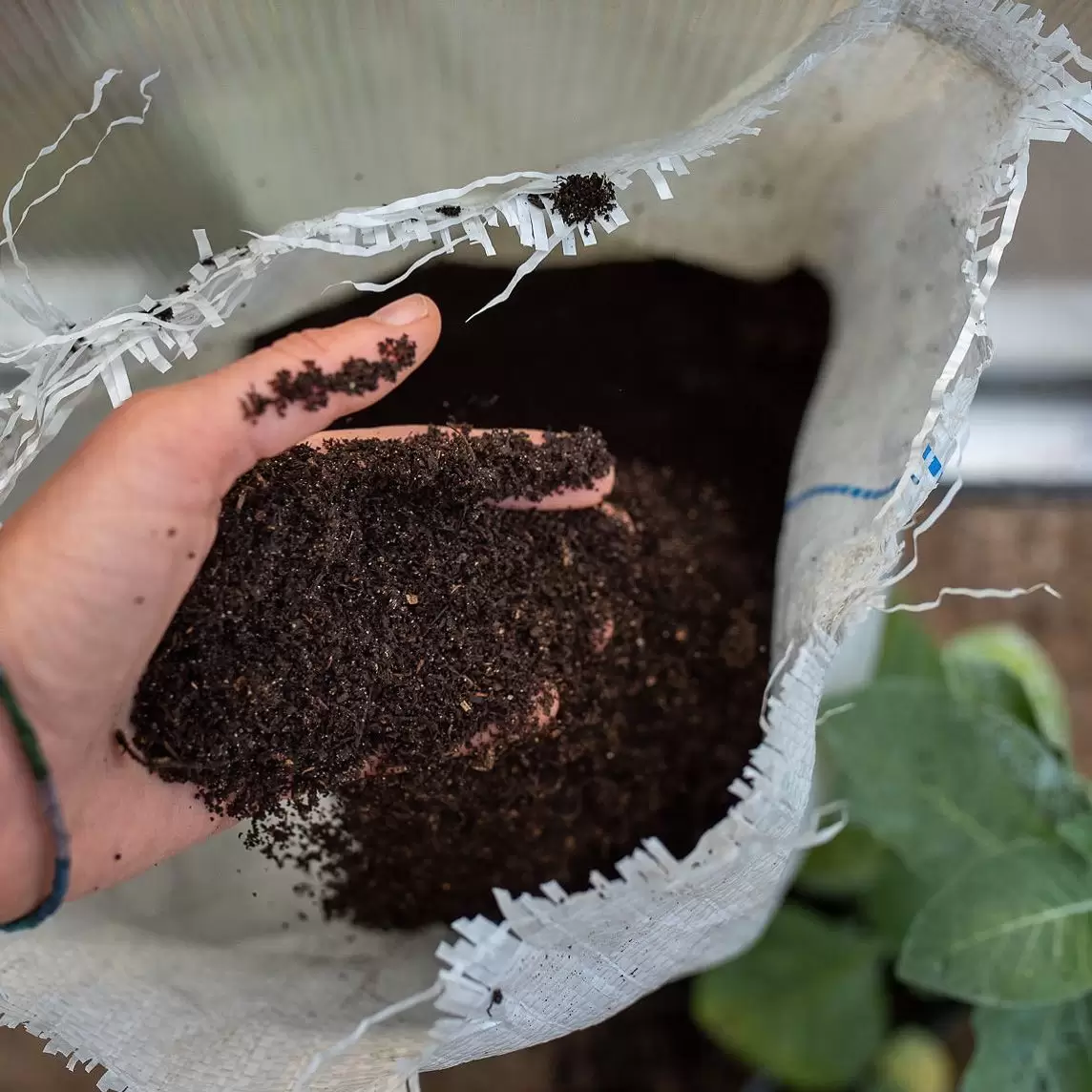
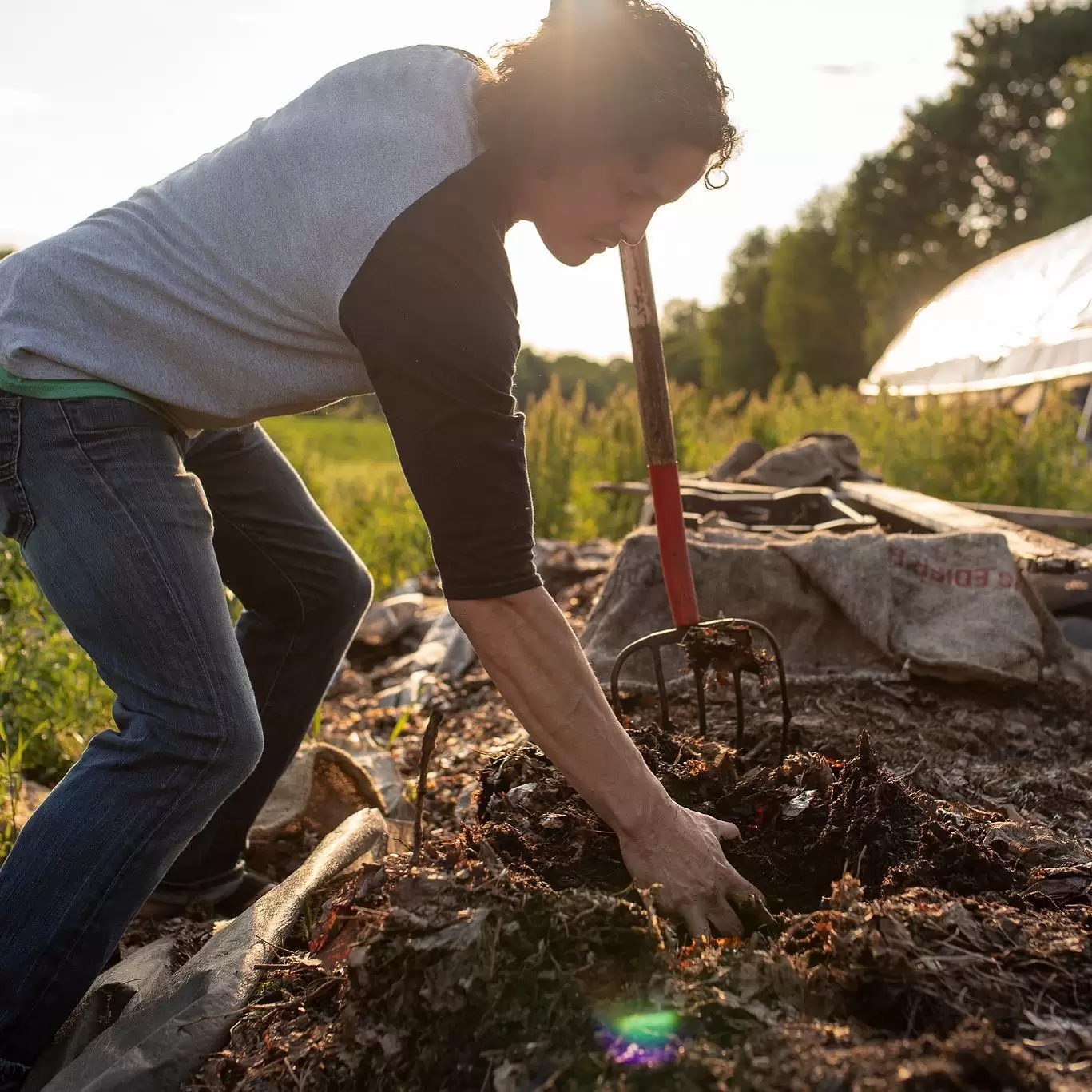
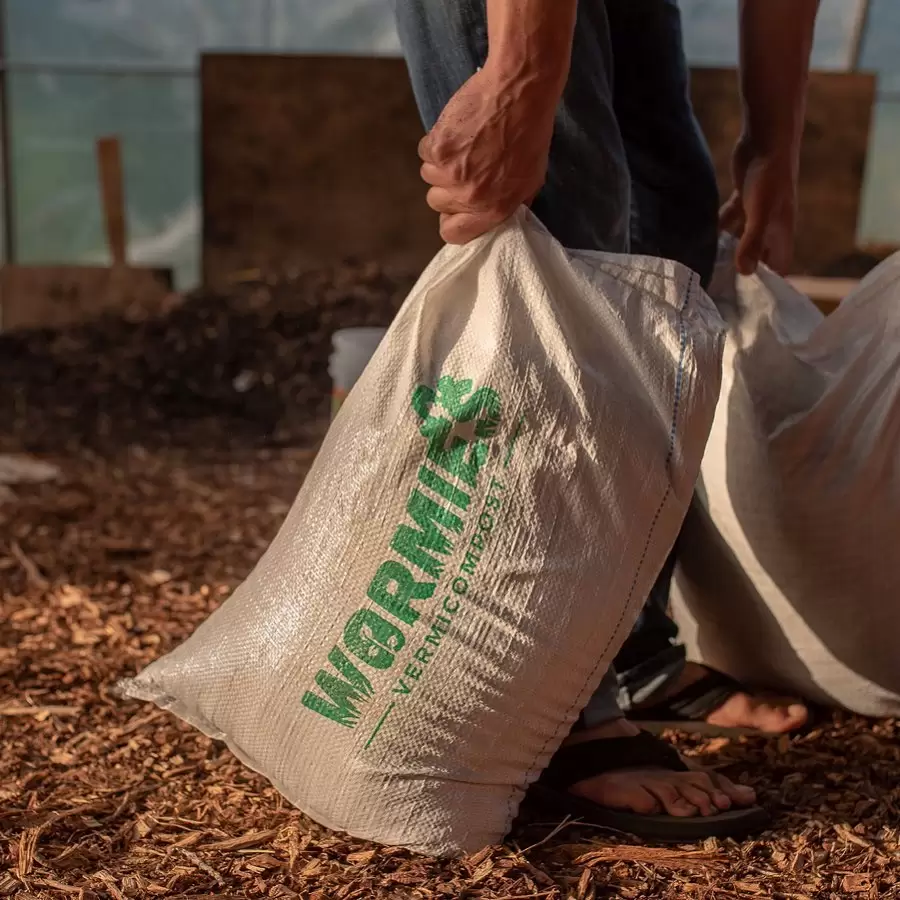
  • Grand Rapids: A more than $275,000 EGLE grant with support from NextCycle Michigan to Grand Rapids-based Wormies, a composting business founded in 2017 specializing in vermicomposting (composting with worms) serving the Grand Rapids community. At the core of its operation is the production of castings (worm poop) for farm and garden use. Wormies’ mission is to change the way the Grand Rapids community manages organic waste by achieving a 100% diversion from landfills. Its vision is to see Wormies composting in every neighborhood and for Grand Rapids to set the standard nationwide for responsible waste management. The EGLE grant is supporting Wormies’ plan to move from its current 1/4-acre location in Jenison to a new 13-acre site in Cascade Township that will feature a state-of-the-art regenerative natural ecosystem farm, pollinator gardens and a biodiversity pond that will increase production of its highly sought-after premium soil product line.

“These strategic investments EGLE has announced today reflect the commitment of communities across Michigan to finding modern and scalable solutions across our entire recycling system,” Clark said. “It is critical that EGLE continue to work together with the Michigan Chamber of Commerce, our partners in the Michigan Legislature, the private sector, nonprofits like The Recycling Partnership, and at the federal and local levels to ensure we achieve our state’s goals for sustainable operations.”

EGLE also announced today new findings from an EGLE-commissioned survey conducted August-September 2021. The statewide and regional data show Michiganders’ understanding of recycling best habits has increased in every corner of the state. EGLE leaders attribute much of Michigan’s improved recycling success to the state’s “Know It Before You Throw It” awareness push. The survey results show:

  • 58% increase in knowledge that food residue ruins recycling. In the U.P., the increase was 124%.
  • 47% increase in knowledge that “tanglers” can ruin a recycling load.
  • 25% decrease in the belief that it’s OK to place nonrecyclable items in recycling because someone will sort out nonrecyclable items later.
  • 51% decrease in Central Michigan, and 38% decrease in West Michigan, in the belief among residents with curbside recycling that plastic bags are accepted at the curb.
  • 47% of Michiganders – and up to 54% in the U.P., 55% in the Lansing area, and 64% in Northern Michigan – recognize the Recycling Raccoons campaign.
  • 78% of people who recalled the campaign said it made them more mindful of their recycling behavior or changed a recycling behavior. That figure was as high as 87% in Metro Detroit and 89% in Northern Michigan.
  • 7 in 10 Michiganders say they learned something new from the ads.

Two examples of how the Know It Before You Throw It Recycling Raccoons’ message is having a positive impact in every region of the state come from data that shows increased knowledge that food residue ruins recycling and that plastic bags should not be included in curbside recycling bins or at drop-off sites.

Statewide, there has been a 58% increase in knowledge that food residue ruins recycling. That includes:

  • A 48% increase in Southeast Michigan.
  • A 67% increase in East Michigan.
  • A 57% increase in West Michigan.
  • A 64% increase in Central Michigan and the Lansing-Jackson area.
  • A 59% increase in Northern Michigan, and
  • A 124% increase in the Upper Peninsula.

Statewide, there also has been a 14% decrease in the mistaken belief among residents with curbside recycling that plastic bags are accepted at the curb. That includes in:

  • Southeast Michigan, where half of Metro Detroit households report recycling plastic bags in their curbside bins or carts – which is a no-no for all recycling programs across southeast Michigan.
  • West Michigan, which has seen a 38% decrease in belief among residents with curbside recycling that plastic bags are accepted at the curb.
  • East Michigan, which has seen a 19% decrease in belief among residents with curbside recycling that plastic bags are accepted at the curb.
  • And in Central Michigan, there’s been a 51% decrease in belief among residents with curbside recycling that plastic bags are accepted at the curb.

EGLE, Michigan Chamber of Commerce and more than 30 partners join with bipartisan lawmakers to announce NextCycle Michigan

Kickoff highlight includes EGLE’s award of record-setting combined total of $4.9 million in Renew Michigan recycling grants to 45 community, business and nonprofit recipients in almost every region of the state

LANSING – Leaders of the Michigan Department of Environment, Great Lakes, and Energy (EGLE) joined today with the Michigan Chamber of Commerce, bipartisan lawmakers and Meijer to announce NextCycle Michigan, hailed as the largest collaborative effort in state history to spark the state’s “recycling and recovery” economy.

As part of the NextCycle Michigan initiative, EGLE announced that already in 2020 and 2021, $97 million is being committed to recycling projects through partners that in addition to Meijer include: Henry Ford Health System, GFL Environmental, Carton Council of North America, Goodwill Industries, Keurig Dr Pepper, Foodservice Packaging Institute, U.S. Business Council for Sustainable Development, Emterra Environmental, Washtenaw County, Great Lakes Tissue and more than 30 Michigan companies, organizations and nonprofits.

“The NextCycle Michigan Initiative and Renew Michigan grants marks the largest push in state history to promote recycling activities that divert materials from Michigan landfills, boost local economies, and support Gov. Whitmer’s climate change priorities through reductions in greenhouse gas emissions,” EGLE Director Liesl Clark said during a virtual press conference.

Emterra, for example, is opening this month a new $9 million recycling sorting facility built through a collaboration with the cities of Lansing and East Lansing. The facility will use state-of-the-art robotics to process recyclables from more than 676,000 households across 12 counties in and around the Capital-area, increasing access to recycling throughout the region and creating new jobs in Lansing. The materials from the Emterra facility will then go to businesses like Great Lakes Tissue, in Cheboygan, Michigan, which turns old cartons into toilet paper sold in grocery stores across the state, including Meijer.

In addition, to highlight NextCycle Michigan’s launch, EGLE announced a record-setting combined total of more than $4.9 million in Renew Michigan grants to recipients in 45 communities statewide that will support the initiative.

“The funding is part of EGLE’s strategy to support recycling infrastructure, improve the quality of recyclable materials, and promote market development using the Renew Michigan Fund, which was created in 2019 to bolster the state’s recycling efforts,” Clark said.

NextCycle Michigan represents “a first-of-its-kind partnership” that will help fund infrastructure investment to promote the development of markets for recycled materials and recycled products, including manufacturing, said EGLE Materials Management Division Director Liz Browne.

Michigan is among the first states in the U.S. to introduce this bold partnership that leverages state dollars with private investment to fund shovel-ready projects, state-of-the-art technology installation and innovation grants, Browne noted.

“Our aim is to spark the state’s “recycling and recovery” economy,” she said. “At EGLE, we know that recycling is one of the most important things you can do every day to make a positive difference for our environment and climate. But what many Michiganders often don’t realize is that recycling has become an essential tool in supporting our state’s local economies, businesses big and small, and major employers in the manufacturing sector.”

By turning waste materials into new products made in Michigan, EGLE and its partners plan to achieve the state’s goals of saving resources, protecting the climate and contributing to the prosperity of Michigan-based companies.

NextCycle Michigan is “uniquely exciting because this level of commitment and partnership to comprehensively promote recycling between Michigan’s private sector and state government has never happened before in our state’s history,” Browne said. “In fact, we believe NextCycle Michigan marks the greatest accomplishment in recycling since our state achieved its first-in-the-nation status by introducing the bottle bill law in 1976.”

Michigan Chamber of Commerce President and CEO Rich Studley praised EGLE for looking to build on that historic success by doing more than ever before with plastics, metal, paper and all forms of recyclable materials. Together with its partners, EGLE is planning to use public and private investment in Michigan's recycling system to put materials once destined for the landfill back into use in manufacturing.

“I am happy to speak today in support of the NextCycle initiative because this program will increase innovation, and overcome barriers that have traditionally hindered Michigan’s recycling rates in the past,” Studley said. “Our state decision-makers wisely understood that partnering with Michigan’s business community to help develop market driven solutions was critical to improving Michigan’s waste and materials management processes. The NextCycle initiative will be an important piece of accomplishing those goals.”

By helping to build-out domestic markets for recycled goods, Studley asserted that Michigan can help support key state industries like automotive, construction materials and paper product manufacturing, while also preserving the environment for the next generation. He pledged to encourage Michigan Chamber members to engage and collaborate across a diverse array of stakeholders to help regulators understand their needs, and bring solutions to the table.

“This is a great example of state policymakers from both sides of the aisle working together to support innovative technologies and solutions that will improve Michigan’s material management and increase the value of products that historically wound up in landfills,” Studley said.

Meijer routinely provides recycling solutions to its customers by offering plastic film recycling and drug-takeback programs, according to Vik Srinivasan, senior vice president for real estate and properties at Meijer. Every year, for example, Meijer keeps more than 100,000 tons of material from the landfill through recycling. Meijer also has food waste reduction programs in its stores and manufacturing facilities that recycle unused food into animal feed and compost.

“We’re proud to say that, since 2018, we’ve achieved more than a 95% waste diversion rate at our five food manufacturing facilities,” Srinivasan said. “But we still have a long way to go to reach our goals, which is why we’re excited to be partnering with EGLE in support of the NextCycle program.

“This program will help us find new ways to recycle some of the most challenging materials in our supply chain, which include packaged food waste from our stores and difficult-to-recycle materials in our distribution centers,” he added. “We look forward to our shared innovation not only to help us reach our sustainability goals, but also to help build the infrastructure for our successes to be replicated statewide.”

Gov. Whitmer and the state Legislature are committed to raising Michigan’s recycling rate to 30% by 2025 and ultimately reach 45% annually — Michigan’s current recycling rate is at 15%, the lowest in the Great Lakes region and among the nation’s lowest.

“To ensure we reach this goal, recycling across Michigan is receiving a major boost in 2021 through Renew Michigan grant funding,” said Democratic U.S. Rep. Haley Stevens, who serves the state’s 11th Congressional District in southeast Michigan.

Among the grants Stevens unveiled in her region of the state were:

  • Next Energy: $50,000 for an assessment of electric vehicle battery recycling system needs in Michigan.
  • Battery Solutions: $75,000 for battery sorting technology upgrades.
  • Schupan: $250,000 for equipment that empties packaging, allowing for additional containers to be recycled.
  • Recycle Livingston (City of Howell): $282,504.80 for Howell drop-off site upgrades that will improve collection and processing capacity and worker health and safety conditions.
  • City of Ypsilanti: $73,440 for recycling bins in downtown and public parks.
  • City of Detroit: $20,000 for residential recycling carts, part of multi-year, on-going EGLE support of City of Detroit recycling program.
  • Huron-Clinton Metroparks: $48,816 for plastic bottle recycling bins in Metroparks.
  • The Resource Recovery and Recycling Authority of Southwest Oakland County: $32,000 for Novi drop-off site upgrades.
  • MSU Recycling (MSU Recycling and Surplus Store): $170,000 for robotic sorting equipment that will improve drop-off recycling in the region, as well as worker health and safety conditions.
  • Vartega: $100,000 for the production of new recycled thermoplastics products.
  • Emterra Environmental: $250,000 for technology to produce cleaner glass material that will be used to make beverage containers and insulation.

The Legislature two years ago in a bipartisan move voted to increase EGLE’s funding for recycling projects from $2 million annually to $15 million per-year moving forward. The additional funds through Renew Michigan grants are being used to promote development of recycling markets, increase access to recycling opportunities, and support efforts to grow recycling at the local level, noted Republican state Sen. Wayne Schmidt of Traverse City.

“I was proud to be one of the members in the Michigan Legislature who voted to provide new funding to support recycling throughout our state,” Schmidt said. “Now, more than ever, Michigan residents view recycling as an essential public service.

“And during a time of social distancing because of COVID-19, when many nonessential employees are working remotely and commercial recycling is near an all-time low due to the coronavirus pandemic, producers see residential recycling programs as a critical part in the manufacturing supply chain so they can make their products from recycled content instead of new materials,” Schmidt said.

The Renew Michigan grant recipients in Northern Michigan and the Upper Peninsula that Schmidt announced today include:

  • Great Lakes Tissue: $250,000 for technology that will recycle more types of containers into paper products.
  • GFL Environmental: $100,000 for technology needed for cart and cup recycling.
  • The Northeast Michigan Council of Governments: $55,000 to support collaborative efforts to secure a new recycling processing facility for the region.
  • Emmet County: $150,000 for expansion of the food scraps collection program.
  • Delta Solid Waste Management Authority: $600,000 for equipment needed to take advantage of the new recycling facility in Marquette that was built through a previous EGLE grant.
  • Three Upper Peninsula townships (Ishpeming/Neguanee/Marquette Charter): $167,791 for residential recycling carts for residents of those three townships, with materials going to the new recycling facility in Marquette.
  • Keweenaw Bay Indian Community: $20,000 for equipment to collect paper and cardboard needed by Michigan businesses like U.P. Paper.
  • City of Alpena: $58,080 for recycling bins in public parks and government buildings.
  • SEEDS: $75,000 for a study of how to optimize the organics recycling system in Northern Michigan.

EGLE is also announcing the launch of the next round of NextCycle Michigan Innovation Challenges and Renew Michigan recycling funding opportunities. Visit EGLE’s website at Michigan.gov/MIRecycles for details about recycling grants. Learn how to participate in NextCycle Michigan at NextCycle Michigan.

The NextCycle Michigan initiative and Renew Michigan grants align with EGLE’s national award-winning “Know It Before You Throw It” recycling education campaign featuring the Recycling Raccoon Squad. The aim of the campaign that began in 2019 is to increase recycling and promote best practices to reduce contaminated materials from going into recycling bins and drop-off sites.

Common recycling mistakes and ways to help our environment

This story was originally published by WOOD-TV for "eightWest."

Michigan and states across the country are seeing big increases in curbside recycling since so many us are spending more time at home and working from home to help prevent the spread of COVID-19.

At the same, the Michigan Department of Environment, Great Lakes, and Energy (EGLE) reports common mistakes are increasingly making their way into the recycling bins and causing problems within the recycling system.

How EGLE is working to reduce waste in our landfills

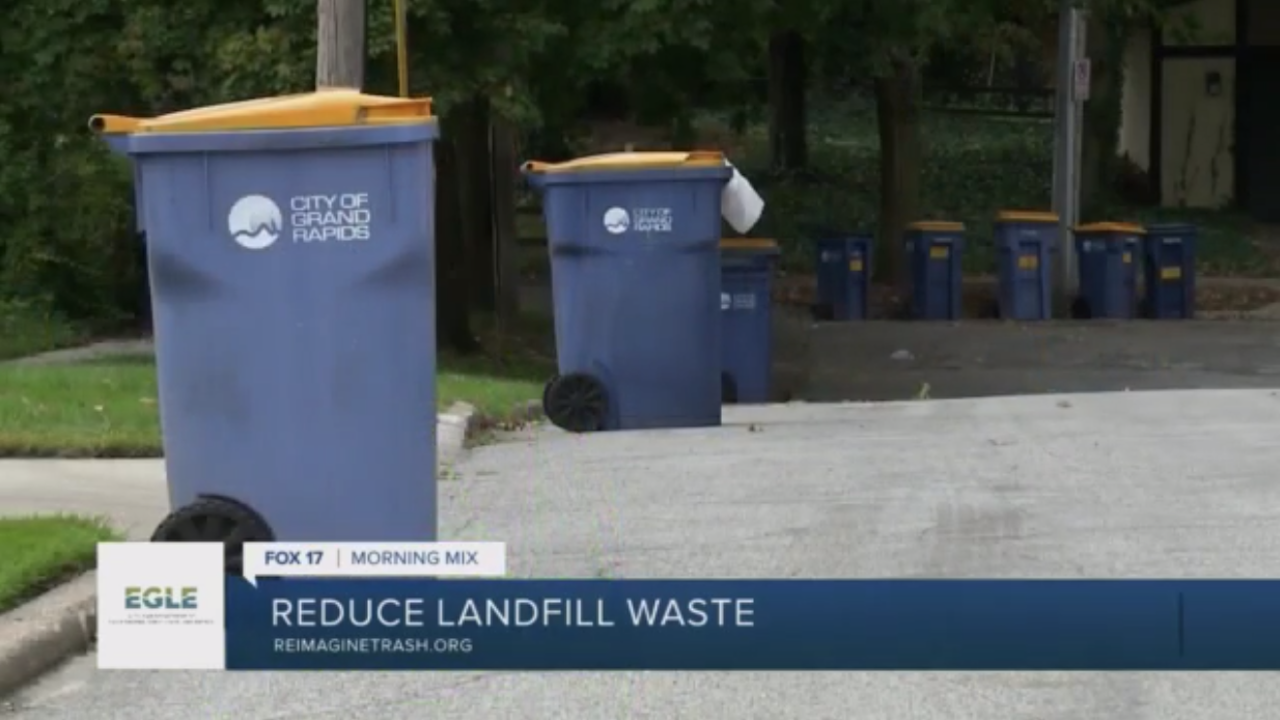
This story was originally published by FOX17 for "Morning Mix."

The Michigan Department of Environment, Great Lakes, and Energy (EGLE) is dedicated to reducing waste that ends up in landfills. The department recently acquired grant money to renovate and update one of the recycling facilities in Grand Rapids, which will allow them to achieve their goal of recycling even more waste.

The facility's updates will allow people to dispose of chemicals, as well as increase the value of recycling glass and certain types of plastics. While the recycling drop-off will be closed at the Wealthy Street location, there are 23 other companies that will allow people to drop off recyclables or pick up curbside.

The recycling center's renovations are part of their overall goal to reduce waste in Kent County's landfills by 90 percent by 2030. To learn more about how to help reduce landfill waste, head to reimaginetrash.org.

Find out if you’re recycling the correct way

This story was originally published by WILX for "Studio 10."

If you’re trying to be greener and recycling more in 2021, there’s a possibility that you’re doing it the wrong way. Lori Welch, the Sustainability Manager for the city of Lansing, gives us some tips on how to make sure that we’re recycling the right way, especially when it comes to plastics.

Energize Your Recycling Know-How

This story was originally published by WDIV for "Live in the D."

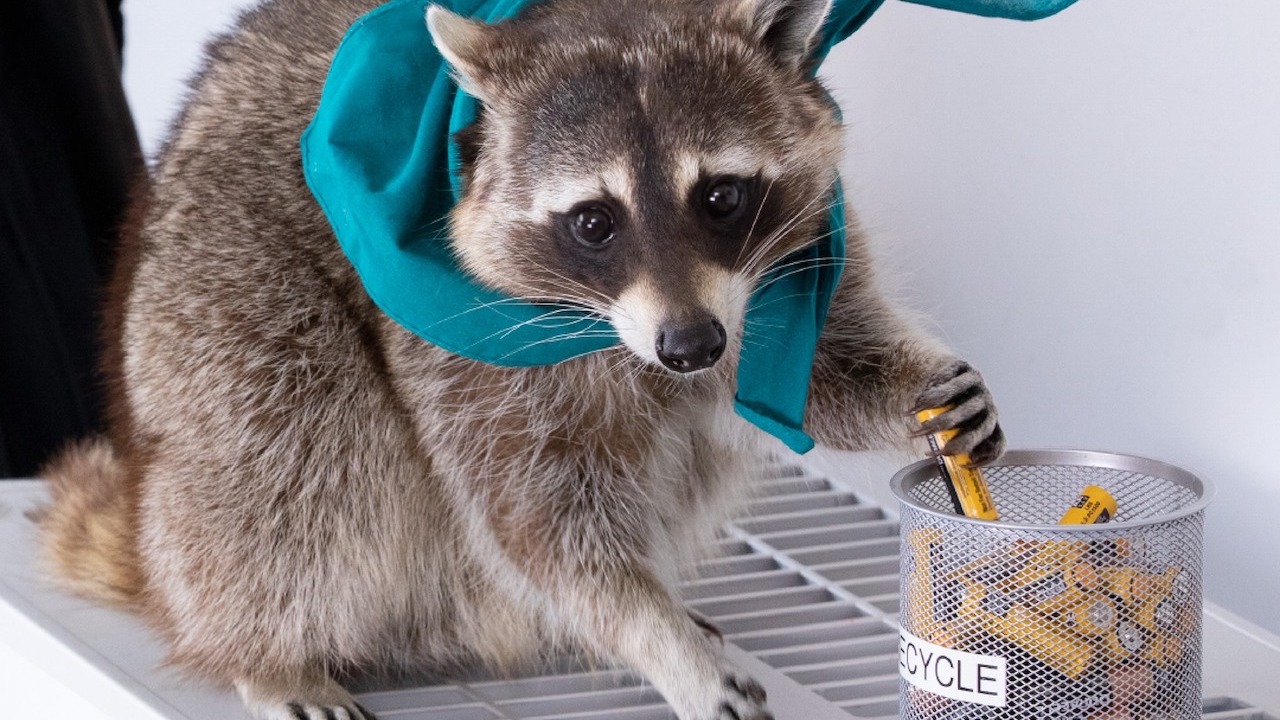
More people are recycling in Michigan and across the country. Curbside pickup is a great convenience, but are you recycling the correct way? “Live in the D” host Jason Carr spoke with Sara Matthews, with EGLE, about how to recycle something that often brings up a lot of questions: batteries. Matthews explained that Battery Solutions, North America’s largest handler of post-consumer batteries for recycling, also processes alkaline at their location in Wixom, Michigan. Some batteries may release chemicals when they are pressed or cracked, so putting them in a garbage bin isn’t the safest option.

Recycling batteries is the best way to keep the environment safe and, Matthews says, the steel can go back into the steel market place to make new items like a kitchen sinks or even an airplane. If the battery has magnesium, it can be used to make fertilizer.

Recycling industry will be key to building back Michigan economy

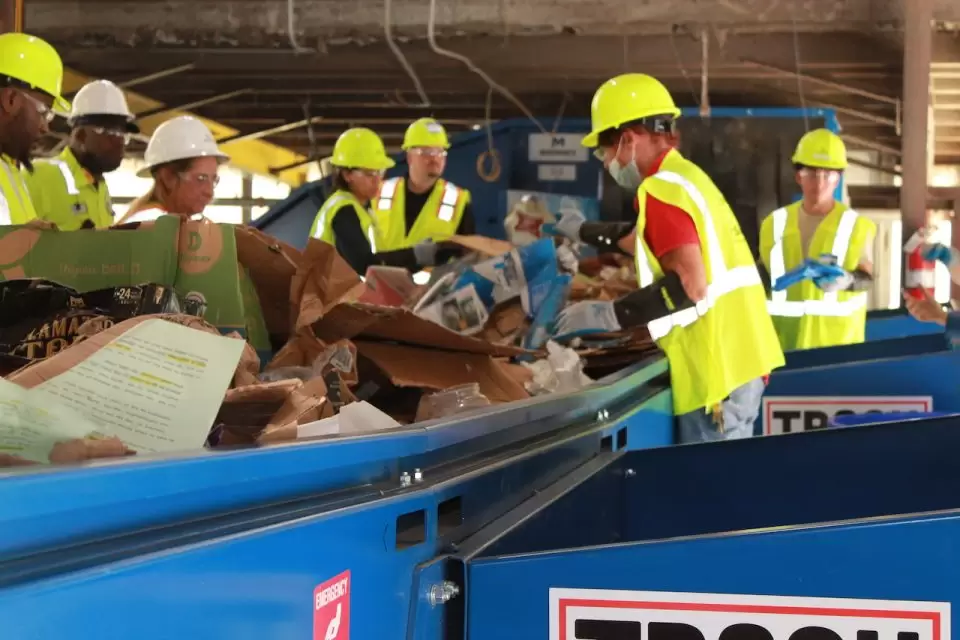
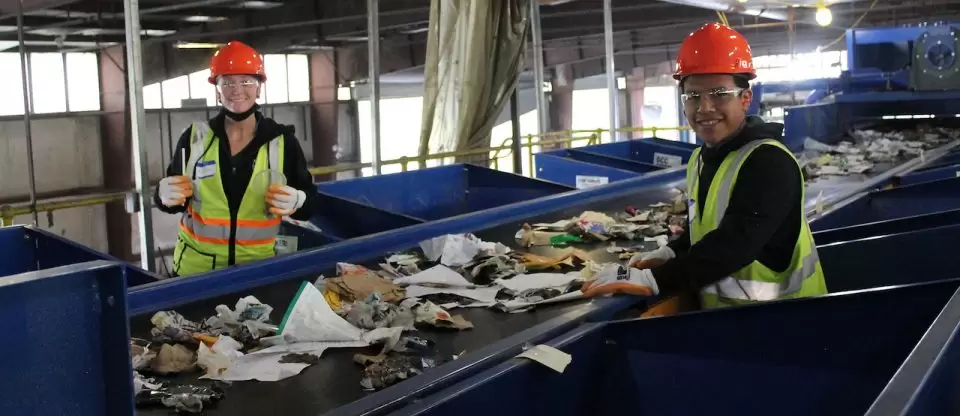
Workers separating paper and plastic on a conveyor belt in a recycling facility

Recycling not only is good for the environment, but it also has a wide-ranging economic impact

The COVID-19 pandemic has magnified the importance of recycling in Michigan and put a greater emphasis on increasing the quality of the state’s recyclable materials for end-market use.

“Recycling has always been environmentally and economically important, but market shifts in the wake of the pandemic have made it even more so,” said Matt Flechter, recycling market development specialist for the Michigan Department of Environment, Great Lakes, and Energy (EGLE). “The consequence of less recycling by businesses is that fewer recyclables are in the supply chain for paper companies to make products such as cardboard boxes and toilet paper.”

Suggestions to achieve high levels of recovery and support robust end markets are outlined in an EGLE report, “Michigan Recycling Impact & Recycled Commodities Market Assessment.” In part, these efforts include education and engagement, policies and public-private coordination.

Ultimately, this is a call to action that will have a wide-ranging economic impact in the state of Michigan.

“When you hear about recycling, you mostly hear about how it’s good for the environment,” Flechter said. “But recycling can boost job growth in Michigan and make us a beacon to attract talent from around the world.”

Bigger than tourism

EGLE’s “Know It Before You Throw It” campaign is aimed at increasing the state’s recycling rate from 15%, currently the lowest in the Great Lakes, to 30% by 2025. The goal is to eventually reach 45%, and according to the report, the economic impact of achieving that would support 138,000 new jobs in Michigan’s recycling, reuse and recovery (RRR) sector. That increase would also provide $9 billion in annual labor income and $33.8 billion in economic output.

Moreover, at that rate, the RRR industry would account for 3.3% of Michigan’s total economic output, overtaking both transportation and tourism volume. Put another way, if all direct or indirect RRR sector jobs were in the same city, they would create the third-largest municipality in the state. And that’s all based on materials that enter the recycling stream rather than go into a landfill.

“It’s important to recognize that the items we discard on a weekly basis from our homes represent resources,” said Mike Csapo, general manager of the Resource Recovery and Recycling Authority of Southwest Oakland County (RRRASOC). “Those materials can be part of an economic equation that feeds a critical supply chain for manufacturing. And that means jobs.”

RRRASOC helps make waste and recycling programs convenient, cost-effective and environmentally responsible for more than a quarter of a million people in its member communities of Farmington, Farmington Hills, Milford, Milford Township, Novi, South Lyon, Southfield, Walled Lake and Wixom. And these programs – which include recycling drop-off centers, curbside collection schedules and household hazardous waste collection events – benefit employment across the state.

“For every job that can be generated by throwing something away, 10 more can be created in the supply chain to repurpose that material,” Csapo said. “When we have systems in place that can treat recyclable items in a way that allows for continued value-added activity, we’re playing an important role in keeping the engines of the economy running.”

Igniting a new workforce pipeline

Recycling doesn’t just mean new jobs – it also offers new pathways into the workforce.

In Muskegon County, for example, the Goodwill LifeLaunch: Ignite Reentry Program recently launched with the aim of introducing new workers to careers in recycling and other manufacturing professions.

The two-year program is a partnership between Goodwill Industries of West Michigan and Padnos Recycling and Scrap Management, and it consists of two parts: recycling certification training for young adults who have had interactions with the criminal justice system, and a more rigorous system of diverting recyclable materials – such as packaging and electronics – from landfills. The goal is to grow the supply of recycled materials for high-demand markets, reduce recycling costs, increase market participation and – crucially – create jobs.

“This program can connect these individuals with marketable skills and give them work experience,” said Dina Butler, program manager at Goodwill of West Michigan. “We want to be able to help them set future goals and give them the skills training to get a good job or continue their education.”

EGLE sparked the Ignite program with a $200,000 Recycling Market Development grant, which served as a catalyst to the more than $820,000 in funding that came from the U.S. Department of Labor’s Employment and Training Administration. The Department of Labor grant is part of a $4.5 million grant that is being shared with Goodwill organizations in Pittsburgh, Atlanta and Louisville. The EGLE and federal money covers 93% of the program’s operating costs, with Goodwill itself contributing the remaining $325,000.

Goodwill, a nonprofit known mostly as a place to sell and purchase used clothing and home furnishings, provides job training, employment placement services and other community-based programs benefiting those who may face barriers to employment. It also has a well-honed recycling program ingrained into its structure.

Butler said Ignite is set to run through December 2022 (with a one-year follow-up period), and although the first batch of cohorts is only four, eventually she sees 100 more being part of the first wave.

“Ultimately, we hope this becomes a self-sustaining program that will continue long after the grant ends,” Butler said.

As part of the program, Muskegon Community College will host a 10-week manufacturing training course, during which participants will also engage in work training at Goodwill. The goal is to give participants “transferrable skills,” such as blueprint reading, manufacturing machinery operation and supply chain management experience. Once training is over, these individuals will then be paired with manufacturing positions around the state where they can put their new abilities to work.

A legacy of recycling benefits

The history of the recycling movement has its origins right here in the Wolverine State – fittingly, in Ann Arbor, the home of the University of Michigan Wolverines. The nation’s very first curbside recycling program got its start there in 1978.

Three years later, a similar program started in New Jersey, and throughout the ’80s curbside programs popped up around the country and the number of drop-off stations grew. However, it wasn’t until 1987, when a shipping vessel loaded with 3,100 tons of trash from New York City was refused by every port it neared, that the United States welcomed a national conversation about waste issues.

“That really helped people visualize the trash problem we were facing, and it led to the creation of recycling programs and legislation that continue to this day,” Flechter said. “This is an environmental issue above, beyond and before an economic issue.”

Investment in innovation continues today with projects like EGLE’s NextCycle Michigan initiative, which aims to develop waste and recycling recovery projects that will grow the state’s recycled materials supply chain and end markets. The initiative recently named 17 inaugural partners who are committed to job creation and industry growth by recovering materials destined for the landfill.

“So we have to really ask ourselves,” Flechter said, “do we want to extract new materials and process them into something and then just put it in a hole in the ground, or do we want to keep using those materials and, in doing so, create jobs right here in Michigan? Recycling is important not just to Michigan’s environment, but also its economy.”

During Michigan’s battle against COVID-19, recycling is more important than ever

Wheeled garbage and recycling bins left along a snowy suburban street after collection day
With many businesses and offices closed or operating at reduced capacity during the pandemic, manufacturers that use recycled materials to make products such as boxes and toilet paper are relying on residential recyclers to pick up the slack.

Rich Elliott has never felt particularly heroic while placing his bin of recyclables out for collection each week.

“I’ve just always felt that it was basically the right thing to do to help the environment,”

said the Redford resident, 51. “My mom and dad always recycled when I was growing up, and I’ve continued the habit.”

But now, amid the lingering fallout of the COVID-19 pandemic, what Elliott views as a simple routine has taken on added significance, recycling experts say.

One big change: With many offices and businesses closed or operating at diminished capacity, a primary supply of recycled paper and cardboard that toilet paper, box and other manufacturers have long relied on to make new products has dwindled – leaving it to residential recyclers like Elliott to help make up the difference.

“Recycling has always been environmentally and economically important, but market shifts in the wake of the pandemic have made it even more so,” said Matt Flechter, recycling market development specialist for the Michigan Department of Environment, Great Lakes, and Energy (EGLE). “The consequence of less recycling by businesses is that fewer recyclables are in the supply chain for paper companies to make products like cardboard boxes and toilet paper.”

More than 75% of U.S. paper mills use recovered paper from recycling operations for their daily production needs, Flechter said.

“The bottom line: When you recycle properly, you are helping to supply manufacturers with the valuable materials they need,” he said. “At the same time, the new products they make help people who are stuck at home while we all work together to mitigate the spread of the coronavirus.”

Essential service

Virtually all of Michigan’s recycling service providers have continued to operate during the pandemic, though a few suspended operations or changed their processes when the pandemic first hit. Residents are advised to check with their local provider on the current rules in their area. If recycling is temporarily unavailable, EGLE is encouraging households to store their recyclables – including rinsed and emptied metal and plastic containers – in a clean and dry place until service resumes.

But in general, curbside residential recycling has remained available as usual throughout Michigan because it’s considered an essential service.

Production of paper products – including toilet paper and boxes used for shipping – has also kept running in the state and nationwide.

Filling the void

Consider Pratt Industries Inc., a major cardboard box manufacturer with five paper mills in the U.S., including one each in Indiana and Ohio that are both supplied by Michigan recycled paper. In addition, Pratt has box plants in Livonia and Grand Rapids that ship to companies such as Amazon, Ford and General Motors.

Paul England, senior vice president for Pratt’s Midwest region, noted that all of the company’s boxes are made from recycled paper, including corrugated containers, cereal boxes, newspapers, magazines and junk mail.

“That’s our raw material – without that, we can’t make boxes,” he said, adding that demand for Pratt’s products has surged because of increased e-commerce shipments during the pandemic. “Items such as medical supplies, food and personal care items all ship in a box. Anybody that produces a box is just trying to keep up with demand right now.”

At the same time, in the pandemic’s immediate aftermath, recyclable paper supplied to box makers by commercial sources dropped by 30% after businesses started closing because of health and safety concerns, England said.

“What is interesting is that we’ve also seen a pretty significant uptick in curbside recycling as more goods are consumed at home,” he said. “So our advice to Michigan residents is that they can make a positive impact on the economy by continuing to recycle what’s recyclable so that we have the materials to continue making boxes for shipping.”

Know the rules

Residential recycling is also important for toilet paper manufacturers, including Great Lakes Tissue Co. in Cheboygan, which each month uses 2,100 tons of recycled raw material – half of which comes directly from recycling operations across the U.S. and Canada.

In March, toilet paper sales soared 112% nationwide as people stocked up amid the COVID-19 outbreak. The hoarding of toilet paper and paper towels largely eased after a few weeks, although there was another run on paper products when COVID-19 cases surged again in late fall.

As part of its ongoing Know It Before You Throw it statewide recycling education campaign, EGLE encourages Michigan curbside recyclers who want to help keep raw materials flowing through supply chains to check the rules for what recyclables are accepted in local programs.

Best practices statewide generally include:

  • •No need to remove staples, paper clips or plastic windows from envelopes.
  • •Keep it dry and free from liquid contaminants.
  • •Never put COVID-related personal protection equipment (PPE) like masks and gloves into your recycling bin. PPE should go into a trash container for proper disposal.
  • •Paper coffee cups are not usually accepted (the inside is typically coated in plastic to prevent leaks).
  • •Magazines and newspapers are usually recyclable.
  • •Paper towels, tissues, wipes and napkins aren’t usually recyclable and don’t belong in the bin.

Proper plastic practices

While paper has garnered the most attention, the coronavirus crisis has also affected other recyclable materials.

For example, shoppers have stockpiled bottled water and other supplies that come in plastic containers, like hand sanitizer and sanitary wipes.

EGLE notes that, while residents should always check with their local provider and follow its specific rules, those types of plastic bottles and containers are generally recyclable as long as they’re rinsed and emptied.

Plastic bag usage has also increased as consumers have groceries delivered rather than go to the store themselves and haul their items in reusable bags.

While plastic bags – as well as the plastic wrapping that toilet paper and paper towel comes in – is rarely recyclable curbside, retailers such as Meijer, Target and Walmart accept them at in-store drop-off stations. If your local outlet has temporarily halted collections, or you’ve stopped going there in person, EGLE urges you to store them for drop-off when normalcy resumes.

Join the Squad!

Help Michigan become a leader in recycling again. Join the squad today. You don't need to be a raccoon – you just need to sign up!

After signing up for recycling news, you will receive occasional updates. We will not sell your email address to any third party at any time. View our privacy policy.

    © Copyright 2026, EGLE. All Rights Reserved.

    This website uses cookies

    We use cookies to personalize ads, to provide social media features, and to analyze our traffic. We also share information about your use of our site with our social media advertising and analytics partners who may combine it with other information that you’ve provided to them or that they’ve collected from your use of their services. You consent to our cookies if you continue to use our website.