This year, the Recycling Raccoon Squad is setting out on the Great Recycling Road Trip! As we celebrate Michigan hitting its highest recycling rate for the fifth consecutive year, we’re visiting some of our favorite spots in the Great Lakes State.
It wouldn’t be a road trip without a stop in Michigan’s Capitol — Lansing! From the Capitol building to the MSU Broad Art Museum and more — you humans across the Lansing area are doing an awesome job of recycling. Your efforts are helping support over 72,500 Michigan jobs, saving 800K tons of material and generating $17 billion in revenue.
And because we love some good recycling rules, we checked out the city’s dos and don’ts of recycling while we were here.
Paper
Dos: Flattened cardboard/food boxes, junk mail, newspapers and paper bags.
Don’ts: Paper plates, wrapping paper or tissues.
Pro Tip: You can recycle shredded paper by placing it in a PAPER bag labeled “SHRED.”
Plastic
Dos: Food, beverage and soap bottles, containers and cups.
Don’ts: Styrofoam and plastic lids.
Metal
Dos: Aluminum foil and containers and steel cans.
Don’ts: Paint or aerosol cans.
Cartons
Dos: Food and beverage cartons.
Don’ts: Frozen food containers.
Glass
Dos: All colors of bottles and jars.
Don’ts: Mirrors, ceramics or light bulbs.
Find these and more tips to keep up the great recycling in Lansing!
Psst — the color-coded ✱ icons in this story are clickable. Tap one for a recycling rule, a recycling benefit or a bit of need-to-know trivia.
Nyla’s first week of teaching had gone better than she could have imagined. But there was one thing that she couldn’t shake. Despite teaching the neighborhood kits the basics of raccooning (cleaning their food and Did you know? Plastic, metal and glass containers are common recyclables — meaning your OJ bottles, tuna cans and pickle jars are recyclable curbside!digging in the trash can for recyclables), there always seemed to be something new to say about plastic recyclables.
She adored their little faces and the little treats they brought her (though truth be told she’d prefer a latte over an apple) but still felt something was missing — a feeling that was about to change …
At the end of one school day, one of her favorite students, Timmy, was still there after most of the other parents had come to pick up their kits.
“Timmy, honey, I’m sure someone will be along in a minute,” Nyla told him, even though inside she was a little annoyed. That’s when a handsome raccoon came bounding up.
“Sorry, bud! I couldn’t remember the address.” He stopped short at the sight of Nyla. “Why, hello there! I’m Timmy’s uncle, Dave.”
Suddenly Nyla didn’t feel so annoyed anymore. She straightened her necklace and fluffed out her cheek tufts casually.
“I’m Timmy’s teacher, Nyla.”
Those simple introductions led to weeks of small talk. Eventually, Nyla and Dave started going on dates, sharing You found a recycling basic! Plastic, metal and glass containers should be rinsed and emptied before recycling!a can of tuna or a spoiled yogurt container as they sorted the trash from the recycling. Nyla couldn’t keep her passion for plastic recycling from creeping into their conversations.
“Ya know, I should introduce you to my friend Frank. He’s really into recycling too — even has this club he meets with. He talks about some of the plastics, but he’s more of a jack-of-all-trades when it comes to recycling,” Dave told her.
They were out so late one night, they were still digging through the recycling when morning came.
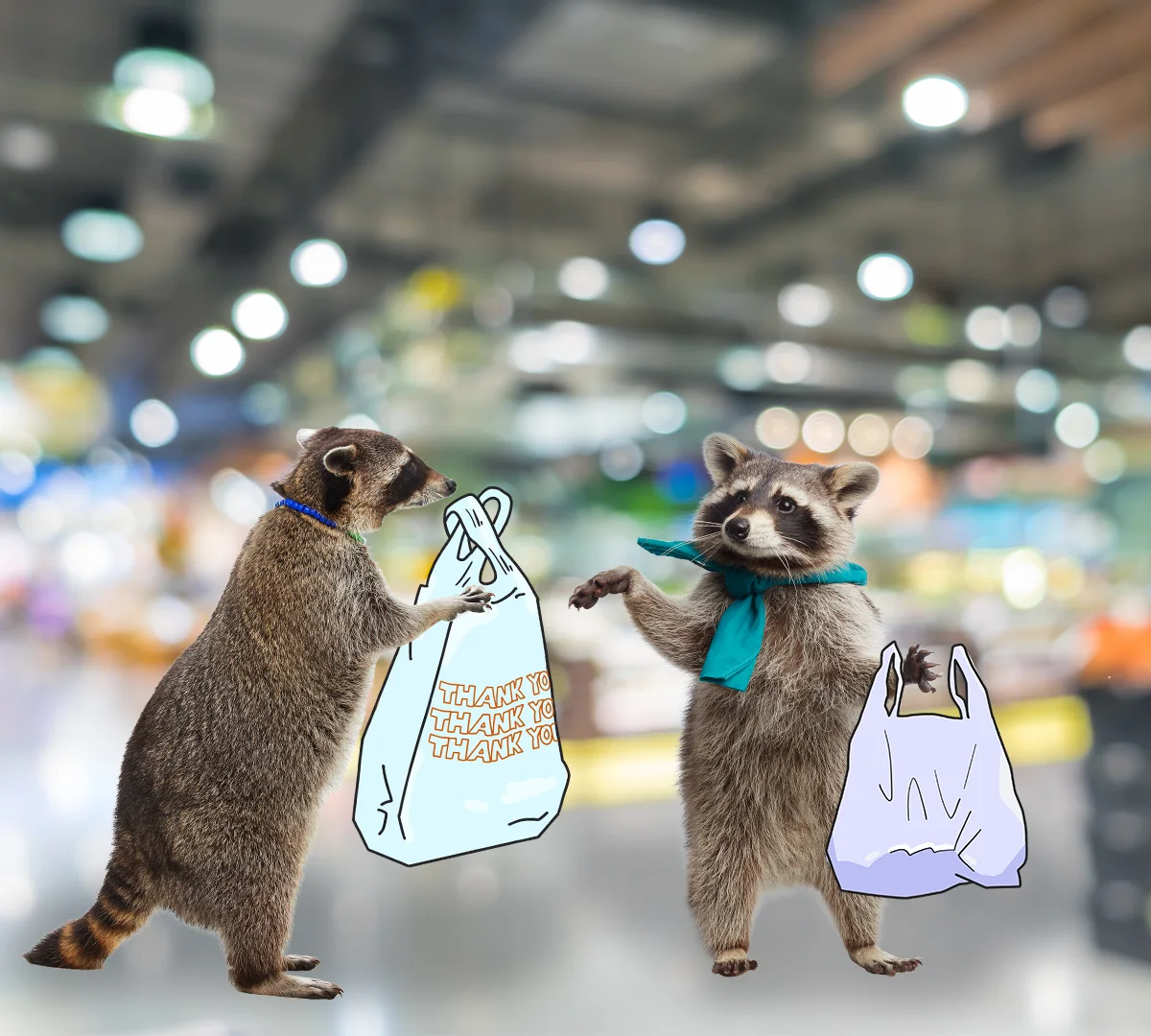
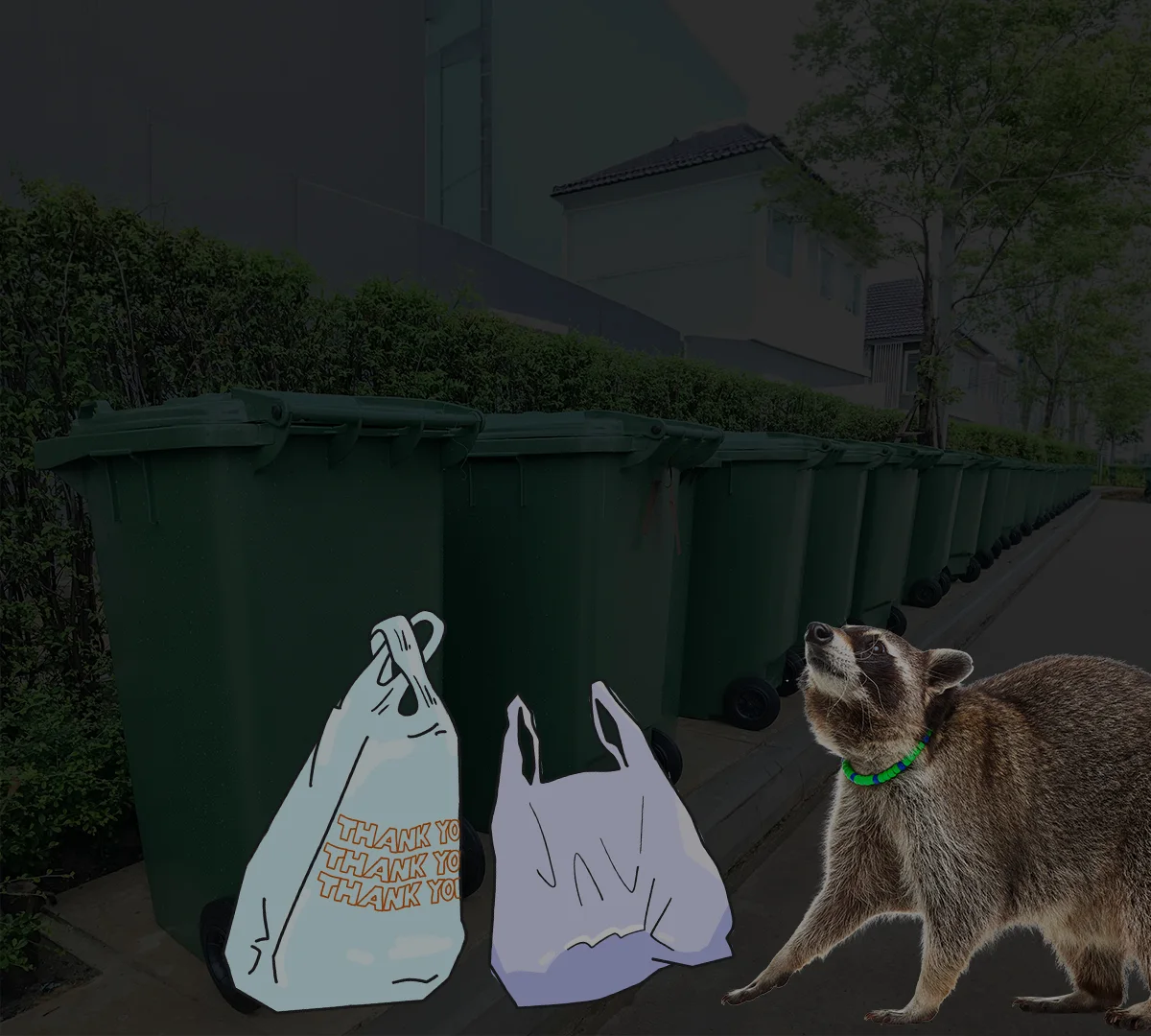
“Look at this!” Nyla said with disgust. “You found a recycling basic! Plastic bags should NOT be recycled in your curbside cart since they can tangle up recycling machines and endanger recycling workers. But they can be returned to local grocers like Meijer and Kroger instead!They threw all these plastic bags in with the other plastics! Somebody could get tangled up and hurt. We better get them out of here before the truck comes.” She began to frantically dig through the bin, grabbing all the plastic bags.
“I’m not sure we’ll have time to get them all. There’s the truck now! You get out of here. I’ll grab the rest.” Dave gently pushed her over the edge of the bin. Nyla dived into the ditch with the bags she had sorted out, but when she looked back the truck was already pulling the cart up to empty it. Dave held on to a plastic bag, trying to wrestle it from the recycling truck.
“Dave, let go!” But the truck was already driving off, the plastic bags tangled in the back of the truck’s machinery as Dave held on to the side. “Dave!” Tears rolled down her cheeks as the truck drove off with him. The brave raccoon was still attempting to undo the jam as he disappeared down the subdivision.
Nyla chased after the truck for as long as she could until her legs finally gave out. She must’ve stayed there for what felt like hours.
Weeks passed before a raccoon wearing a turquoise bandanna around his neck and a raccoon with a stylish red hat entered her classroom after school had ended. “Excuse me, but are you Nyla?”
“Yes,” she replied shakily.
“I’m Frank, Dave’s friend. And this is Paper. He told us a lot about you. Have you seen him?”
“He’s missing. He … tried to save a recycling truck.” Nyla vowed from that moment on to help others know about plastic recycling, so an accident like Dave’s never happened again.
Psst — the color-coded ✱ icons in this story are clickable. Tap one for a recycling rule, a recycling benefit or a bit of need-to-know trivia.
It was supposed to be a typical practice. But when the lead guitarist of noise-rock cover band Heavi Metale — Heavi — strummed the strings, it was as if he thrummed the very strings of fate.
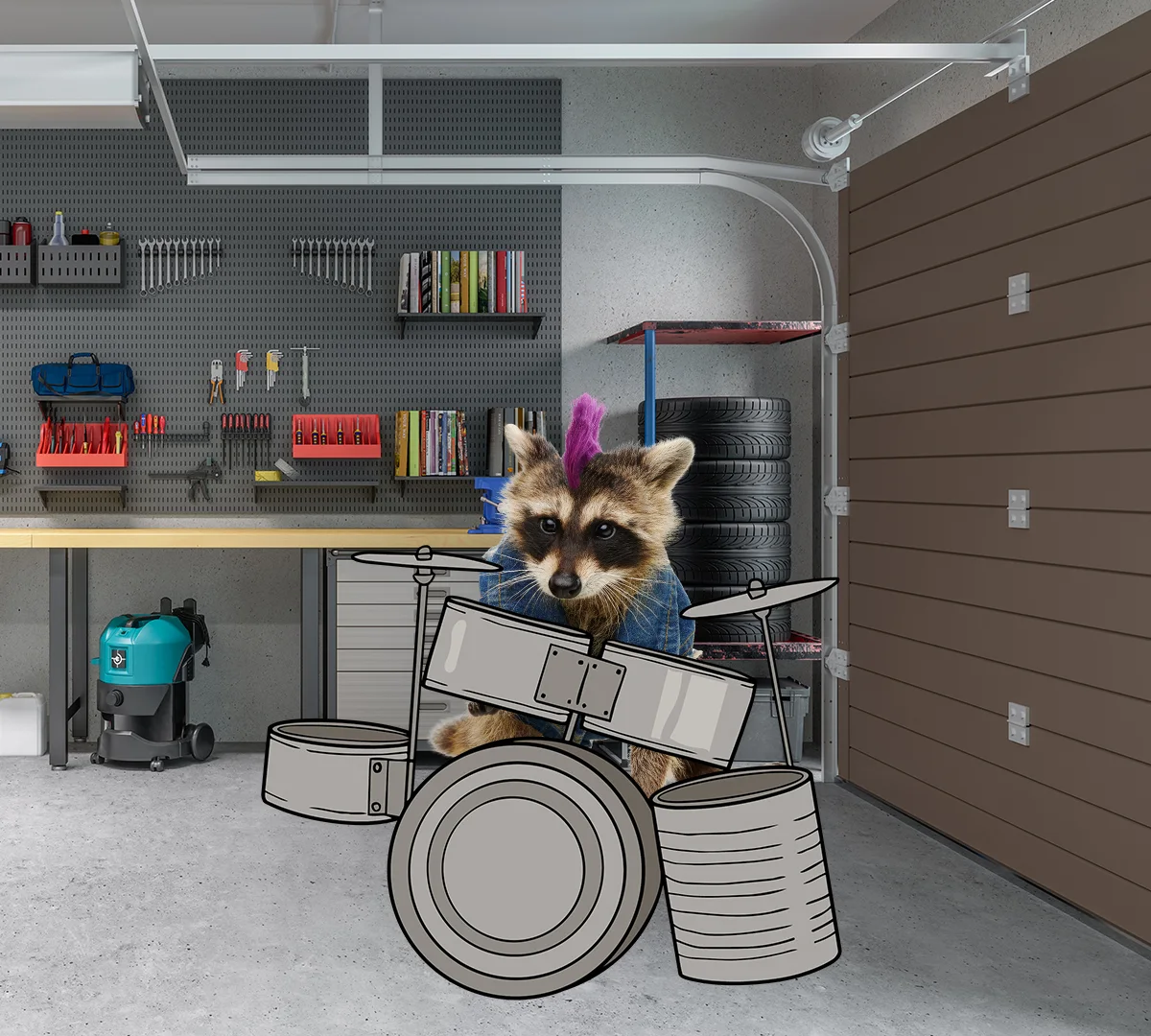
As the music swelled, so too did Precious Metale’s excitement — causing her to break into a wicked impromptu drum solo. Her kit, made from metal cans scavenged from recycling carts, You found a recycling basic! NEVER recycle aerosol cans … because during the recycling process, these can ACTUALLY explode.let out an explosive sound under her drum sticks.
“Stop, stop, stop!” Heavi shouted, his gray fur puffed in agitation. “Can’t we get through one practice without you going rogue?”
“Sorry, man, but that’s just not rock ’n’ roll. If I feel it, I play it!” Precious said with a shrug. It was a fight they’d had often. Despite both raccoons’ shared love of Fun fact: Recycling your metal cans saves on natural resources! Making a can from recycled aluminum takes up to 95% less energy than a brand-new one.metal (both music and recyclables), the dynamic duo was often at odds.
“I’ve had it!” Heavi snapped, shoving his guitar in its case. “I got an offer from a group of jazz cats anyway, so I’m out!”
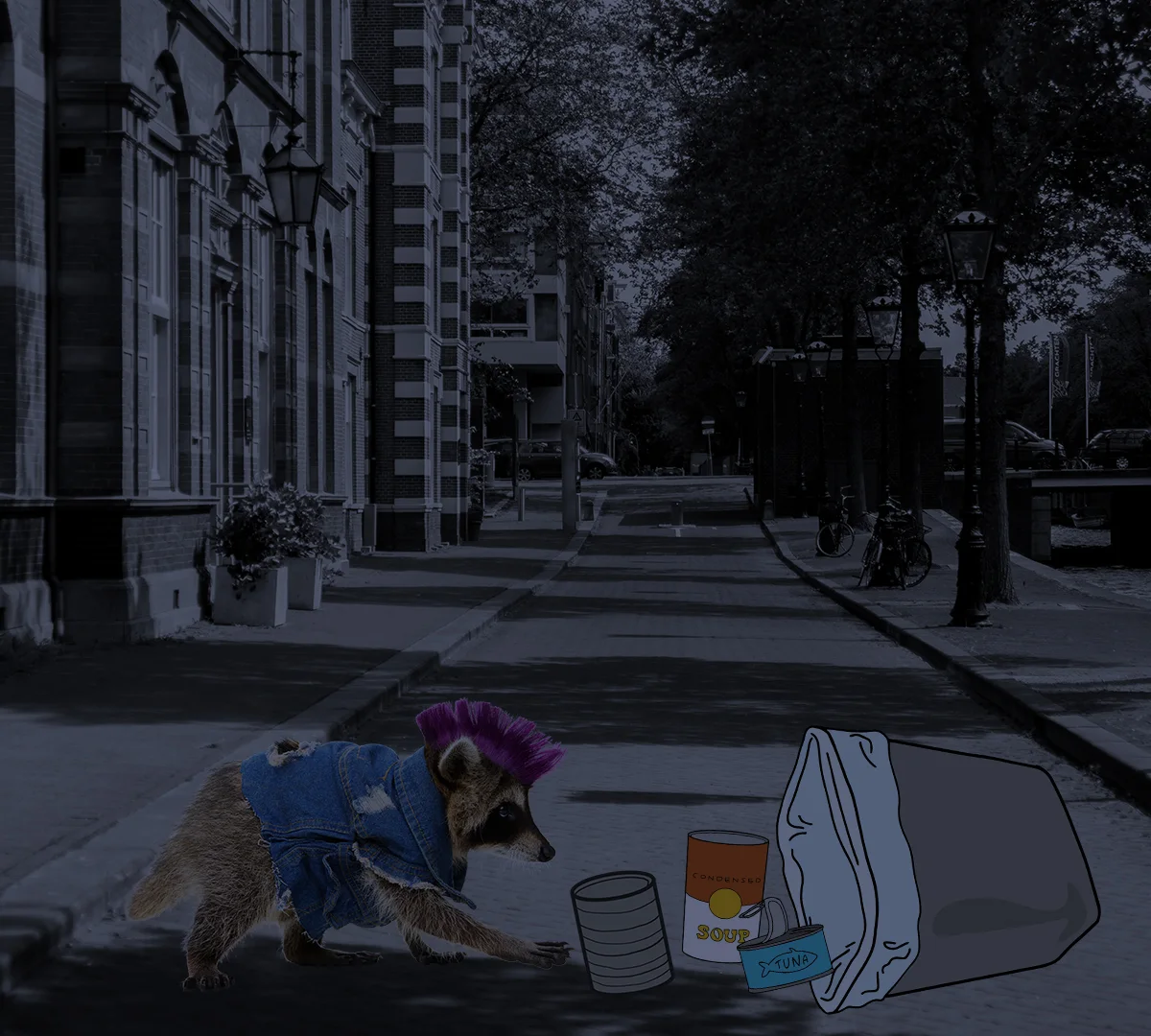
Precious watched, mouth agape, as Heavi stormed out. Full of righteous fury (and determined to have the last word), Precious sprinted out into the dark alley. In her haste, she toppled into a trash can, sending the contents flying.
Under the shallow light of a crescent moon, Heavi had disappeared and Precious hissed — her anger worsened by the sight of You found a recycling basic! Relatively grease-free pizza boxes, rinsed and emptied metals like tuna cans, and paper envelopes (even with plastic windows) are all recyclable curbside!perfectly good recyclable pizza boxes, tuna cans and paper envelopes mixed into the trash at her feet.
“’Tis a right shame, isn’t it, Lass,” a voice said, making her jump.
Precious whirled around to see a raccoon sporting a checkered cap approaching from the mouth of the alley. “It seems the humans still have a long way to go when it comes to learning the rules of recycling,” he said while looking at the mess.
A set of paper bagpipes slung across his back caught her eye. “Nice pipes. Pawmade?”
“Yes, and out of Newspapers, magazines, non-glittery wrapping paper, envelopes and more can all be recycled curbside (or given to Paper to make into bagpipes!).recycled paper too! You’ve a fine eye for instruments.”
“Thanks, I’m in — I was in a band … but that’s over now,” she said, shaking her head. The strange raccoon began cleaning the mess as she watched, sorting out recyclable items with care.
“The name’s Paper MacKay, and it seems we’re both in luck. As fate would have it, I’m putting together an ensemble of my own. Any interest in joining a new group?”
“Think you can handle my sound?” Precious asked, starting to grin.
“Lass, bagpipes are nothing BUT sound! I think we’ll get along jus’ fine.”
Ever stared at an empty item and wondered … can I recycle that?
The answer might be yes! But rather than wishcycling — aka tossing questionable items in your cart and hoping for the best — it’s better to learn the right way to recycle. And you’re in luck! Our Squad put together this handy-dandy Q&A to help you learn the common rules of recycling.
Q&A: Get to know the rules of recycling
Q: What are the main things I can recycle curbside?
A: There are five main types of materials you can recycle in your curbside cart: paper, cardboard, plastic, metal and glass!
Q: Do I need to do anything before recycling my items curbside?
A: Yes! And it depends on the material. Here’s a quick overview:
Plastic, metal and glass — Empty and rinse containers, jars and cans made from these materials before they enter your cart.
Cardboard — Should always be flattened to create more room in your cart.
Paper — Keep clean, dry and ick-free! Keep this in mind when dealing with rinsing food waste out of other recyclable items.
Q: Cardboard you say. … Does that mean I can recycle pizza boxes too?
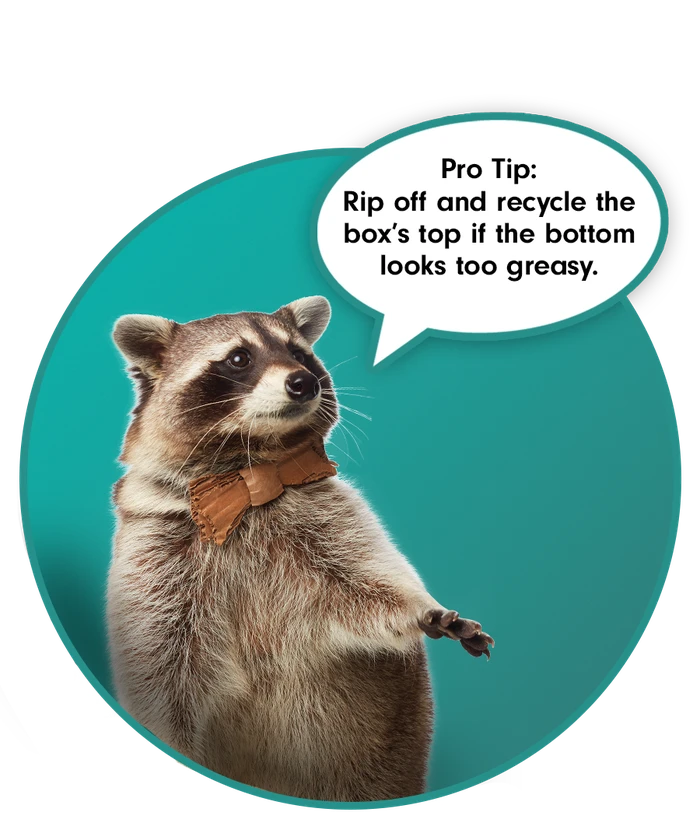
A: Sure can! But only if they’re empty of food waste (so hold the cheese, please) and not overly greasy.
Q: If my recyclables are stored in a bag, can I toss the whole thing in my cart?
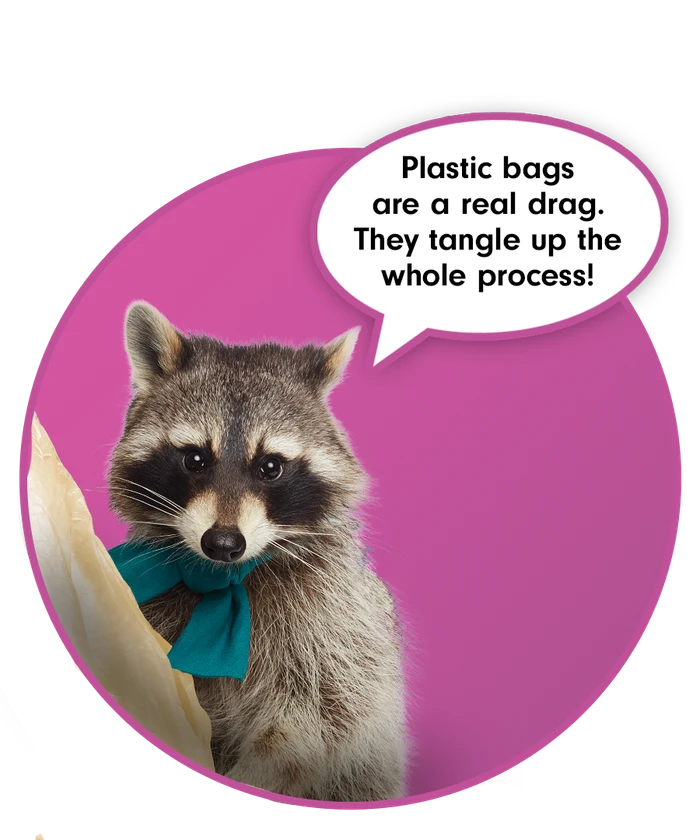
A: No!!! Never! Bagging recyclables ruins the process! Recycling sorters can’t tell what’s inside a bag, meaning opening one runs the risk of encountering sharp objects or hazardous materials. 😱
Always keep your recyclables loose in the cart, NEVER bagged. And take any plastic bags back to local grocers like Meijer and Kroger instead.
Q: What tips do you have for stopping wishcycling once and for all?
A: If you aren’t sure about an item, don’t guess! Look for an answer with our recycling rules search tool. We can help you find information on:
What items are recyclable curbside
What items are drop-off or collection event only
What items simply can’t be recycled
Knowledgeable humans can help too! If you still have some questions, feel free to watch how our friends in Kent County navigate common recycling mistakes in this video:
“The Basics” are universal across Michigan. If “niche” materials are making you confused, check with your local recycler for their specific rules before placing something into your curbside cart!
They keep going and going … batteries, of course! They’re in everything — toothbrushes, remotes, computer mice, kids’ toys, phones, computers, laptops, power tools, lawn care equipment. You get the picture.
Did you know that the average house goes through 90 batteries a year?! That’s a loooooot of batteries. But anybody will tell you the worst day for a battery is when it dies. What happens then?
The first thing to know when the inevitable happens is batteries aren’t accepted in curbside recycling.
Why? Batteries contain a toxic chemical that could harm recycling center workers. And they can be a fire hazard. So when it comes to batteries, safety is king!
Know your options
Some places have special drop-off locations for recycling batteries. It’s also common to have community events several times a year where folks can drop off their hazardous materials.
Your options could include:
Your local recycling provider
Retailers like Staples, Home Depot, Lowe’s, etc.
Automotive parts supply stores for recycling car batteries
Mail-in companies
Not sure where to start? We’ve put together a handy-dandy list of providers and a battery recycling locator to make things easier. Check it out.
Types of batteries
Most of us probably think of batteries only in terms of AA or AAA, maybe a 9-volt or when charging our phone. But knowing the different types of batteries can help you be a better battery recycler!
Types of batteries you use every day include:
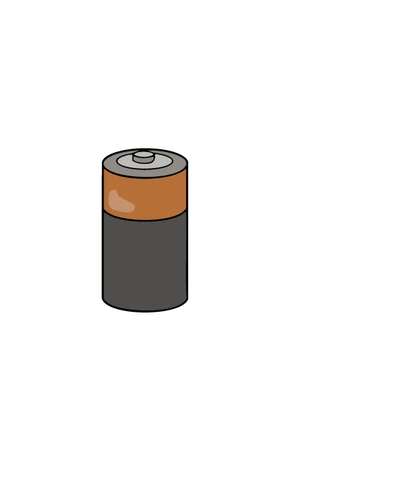
AlkalineLike what you use in your TV remote.
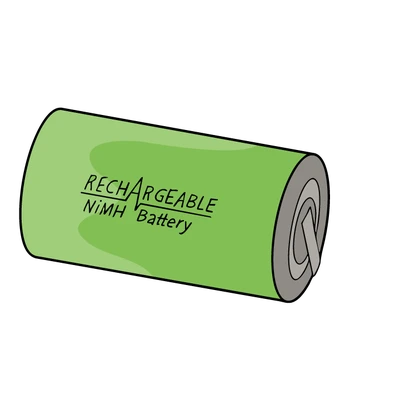
Rechargeable alkalineThe ones you top up and use again.
Lithium-ionLike what your phone or laptop use.
How to collect batteries to recycle
Whether you’re mailing batteries in or planning to drop them off, having a way to collect them at home is important!
1
Collection
Mail-in services like Battery Solutions have battery recycling pails you can order to collect batteries in. Make sure to check what type of pail you’re ordering. Some allow you to mix different types of batteries and some don’t!
2
Fill it
Wait until your pail is full or there’s a special community drop-off event.
Important note: Make sure to tape both ends of your batteries before putting them in your pail!
3
Recycle
Once your pail is ready, you can mail it in or drop it off and start again.
Have you ever heard of tumbleweeds blowing in the wind? Kind of peaceful. We can dig it. But do you want to know what we don’t love seeing blowing around out there? You guessed it: plastic bags!
If you’ve been recycling for a minute, you’ve probably heard that plastic bags can’t be recycled in your curbside bin. But before you let those things tumble around in the breeze, there are ways to still recycle them!
Take it from us — Nyla P. Lastic, the Queen of Plastic Recycling, and Frank, the King of “Other” Recycling. Let’s break it down.
How to recycle plastic bags
Don’t put them in your curbside bin. They can tangle around the sorting machines at the recycling center — not cool!
Make sure they’re clean and dry and free from things like receipts.
Designate a place to collect them at home.
Check with a grocery store or other retailer in your area to see if they accept them. Usually there’s a drop-off bin in the store.
No special trip required! Just grab your bags the next time you plan to hit the grocery store.
Not sure if your plastic bag can be returned to the store? Try the stretch test! If it stretches, it can probably go. Or check with your individual retailer to see if they have a list of accepted items.
And while we know using plastic bags happens to the best of us, try opting for reusable bags where you can!
Now excuse us while we go chase down a few bags to return!
As a total recycling lover, you help improve Michigan’s environment and boost the economy with each recyclable that goes into your curbside cart. To make the most of your recycling, safety is key!
Believe it or not, keeping recycling workers safe also ensures that your recyclables get a second chance. And the best part is that you can do both in just three steps.
Take it from Matt Van Benten, operations supervisor at the Resource Recovery and Recycling Authority of Southwest Oakland County (RRRASOC) Material Recovery Facility in Southfield. “Safety is huge here — it’s our No. 1 concern, and it’s our No. 1 problem.”
As he sorted through a box of potentially dangerous items that were pulled from the MRF’s conveyor line, he found items that don’t belong in curbside recycling.
“There are homes for them, but your local recycling bin is not it.”
— Matt Van Benten
Sharps
Sharps can easily injure workers while they move down the conveyor. Objects that should be kept out of curbside recycling include:
Sharps that don’t fit into medical waste, like scissors, can often be taken to local household hazardous waste collection events.
Bags
Bags can hide among paper and plastic materials, which makes them a bit tricky for recycling workers since, as Van Benten said, “You don’t know where it is.” Not only can they clog up sorting machines, but they can also hide hazards from recycling workers — which means it’s safer to dispose of them when materials are being sorted.
Leave your recyclables loose in your curbside cart and clear of tanglers like plastic bags, string lights and hoses. As for the plastic bags, those can be taken right back to a local grocer, like Meijer or Kroger.
Electronics
The last item you should keep FAR from your curbside cart are batteries or any kind of electronic.
“We’ve had explosions and fires here caused by things like this,” Van Benten said. And that’s why electronic devices are a no-no. Things like cellphones, laptops and tablets are powered by lithium-ion batteries, which can explode when crushed or shaken.
Instead, return them to a local electronic retailer like Best Buy, Home Depot and more.
Howdy, humans! So, you found our quiz and want to test your recycling knowledge? Or maybe you’re just sniffing around for more recycling rules. Whatever the reason, the Recycling Raccoon Squad has gathered the answers below. 👇
True!
Not much more to say than envelopes with plastic windows are A-OK!
False!
Styrofoam and other foam materials are NOT recyclable curbside. This is mainly because of their porous nature (they hold on to air and contaminants). Some centers and programs will accept them, but otherwise they can be thrown away.
False!
As long as it’s crumb- and cheese-free (without a drenching of grease), your pizza box is recyclable. We were so jazzed, we even made a page where you can check your grease level.
False!
Glass is actually one of the MOST recyclable materials because it can be recycled again and again and again and aga — you get it.
That means mason jars, food jars, glass bottles are all recyclable curbside!
Psst — the color-coded ✱ icons in this story are clickable. Tap one for a recycling rule, a recycling benefit or a bit of need-to-know trivia.
The night was dark. His surroundings coated in dew from a dense fog. And Frank was face down in a recycling cart. The only sound was the rustling of common household recyclables as You found a recycling basic! Plastic, metal and glass containers should be rinsed (or carefully licked clean) before being recycled curbside.he licked forgotten yogurt cups, orange juice bottles and bean cans clean.
That’s when he heard it. A sound that made his ears shoot up. Frank peered out of the recycling cart to look around him. Nothing. Frank returned to his work when again … tap, tap. Tap. Tap, tap.
When he looked out, he saw only the neighboring recycling cart. Something was inside.
Frank’s fur stood on end as he drew nearer. A blur of white shot at him and wrapped around his back paw. Frank hissed — kicking until he saw the blur was a plastic bag … Did you know, tanglers are items that tangle up recyclables, recycling machines and raccoons. Plastic bags, however, can be taken back to local grocers like Meijer and Kroger for recycling.a tangler.
That couldn’t have made the sound, so what had? Frank continued forward and lifted the lid to see the cart was full of … tanglers! He fell back at the sight, scrambling behind a nearby tree as images of what he had seen flashed through his mind. FYI: String lights, rope, wires and hangers are all included in the tangler category and should be kept FAR from your curbside cart.String lights, rope, wire and even hangers — all stuffed inside a recycling cart. And all coiling around common household recyclables.
If these items made it back to a recycling center, they could tangle a sorting machine and stop You found a recycling benefit! Recycling helps items become something new, rather than lying in a landfill.loads of recyclables from becoming new items! Frank was frantic as he rushed back to the cart. He didn’t have time for fear. He had to save the recyclables!
His paws worked feverishly to yank tangler after tangler, even as they tangled around him. In his mind, he could hear his mother Pearl’s voice: “You found a recycling benefit! In Michigan, recycling and reuse industries support more than 72,500 jobs and can save up to 95% of energy.Recyclables save energy and help the economy, Frank. That’s why it’s our duty to save them in return … ”
Finally, the unfettered recyclables lay loose in the recycling cart, but Frank knew he wasn’t done. He had to get rid of the tanglers — properly. And yet, as he pulled the last one out of the cart, his strength left him and he passed out on the soft grass.
“Awrite, laddie? You look as though you’ve seen a ghost!”
“Oh man, he’s laid out.”
Frank blinked awake at two raccoons, one with a purple mohawk holding drumsticks and another with a plaid hat and paper bagpipes. They helped him up, asking about what had happened. As Frank explained, the two smiled and helped remove the tanglers. You found a recycling rule! Remember! While each tangler has its own disposal process, most can be donated or resold if they are in good condition!Rope: Cut into smaller sections before placing in your trash.Hangers: Place in curbside trash.String Lights: Look for local drop-off options.Hoses: Remove the metal ends and take to a specialty recycler or cut the hose into smaller sections before placing in your trash.Wire: Look for local options that will buy old wire or take to a specialty recycler.They disposed of each one before leading him to a small group they called … the Recycling Raccoon Squad.
Burgeoning metro Detroit city’s plan to make recycling easier than ever before will help Madison Heights reach all-time highs for the amount of materials recycled each year with support from Michigan Department of EGLE
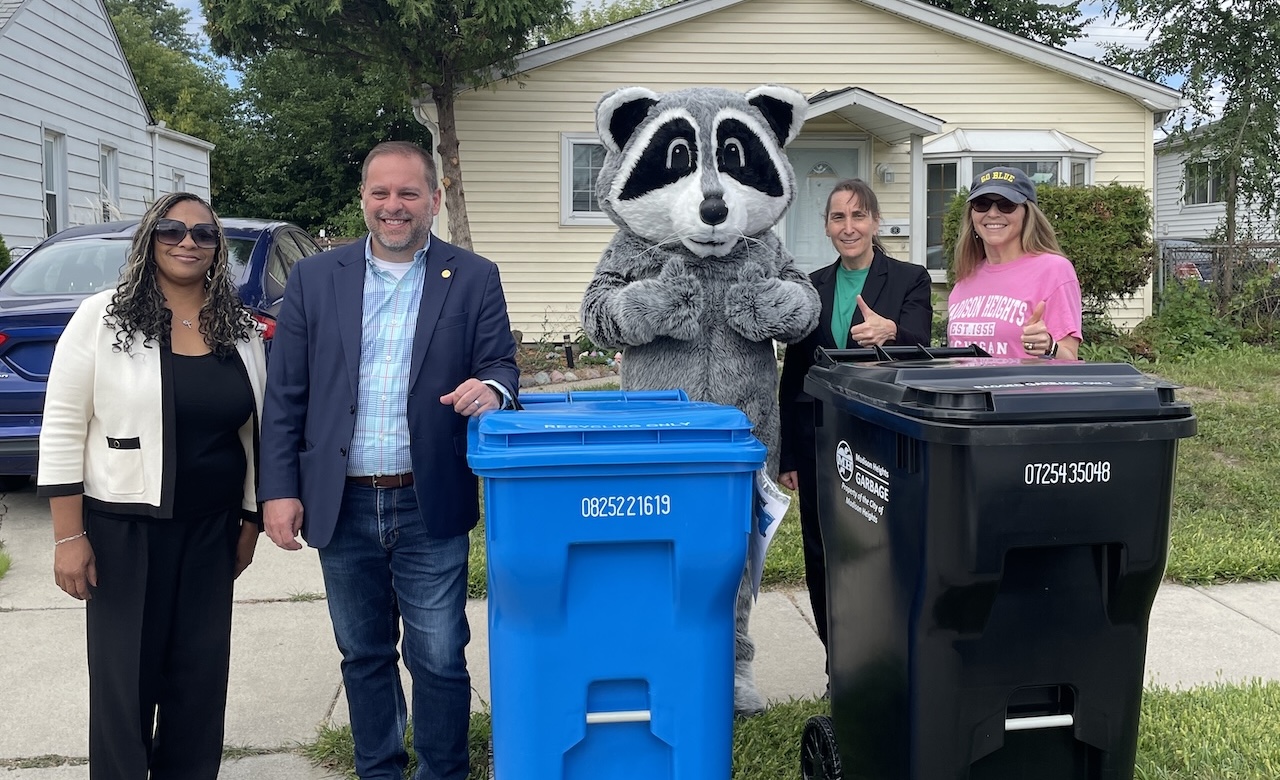
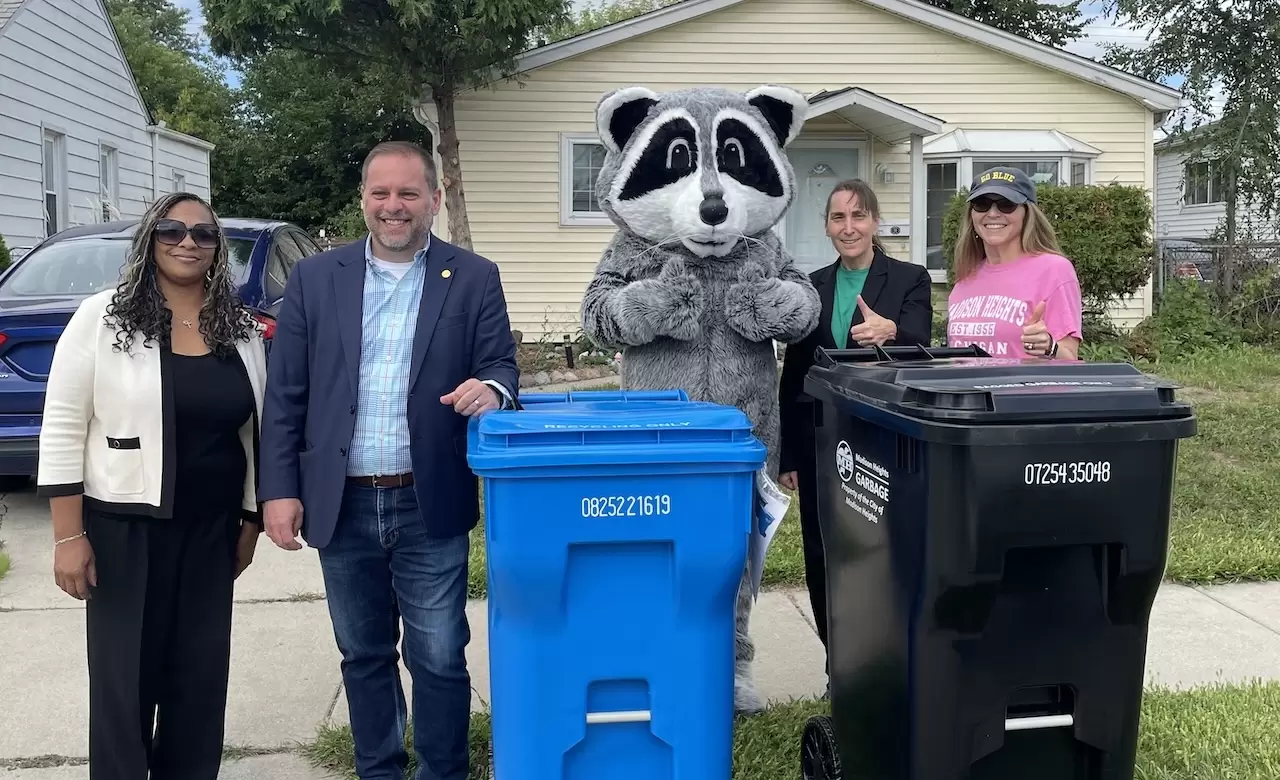
MADISON HEIGHTS, Mich. — The City of Madison Heights today is kicking off the largest expansion of recycling collection in the metro Detroit city’s 70-year history with the distribution of more than 20,000 free curbside trash and recycling carts, supported by essential funding from the Michigan Department of Environment, Great Lakes, and Energy (EGLE).
The new rolling, lidded recycling carts are projected to increase the amount of materials recycled in Madison Heights to all-time highs — from 1,000 tons per year to 1,500 tons per year, a 50% increase — as well as improve recycling access, inspire more resident participation and enhance safety for sanitation workers.
Madison Heights is spending $1.1 million to purchase the carts from Grand Rapids-based Cascade Cart Solutions, with almost half of the cost covered by a $403,200 EGLE Recycling Infrastructure Grant in addition to a $105,600 grant from national nonprofit The Recycling Partnership to support the rollout.
“Thanks to the generous grant funding provided by EGLE and The Recycling Partnership, Madison Heights is moving toward a more sustainable and efficient waste management system for all residents. This rollout marks a major milestone for our community,” said Madison Heights Mayor Roslyn Grafstein.
“We all know recycling helps us keep Michigan beautiful. Now, Madison Heights gets to be a larger part of that beautiful story,” Grafstein said during a morning news conference that preceded the first installation of the cart rollout in a nearby neighborhood.
The city’s investment helps put Madison Heights on the map as among Michigan’s community recycling champions.
“The residents of Madison Heights’ commitment to recycling helps contribute to Michigan’s cleaner, more resilient future,” said EGLE Environmental Justice Public Advocate Regina Strong.
“By increasing our recycling rate, we not only conserve natural resources but also generate significant economic benefits, supporting over 72,500 jobs and injecting billions of dollars into our economy,” Strong said. “Every bottle, box and can we recycle brings us one step closer to a sustainable Michigan where both the environment and our communities thrive.”
Each of the city’s 10,300-plus households will receive one 96-gallon Madison Heights-branded trash cart and one 64-gallon Madison Heights-branded recycling cart as part of the rollout that begins Monday, Aug. 18.
Both of the cart models produced by Cascade are made with 10% postconsumer curbside recycled material. As a woman-owned company and the only Michigan-based recycling and trash cart manufacturer, Cascade has rolled out over 40 million trash and recycling containers nationwide, including over 4 million receptacles in Michigan.
“Cascade is excited to be a small part of Madison Heights’ curbside trash and recycling upgrades,” said Cascade Engineering Sales Manager Brian Miller.
“Roll carts have a life cycle of 10-20 years or more,” Miller added, “and these new carts will be a part of the Madison Heights community for decades to come, contributing to blight control around the city as well as contributing to the state of Michigan’s recycling goals well into the future.”
All of the carts are expected to be delivered by Sept. 1, 2025. As part of the plan, Madison Heights will move to cart-only collection, effective on Monday, Oct. 6, 2025. That means all Madison Heights residents beyond that date are required to use carts to dispose of their garbage and recyclables.
“Many conscientious people in Madison Heights have done their best to recycle, but most of the city’s potentially recyclable materials end up in trash containers and go to the landfill because many of our residents don’t have their own recycling containers,” said Jennifer Bartleman, of the Madison Heights Citizens Environmental Committee.
“This campaign we’re rolling out today allows all Madison Heights residents to do their part. Recycling is not only the right thing to do, but the smart thing to do,” Bartleman said.
The city’s new collection system provides several important benefits:
It will now be easier and faster than ever in city history for Madison Heights residents, especially senior citizens, to recycle.
Local taxpayers will benefit from an estimated $200,000 in annual savings compared with the previous refuse and recycling collection model, totaling approximately $1 million over the five-year collection contract with Clinton Township-based Priority Waste.
Enclosed carts improve curbside appearance and reduce rodent activity.
A universal recycling program that increases landfill diversion.
Materials that can be deposited in the recycling carts include:
Plastic bottles and containers
Aluminum and steel cans
Glass bottles and jars
Cardboard (flattened)
Newspaper, junk mail, mixed paper — all colors and types
The city is launching a comprehensive outreach campaign to inform residents about the transition. This includes:
Direct mailers with rollout information
Printed instructions that will be attached to each cart upon cart delivery
Educational content shared via social media, city newsletter and local newspapers
Refuse and recycling must be placed in an approved cart for regular collection.
Overflow material can be handled through special pickups or by purchasing additional approved carts.
One bulk item per week will be collected at no charge on the regular collection day.
Residents with disabilities may qualify for a door-side pickup service. Residents can contact the Department of Public Services with questions about the program.
“By helping Madison Heights residents and all Michiganders understand how to recycle and why it is so important, and by continuing to expand access to recycling services, we can help protect our natural resources and enhance the economy of our state,” said state Rep. Mike McFall, D-Hazel Park, whose legislative district encompasses Madison Heights and who spoke at the news conference.
EGLE announced this year the recycling rate in the Great Lakes State is at a record high, based on 2024 metrics. EGLE leaders attribute the state’s recycling success to its launch of the national award-winning “Know It Before You Throw It” education campaign featuring the Recycling Raccoon Squad, as well as EGLE funding for infrastructure and technical support for projects that increase access to recycling services across Michigan.
EGLE research shows Michigan has steadily increased its recycling rate from 14.25% before 2019 (when Michigan ranked among the nation’s lowest in recycling before the Recycling Raccoon campaign began) to 23% last year and an all-time high of over 25% now. EGLE forecasts that Michigan is on track to achieve the state’s goal of a 30% recycling rate by 2029.
In fiscal year (FY) 2024, Michiganders recycled more than 71,000 tons of glass, 329,000 tons of paper and paper products and 56,000 tons of plastics and plastic products. The total amount of residential recycled materials reported for FY 2024 was 723,174 tons — exceeding the year before by more than 19,000 tons.
This equates to every person in Michigan recycling nearly 143 pounds of cardboard boxes, milk cartons, soup cans, plastic bottles, glass bottles and jars, food waste and other recyclable materials over a 12-month span. The volume of materials Michiganders recycled in FY 2024 equals the weight of 10 Mackinac Bridges and would fill the football stadiums of the Detroit Lions, University of Michigan and Michigan State University, as well as the hockey stadium of NCAA men’s national champion Western Michigan University.
Join the Squad!
Help Michigan become a leader in recycling again. Join the squad today. You don't need to be a raccoon – you just need to sign up!
After signing up for recycling news, you will receive occasional updates. We will not sell your email address to any third party at any time. View our privacy policy.
We use cookies to personalize ads, to provide social media features, and to analyze our traffic. We also share information about your use of our site with our social media advertising and analytics partners who may combine it with other information that you’ve provided to them or that they’ve collected from your use of their services. You consent to our cookies if you continue to use our website.
















 Alkaline
 Rechargeable alkaline
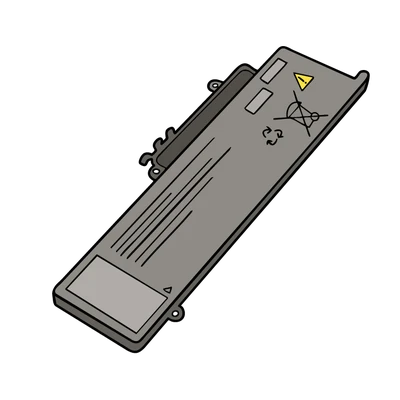 Lithium-ion