This year, the Recycling Raccoon Squad is setting out on the Great Recycling Road Trip! As we celebrate Michigan hitting its highest recycling rate for the fifth consecutive year, we’re visiting some of our favorite spots in the Great Lakes State.
It wouldn’t be a road trip without a stop in Michigan’s Capitol — Lansing! From the Capitol building to the MSU Broad Art Museum and more — you humans across the Lansing area are doing an awesome job of recycling. Your efforts are helping support over 72,500 Michigan jobs, saving 800K tons of material and generating $17 billion in revenue.
And because we love some good recycling rules, we checked out the city’s dos and don’ts of recycling while we were here.
Paper
Dos: Flattened cardboard/food boxes, junk mail, newspapers and paper bags.
Don’ts: Paper plates, wrapping paper or tissues.
Pro Tip: You can recycle shredded paper by placing it in a PAPER bag labeled “SHRED.”
Plastic
Dos: Food, beverage and soap bottles, containers and cups.
Don’ts: Styrofoam and plastic lids.
Metal
Dos: Aluminum foil and containers and steel cans.
Don’ts: Paint or aerosol cans.
Cartons
Dos: Food and beverage cartons.
Don’ts: Frozen food containers.
Glass
Dos: All colors of bottles and jars.
Don’ts: Mirrors, ceramics or light bulbs.
Find these and more tips to keep up the great recycling in Lansing!
They keep going and going … batteries, of course! They’re in everything — toothbrushes, remotes, computer mice, kids’ toys, phones, computers, laptops, power tools, lawn care equipment. You get the picture.
Did you know that the average house goes through 90 batteries a year?! That’s a loooooot of batteries. But anybody will tell you the worst day for a battery is when it dies. What happens then?
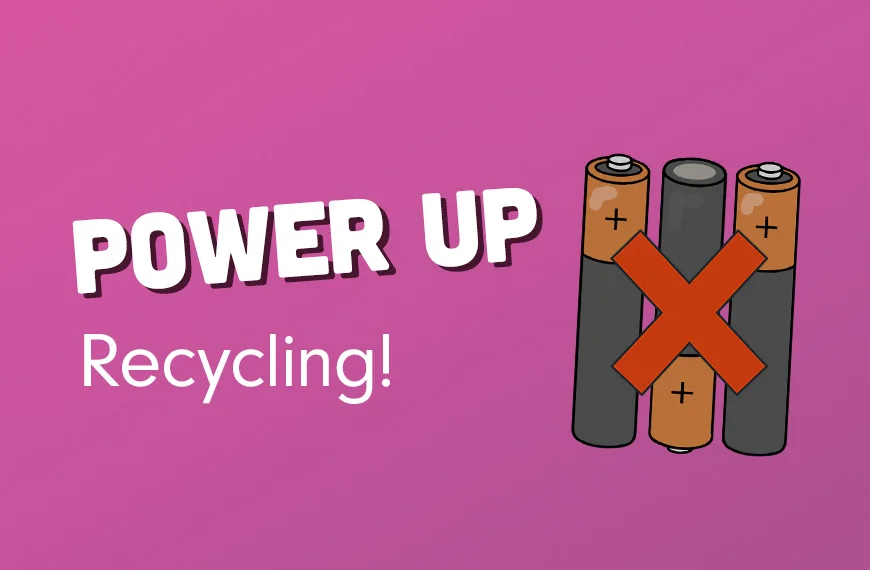
The first thing to know when the inevitable happens is batteries aren’t accepted in curbside recycling.
Why? Batteries contain a toxic chemical that could harm recycling center workers. And they can be a fire hazard. So when it comes to batteries, safety is king!
Know your options
Some places have special drop-off locations for recycling batteries. It’s also common to have community events several times a year where folks can drop off their hazardous materials.
Your options could include:
Your local recycling provider
Retailers like Staples, Home Depot, Lowe’s, etc.
Automotive parts supply stores for recycling car batteries
Mail-in companies
Not sure where to start? We’ve put together a handy-dandy list of providers and a battery recycling locator to make things easier. Check it out.
Types of batteries
Most of us probably think of batteries only in terms of AA or AAA, maybe a 9-volt or when charging our phone. But knowing the different types of batteries can help you be a better battery recycler!
Types of batteries you use every day include:
AlkalineLike what you use in your TV remote.
Rechargeable alkalineThe ones you top up and use again.
Lithium-ionLike what your phone or laptop use.
How to collect batteries to recycle
Whether you’re mailing batteries in or planning to drop them off, having a way to collect them at home is important!
1
Collection
Mail-in services like Battery Solutions have battery recycling pails you can order to collect batteries in. Make sure to check what type of pail you’re ordering. Some allow you to mix different types of batteries and some don’t!
2
Fill it
Wait until your pail is full or there’s a special community drop-off event.
Important note: Make sure to tape both ends of your batteries before putting them in your pail!
3
Recycle
Once your pail is ready, you can mail it in or drop it off and start again.
Ever stared at an empty item and wondered … can I recycle that?
The answer might be yes! But rather than wishcycling — aka tossing questionable items in your cart and hoping for the best — it’s better to learn the right way to recycle. And you’re in luck! Our Squad put together this handy-dandy Q&A to help you learn the common rules of recycling.
Q&A: Get to know the rules of recycling
Q: What are the main things I can recycle curbside?
A: There are five main types of materials you can recycle in your curbside cart: paper, cardboard, plastic, metal and glass!
Q: Do I need to do anything before recycling my items curbside?
A: Yes! And it depends on the material. Here’s a quick overview:
Plastic, metal and glass — Empty and rinse containers, jars and cans made from these materials before they enter your cart.
Cardboard — Should always be flattened to create more room in your cart.
Paper — Keep clean, dry and ick-free! Keep this in mind when dealing with rinsing food waste out of other recyclable items.
Q: Cardboard you say. … Does that mean I can recycle pizza boxes too?
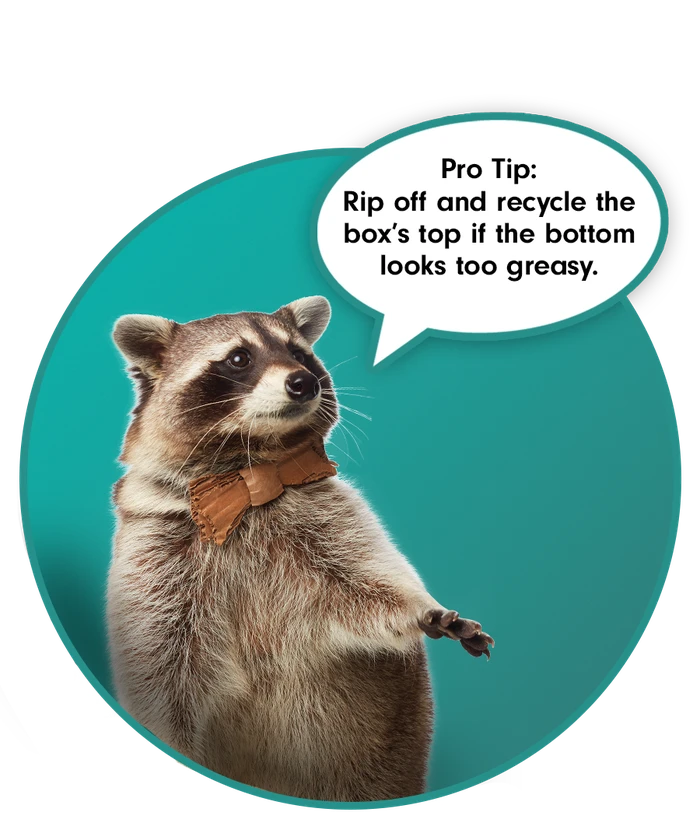
A: Sure can! But only if they’re empty of food waste (so hold the cheese, please) and not overly greasy.
Q: If my recyclables are stored in a bag, can I toss the whole thing in my cart?
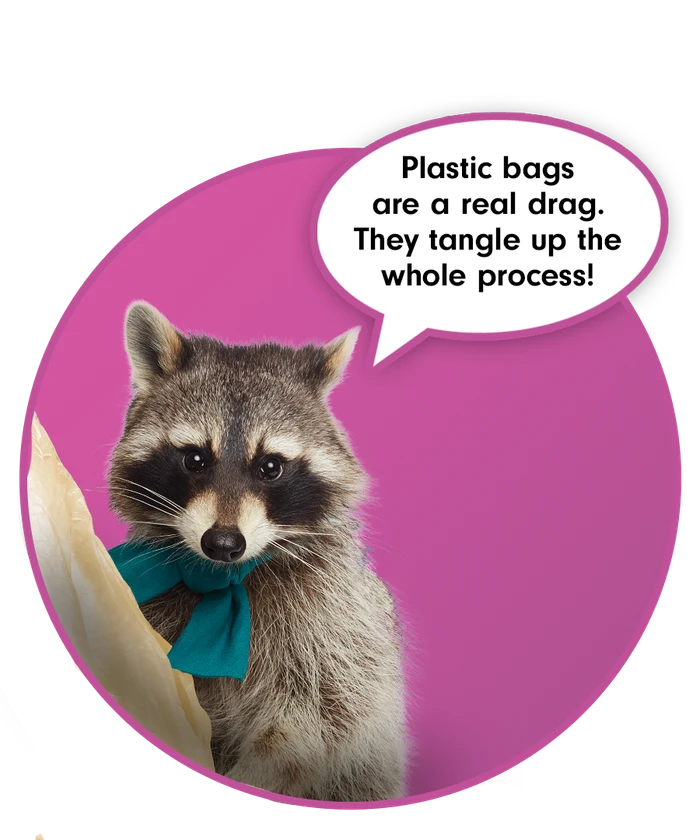
A: No!!! Never! Bagging recyclables ruins the process! Recycling sorters can’t tell what’s inside a bag, meaning opening one runs the risk of encountering sharp objects or hazardous materials. 😱
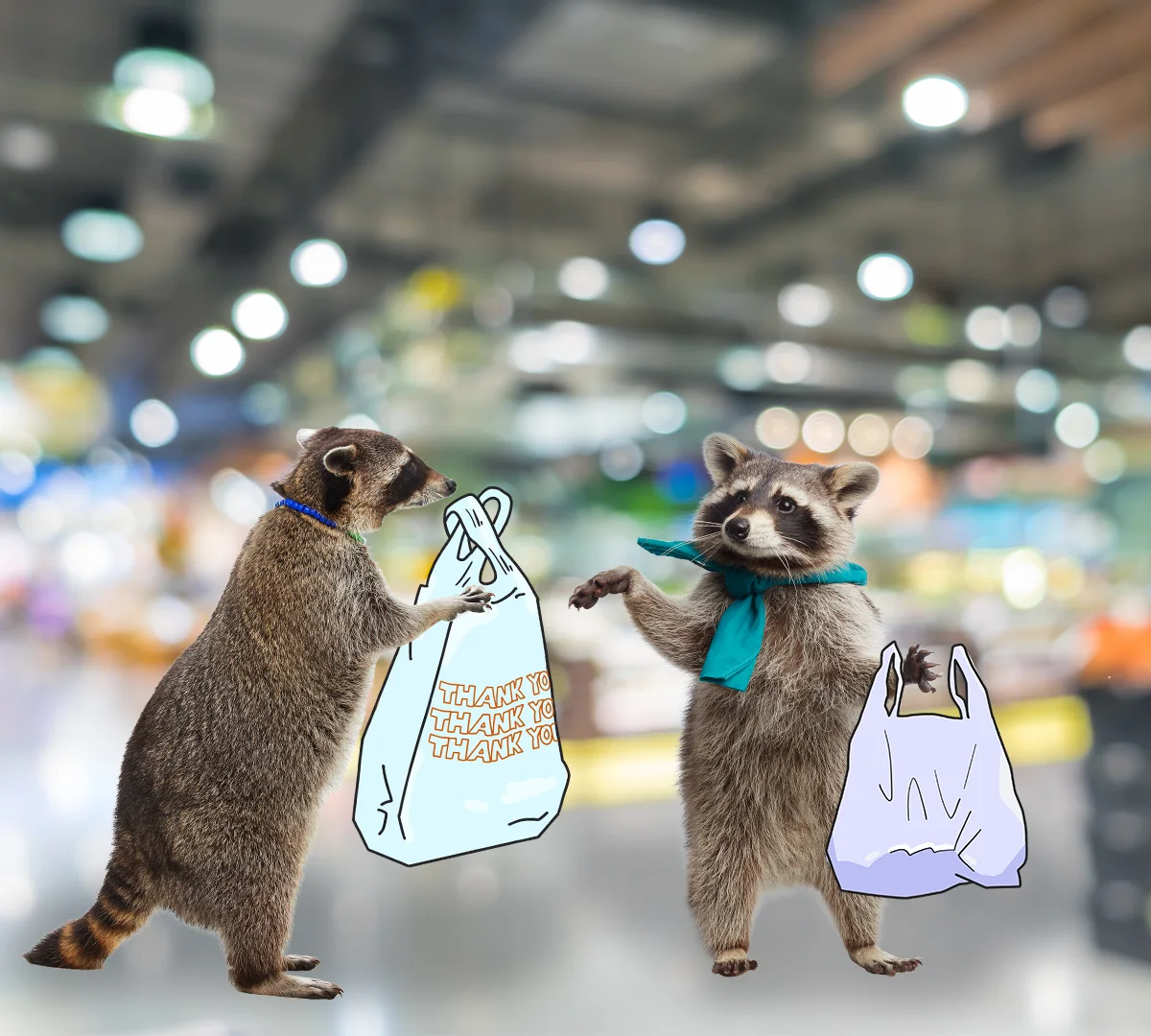
Always keep your recyclables loose in the cart, NEVER bagged. And take any plastic bags back to local grocers like Meijer and Kroger instead.
Q: What tips do you have for stopping wishcycling once and for all?
A: If you aren’t sure about an item, don’t guess! Look for an answer with our recycling rules search tool. We can help you find information on:
What items are recyclable curbside
What items are drop-off or collection event only
What items simply can’t be recycled
Knowledgeable humans can help too! If you still have some questions, feel free to watch how our friends in Kent County navigate common recycling mistakes in this video:
“The Basics” are universal across Michigan. If “niche” materials are making you confused, check with your local recycler for their specific rules before placing something into your curbside cart!
Have you ever heard of tumbleweeds blowing in the wind? Kind of peaceful. We can dig it. But do you want to know what we don’t love seeing blowing around out there? You guessed it: plastic bags!
If you’ve been recycling for a minute, you’ve probably heard that plastic bags can’t be recycled in your curbside bin. But before you let those things tumble around in the breeze, there are ways to still recycle them!
Take it from us — Nyla P. Lastic, the Queen of Plastic Recycling, and Frank, the King of “Other” Recycling. Let’s break it down.
How to recycle plastic bags
Don’t put them in your curbside bin. They can tangle around the sorting machines at the recycling center — not cool!
Make sure they’re clean and dry and free from things like receipts.
Designate a place to collect them at home.
Check with a grocery store or other retailer in your area to see if they accept them. Usually there’s a drop-off bin in the store.
No special trip required! Just grab your bags the next time you plan to hit the grocery store.
Not sure if your plastic bag can be returned to the store? Try the stretch test! If it stretches, it can probably go. Or check with your individual retailer to see if they have a list of accepted items.
And while we know using plastic bags happens to the best of us, try opting for reusable bags where you can!
Now excuse us while we go chase down a few bags to return!
As a total recycling lover, you help improve Michigan’s environment and boost the economy with each recyclable that goes into your curbside cart. To make the most of your recycling, safety is key!
Believe it or not, keeping recycling workers safe also ensures that your recyclables get a second chance. And the best part is that you can do both in just three steps.
Take it from Matt Van Benten, operations supervisor at the Resource Recovery and Recycling Authority of Southwest Oakland County (RRRASOC) Material Recovery Facility in Southfield. “Safety is huge here — it’s our No. 1 concern, and it’s our No. 1 problem.”
As he sorted through a box of potentially dangerous items that were pulled from the MRF’s conveyor line, he found items that don’t belong in curbside recycling.
“There are homes for them, but your local recycling bin is not it.”
— Matt Van Benten
Sharps
Sharps can easily injure workers while they move down the conveyor. Objects that should be kept out of curbside recycling include:
Sharps that don’t fit into medical waste, like scissors, can often be taken to local household hazardous waste collection events.
Bags
Bags can hide among paper and plastic materials, which makes them a bit tricky for recycling workers since, as Van Benten said, “You don’t know where it is.” Not only can they clog up sorting machines, but they can also hide hazards from recycling workers — which means it’s safer to dispose of them when materials are being sorted.
Leave your recyclables loose in your curbside cart and clear of tanglers like plastic bags, string lights and hoses. As for the plastic bags, those can be taken right back to a local grocer, like Meijer or Kroger.
Electronics
The last item you should keep FAR from your curbside cart are batteries or any kind of electronic.
“We’ve had explosions and fires here caused by things like this,” Van Benten said. And that’s why electronic devices are a no-no. Things like cellphones, laptops and tablets are powered by lithium-ion batteries, which can explode when crushed or shaken.
Instead, return them to a local electronic retailer like Best Buy, Home Depot and more.
Howdy, humans! So, you found our quiz and want to test your recycling knowledge? Or maybe you’re just sniffing around for more recycling rules. Whatever the reason, the Recycling Raccoon Squad has gathered the answers below. 👇
True!
Not much more to say than envelopes with plastic windows are A-OK!
False!
Styrofoam and other foam materials are NOT recyclable curbside. This is mainly because of their porous nature (they hold on to air and contaminants). Some centers and programs will accept them, but otherwise they can be thrown away.
False!
As long as it’s crumb- and cheese-free (without a drenching of grease), your pizza box is recyclable. We were so jazzed, we even made a page where you can check your grease level.
False!
Glass is actually one of the MOST recyclable materials because it can be recycled again and again and again and aga — you get it.
That means mason jars, food jars, glass bottles are all recyclable curbside!
Psst — the color-coded ✱ icons in this story are clickable. Tap one for a recycling rule, a recycling benefit or a bit of need-to-know trivia.
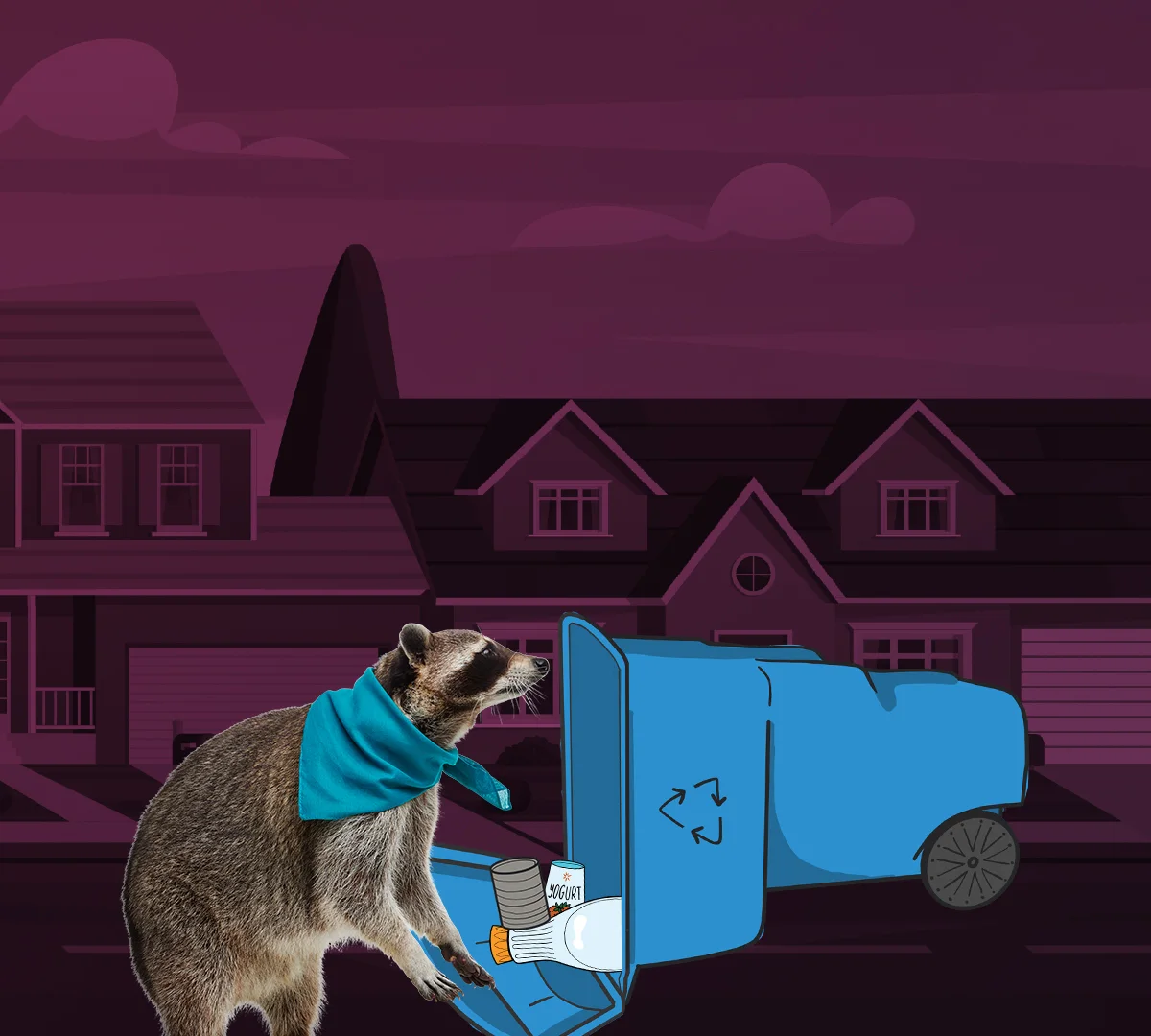
The night was dark. His surroundings coated in dew from a dense fog. And Frank was face down in a recycling cart. The only sound was the rustling of common household recyclables as You found a recycling basic! Plastic, metal and glass containers should be rinsed (or carefully licked clean) before being recycled curbside.he licked forgotten yogurt cups, orange juice bottles and bean cans clean.
That’s when he heard it. A sound that made his ears shoot up. Frank peered out of the recycling cart to look around him. Nothing. Frank returned to his work when again … tap, tap. Tap. Tap, tap.
When he looked out, he saw only the neighboring recycling cart. Something was inside.
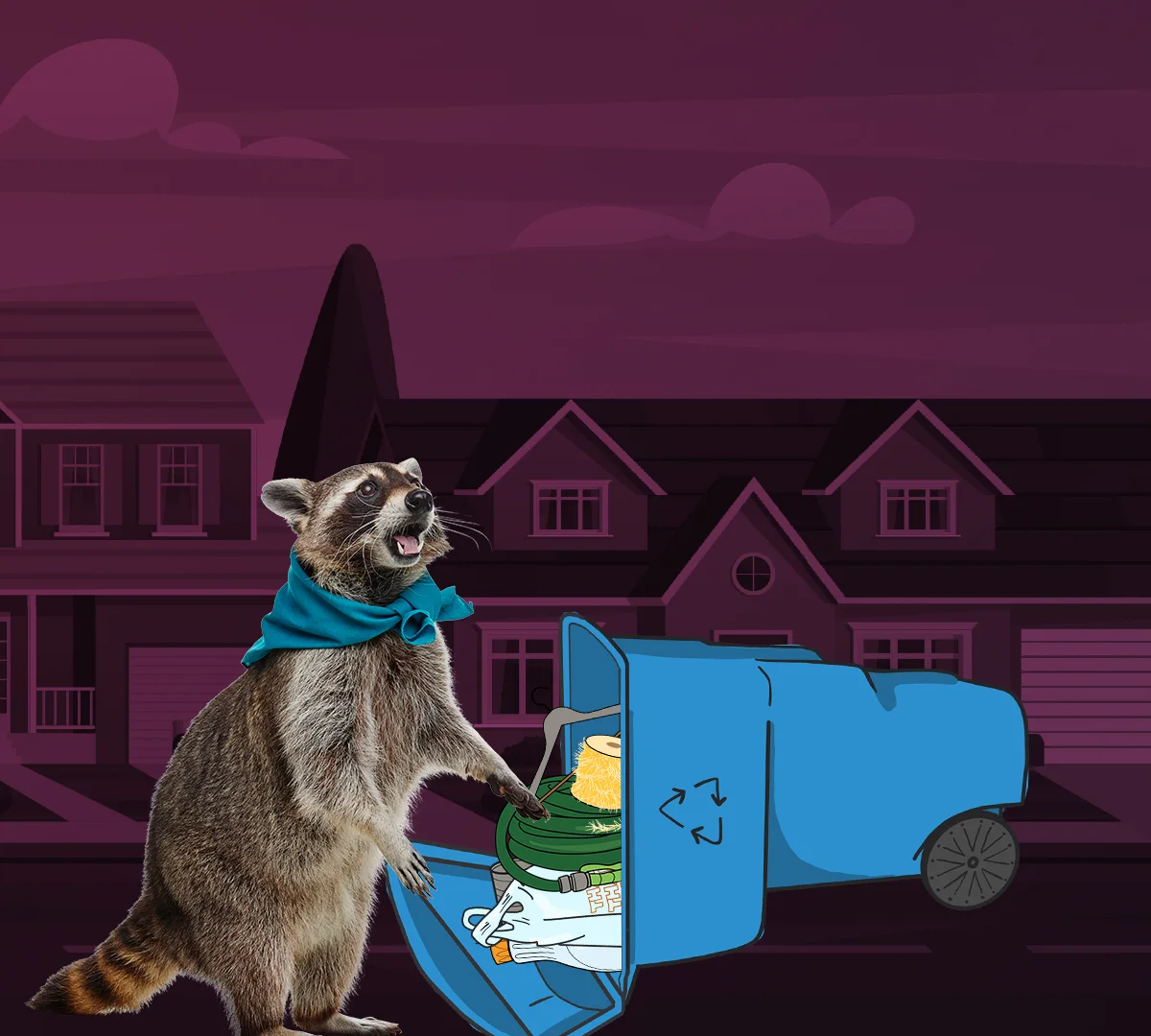
Frank’s fur stood on end as he drew nearer. A blur of white shot at him and wrapped around his back paw. Frank hissed — kicking until he saw the blur was a plastic bag … Did you know, tanglers are items that tangle up recyclables, recycling machines and raccoons. Plastic bags, however, can be taken back to local grocers like Meijer and Kroger for recycling.a tangler.
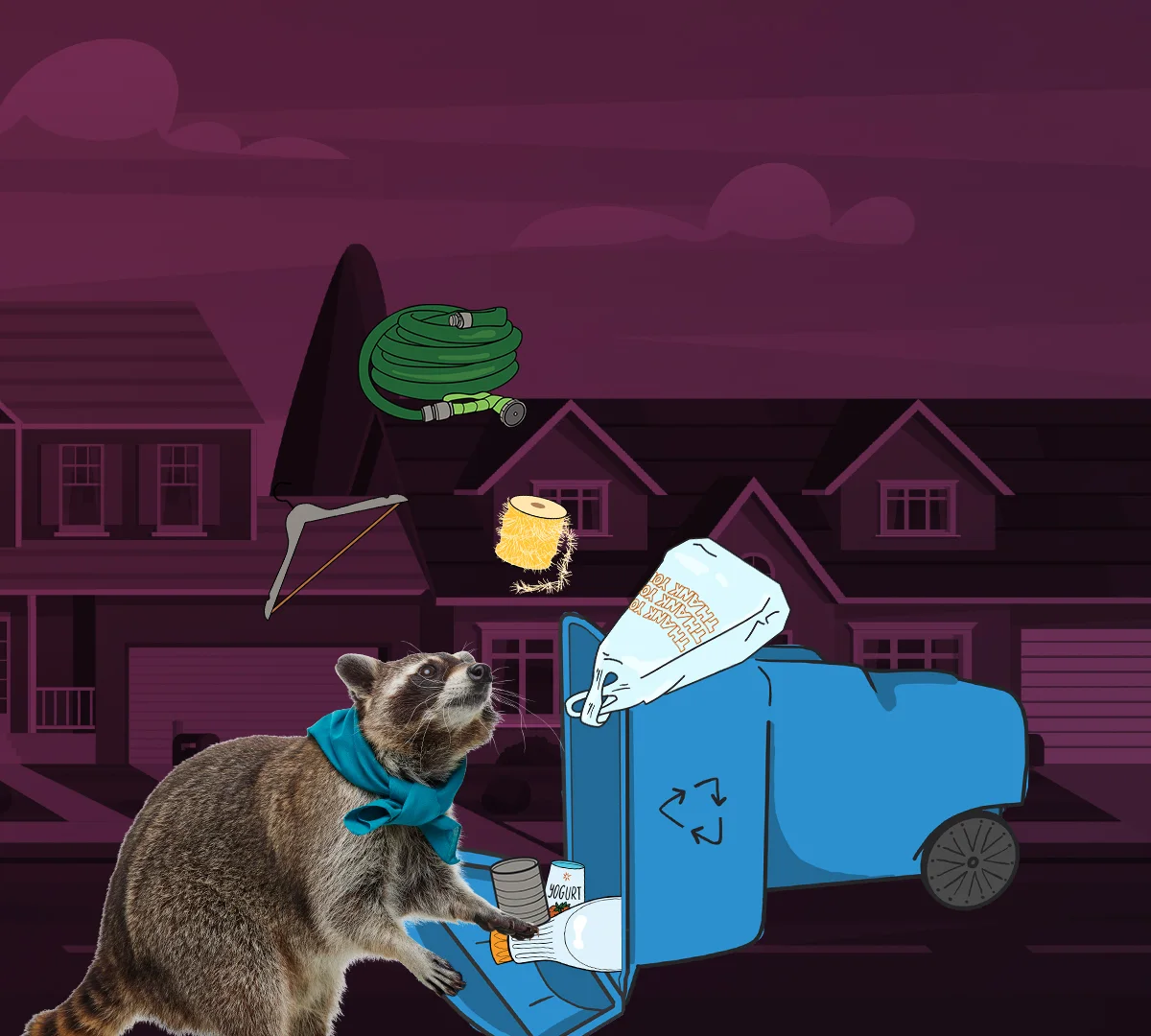
That couldn’t have made the sound, so what had? Frank continued forward and lifted the lid to see the cart was full of … tanglers! He fell back at the sight, scrambling behind a nearby tree as images of what he had seen flashed through his mind. FYI: String lights, rope, wires and hangers are all included in the tangler category and should be kept FAR from your curbside cart.String lights, rope, wire and even hangers — all stuffed inside a recycling cart. And all coiling around common household recyclables.
If these items made it back to a recycling center, they could tangle a sorting machine and stop You found a recycling benefit! Recycling helps items become something new, rather than lying in a landfill.loads of recyclables from becoming new items! Frank was frantic as he rushed back to the cart. He didn’t have time for fear. He had to save the recyclables!
His paws worked feverishly to yank tangler after tangler, even as they tangled around him. In his mind, he could hear his mother Pearl’s voice: “You found a recycling benefit! In Michigan, recycling and reuse industries support more than 72,500 jobs and can save up to 95% of energy.Recyclables save energy and help the economy, Frank. That’s why it’s our duty to save them in return … ”
Finally, the unfettered recyclables lay loose in the recycling cart, but Frank knew he wasn’t done. He had to get rid of the tanglers — properly. And yet, as he pulled the last one out of the cart, his strength left him and he passed out on the soft grass.
“Awrite, laddie? You look as though you’ve seen a ghost!”
“Oh man, he’s laid out.”
Frank blinked awake at two raccoons, one with a purple mohawk holding drumsticks and another with a plaid hat and paper bagpipes. They helped him up, asking about what had happened. As Frank explained, the two smiled and helped remove the tanglers. You found a recycling rule! Remember! While each tangler has its own disposal process, most can be donated or resold if they are in good condition!Rope: Cut into smaller sections before placing in your trash.Hangers: Place in curbside trash.String Lights: Look for local drop-off options.Hoses: Remove the metal ends and take to a specialty recycler or cut the hose into smaller sections before placing in your trash.Wire: Look for local options that will buy old wire or take to a specialty recycler.They disposed of each one before leading him to a small group they called … the Recycling Raccoon Squad.
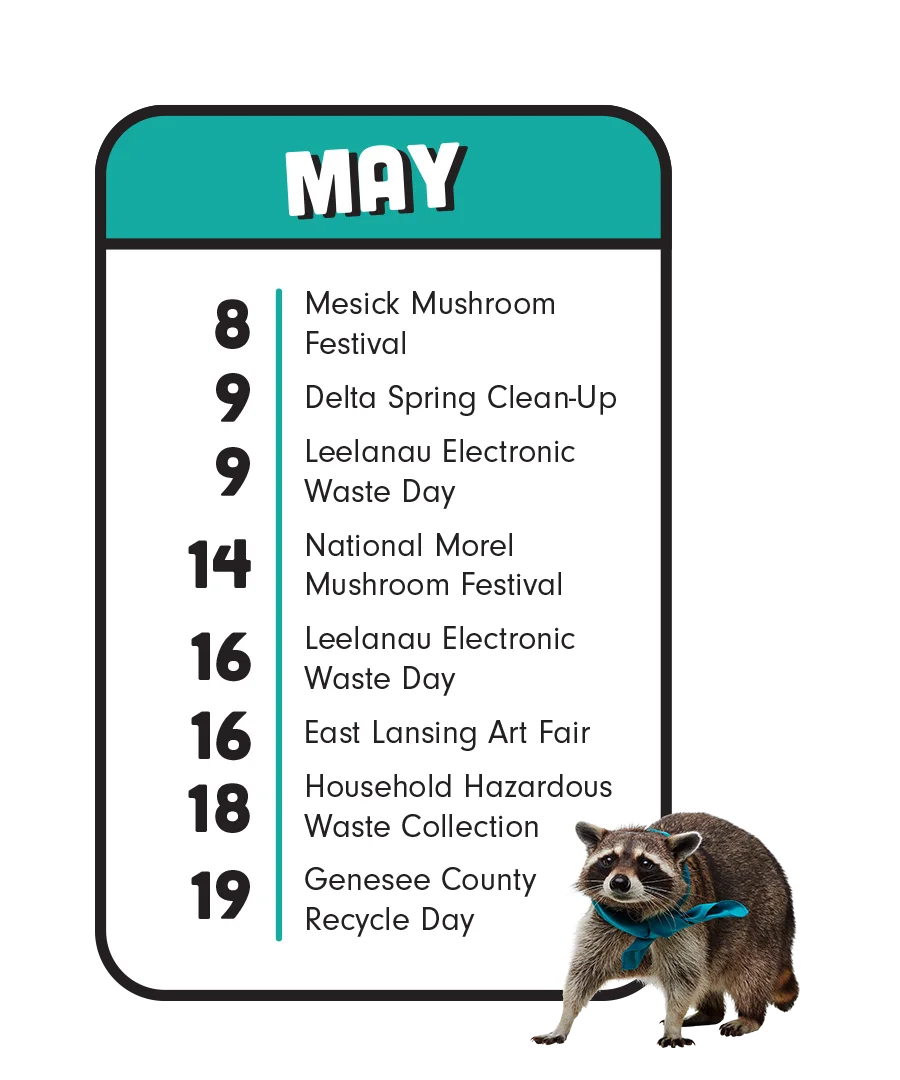
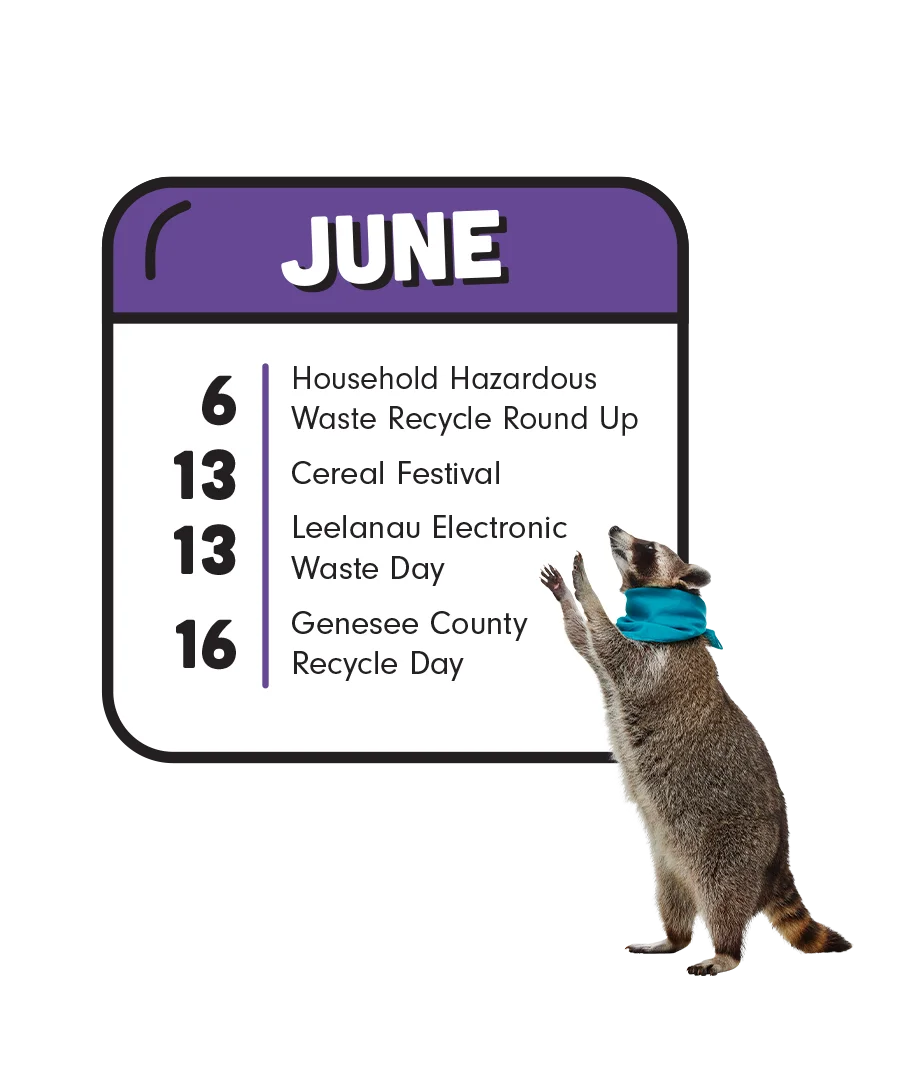
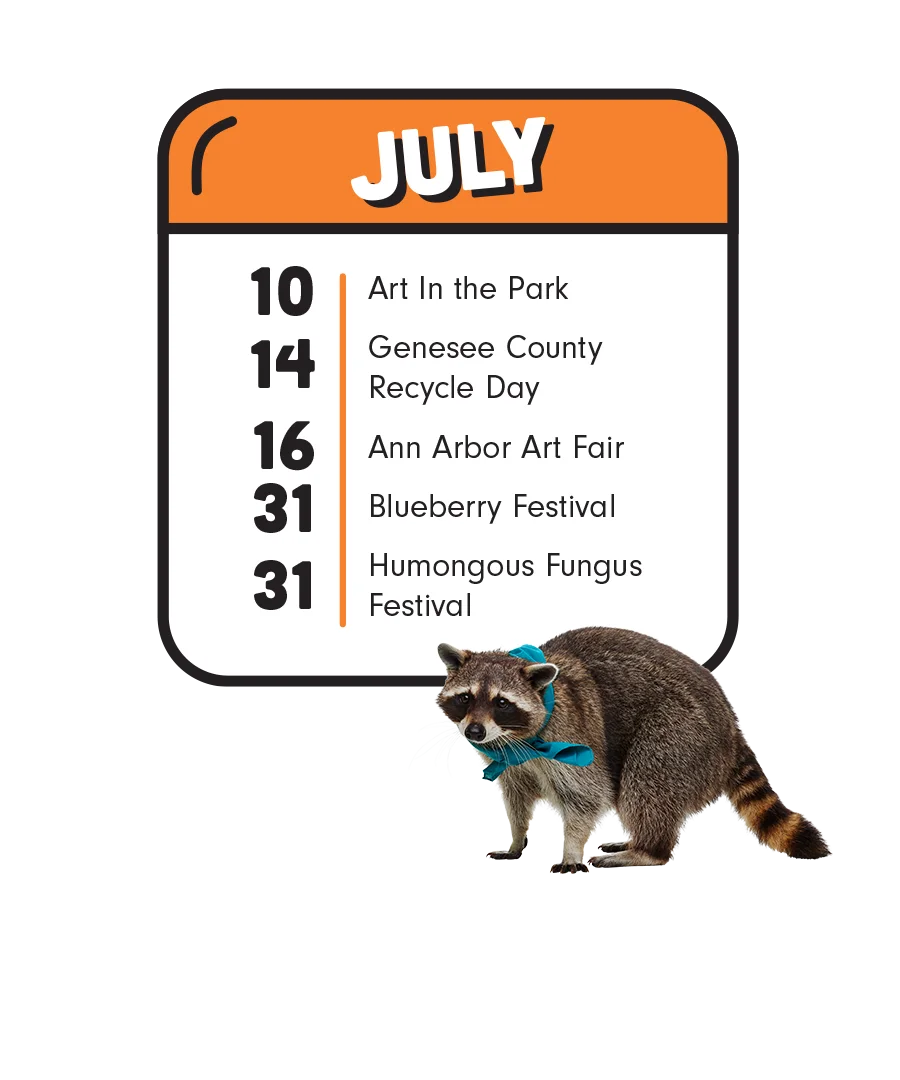
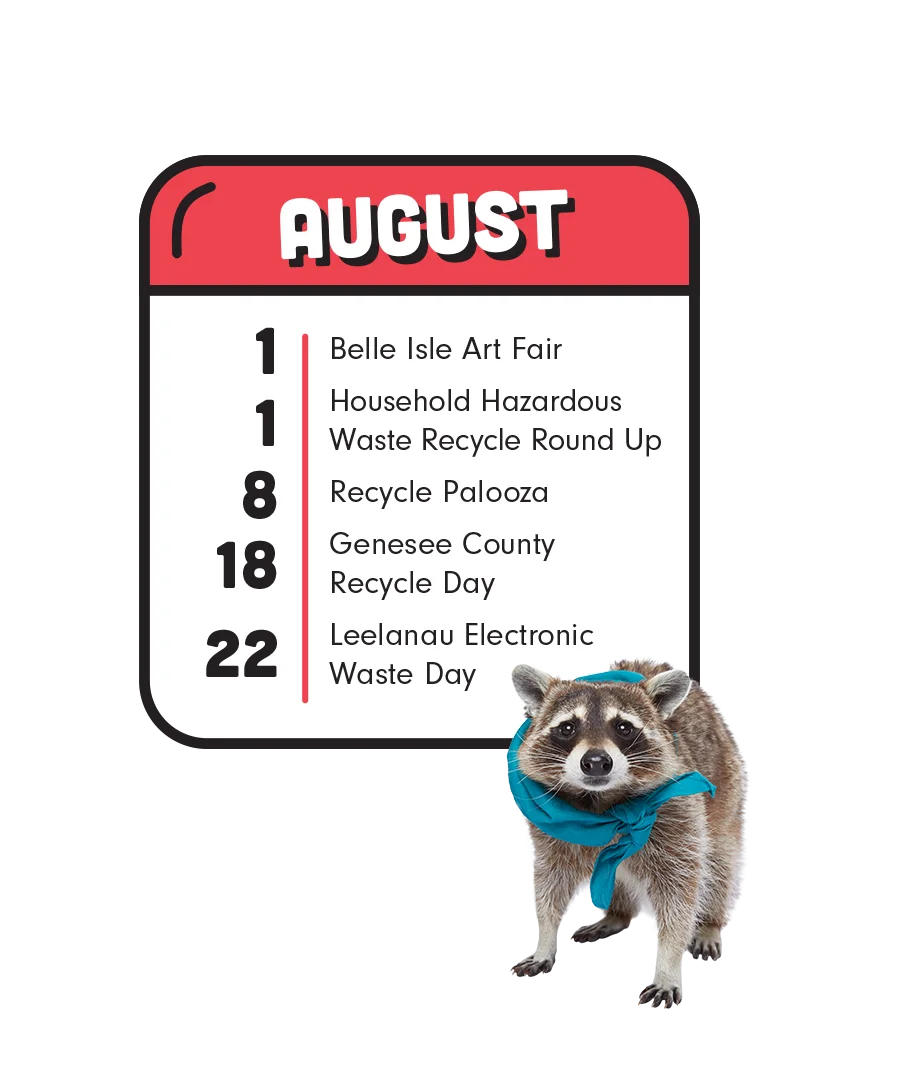
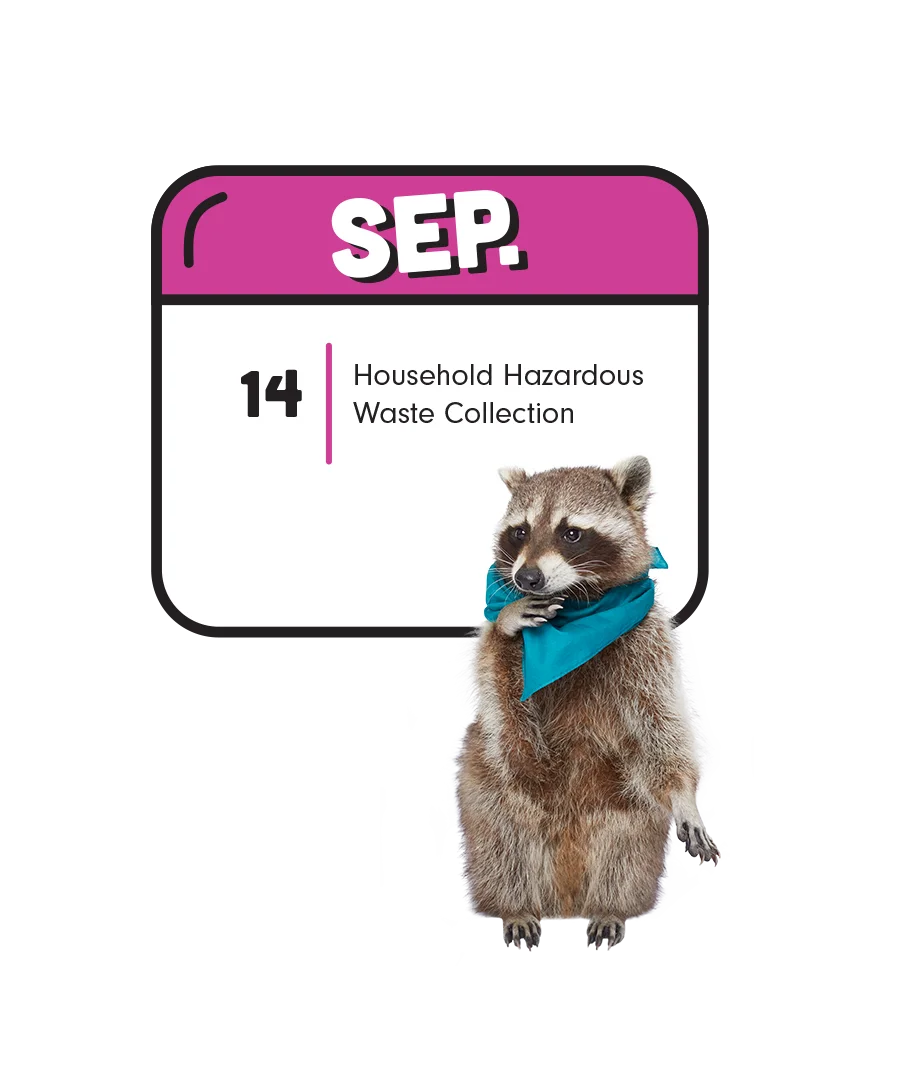
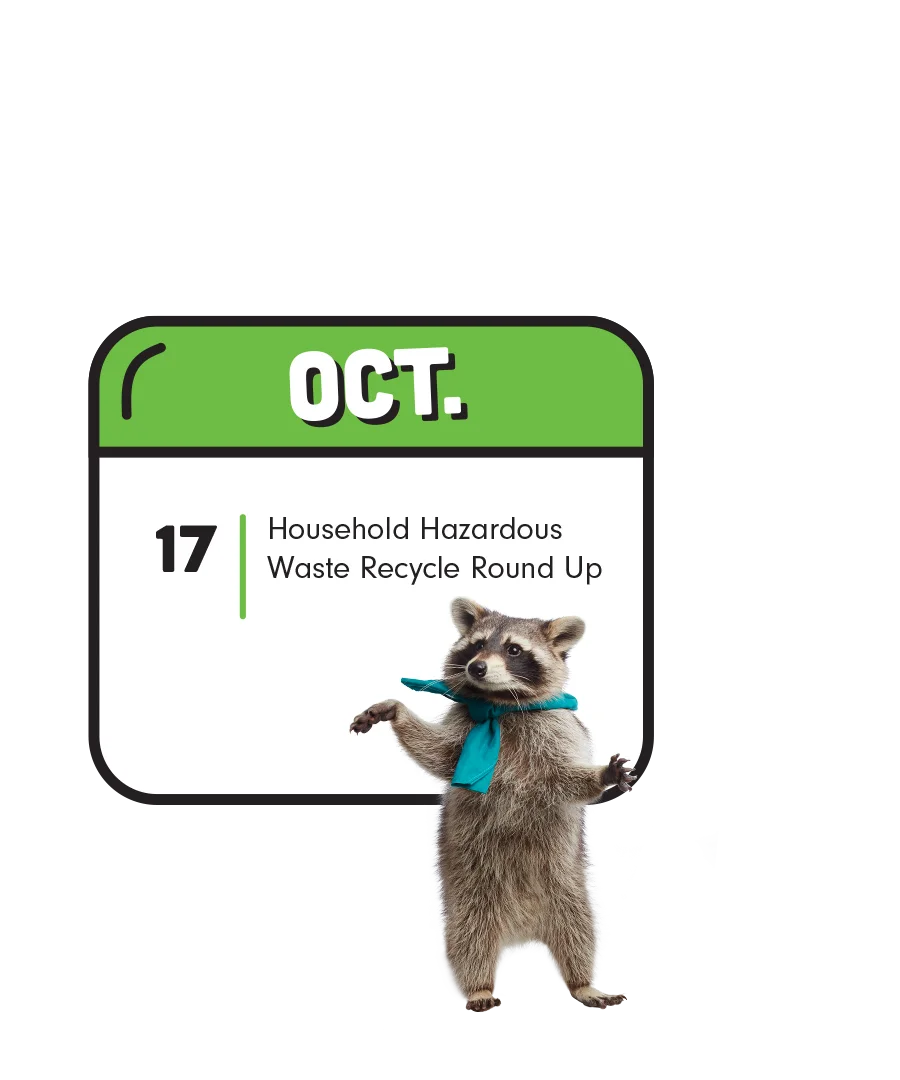
Do you find yourself wondering, “Where can I take this pile of old batteries?” or, “Are there any events happening in Michigan this week?” If so, the Recycling Raccoon Squad has your back!
Did you know, thanks to recycling, your used paper doesn’t just disappear? It’s made into a slew of new items! ’Tis true. Take it from me, resident paper expert and bagpipe enthusiast Paper MacKay.
I’ve spent years getting my paws on all types of recyclable paper and have even toured a facility or two to get a behind-the-scenes look at the process. And trust me when I tell you, the journey your recycled paper goes on is truly magical.
First
It starts when your newspapers, magazines and envelopes (aye, even the ones with plastic windows on ’em) first enter your curbside recycling cart. Come pickup day, these items will be ferried off to a local recycling facility. As long as no other items in your bin have contaminated your paper (think food waste from unwashed glass or cheese residue in a pizza box), facility workers will sort and send that paper on to the next step.
Next
Once sorted and given the green light, your paper gets fed to a shredder! It’s torn asunder and made into a papery pulp.
This pulpy masterpiece is then washed to break down its fibers. Fun fact: One of the reasons paper recycling is so successful is because of these fibers! Unlike other materials that can be repurposed only two or three times, paper can be repurposed five to seven times before its fibers are too short and weak to be used again. Talk about high-fiber content!
Last
Once that pulp has taken a nice bath to break down the fibers, the big dogs (large rollers) come out. These are used to flatten the pulp and help it dry out into — you guessed it — new paper! This flattened and dried product is used as the base for a variety of new paper products, including:
Cereal boxes
Paper towels
Fast-food bags
Egg cartons
& more!
And that’s all she wrote when it comes to the life cycle of paper recycling! While the journey is as fascinating as it is pleasant, the environmental benefits of paper recycling cannot be understated either. According to the U.S. Environmental Protection Agency, recycling just 1 ton of paper can save 380 gallons of oil, 7,000 gallons of water and enough energy to power the average American home for up to six months!
So, the next time you’re putting an envelope in your recycling bin or wheeling your cart to the curb, give yourself a pat on the back for a job well done.
Your recycling cart is just the first stop in a pretty amazing process. Trust me — Nyla P. Lastic. I’ve got the deets to show how sweet plastic recycling can be.
First things first: It’s important to know your recycled plastic gets used to make all kinds of new items. Not only does it take less energy, water and other natural resources to create an item from recycled material, but recycled plastic can also make up 100% of the item it’s creating!
Let’s get into it!
After the ever-anticipated day arrives, your recycling truck takes off toward a local recycling center.
Then?
Your recyclables get sorted out! Non-recyclable items are removed (including any plastic bags), materials get grouped by color and the remaining recyclables get cubed into bales.
The cube holding your item may be transferred to another recycling center at this point. Whether it heads on out or stays in the same place, the bale is cut up into small plastic flakes.
Next.
The flakes get washed to rid them of any remaining contaminants. This is also where your hard work rinsing your containers shines. Your effort helps keep excess residue out of the containers — which means fewer rounds of washing!
From there …
Your plastic items are dried and melted so they can finally become all sorts of new items!
Help Michigan become a leader in recycling again. Join the squad today. You don't need to be a raccoon – you just need to sign up!
After signing up for recycling news, you will receive occasional updates. We will not sell your email address to any third party at any time. View our privacy policy.
We use cookies to personalize ads, to provide social media features, and to analyze our traffic. We also share information about your use of our site with our social media advertising and analytics partners who may combine it with other information that you’ve provided to them or that they’ve collected from your use of their services. You consent to our cookies if you continue to use our website.








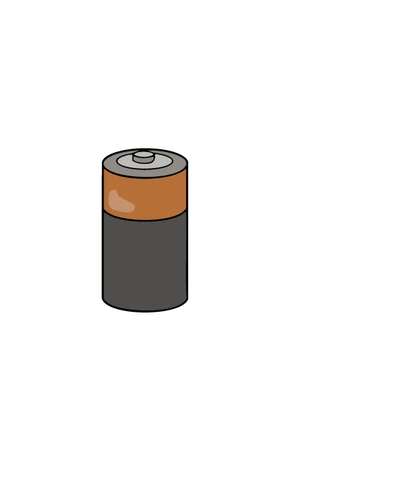 Alkaline
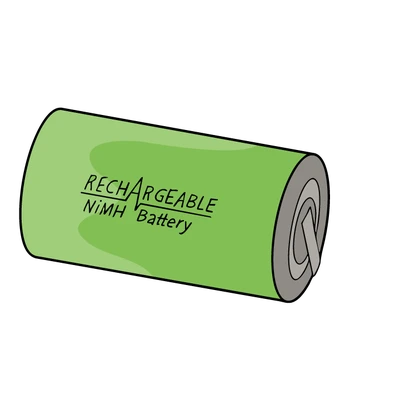 Rechargeable alkaline
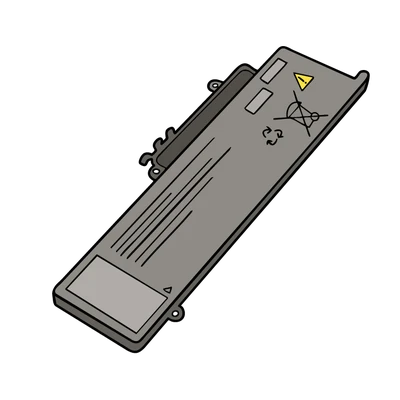 Lithium-ion