Michigan announces the state’s recycling rate is at a record high for the fourth consecutive year

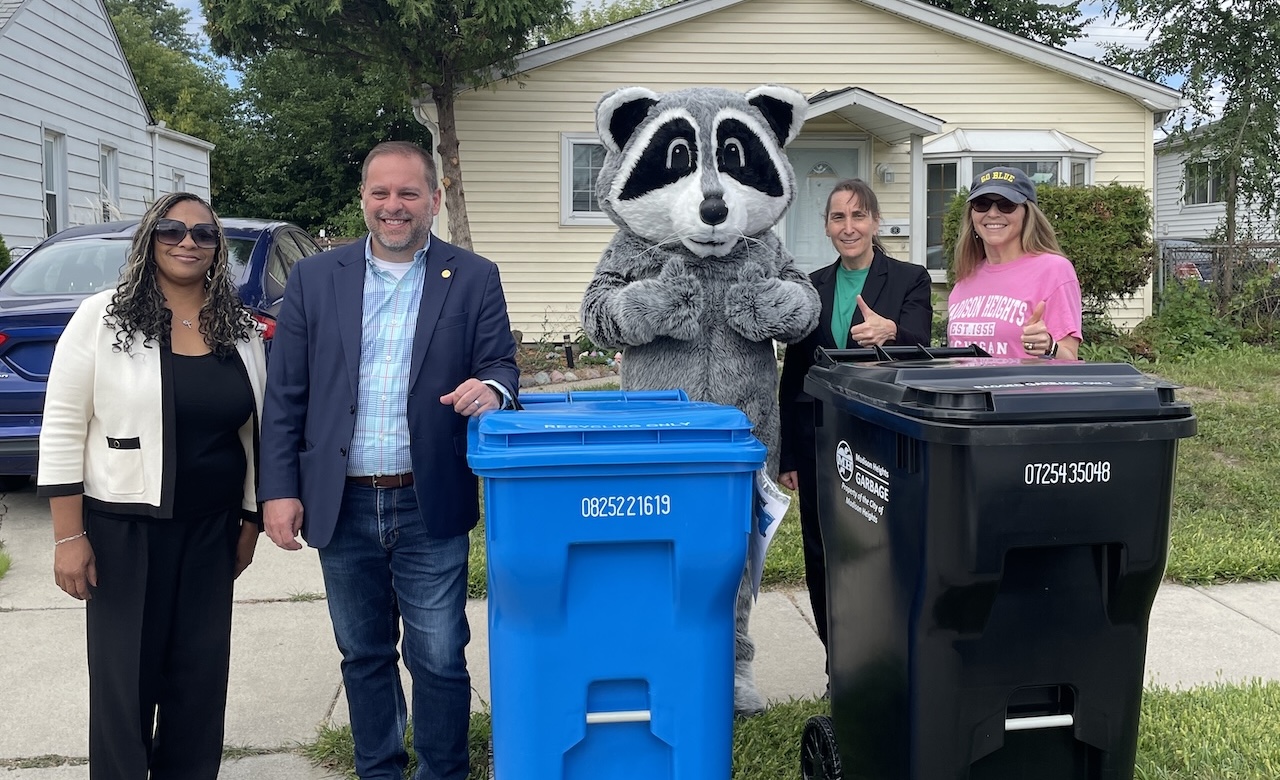
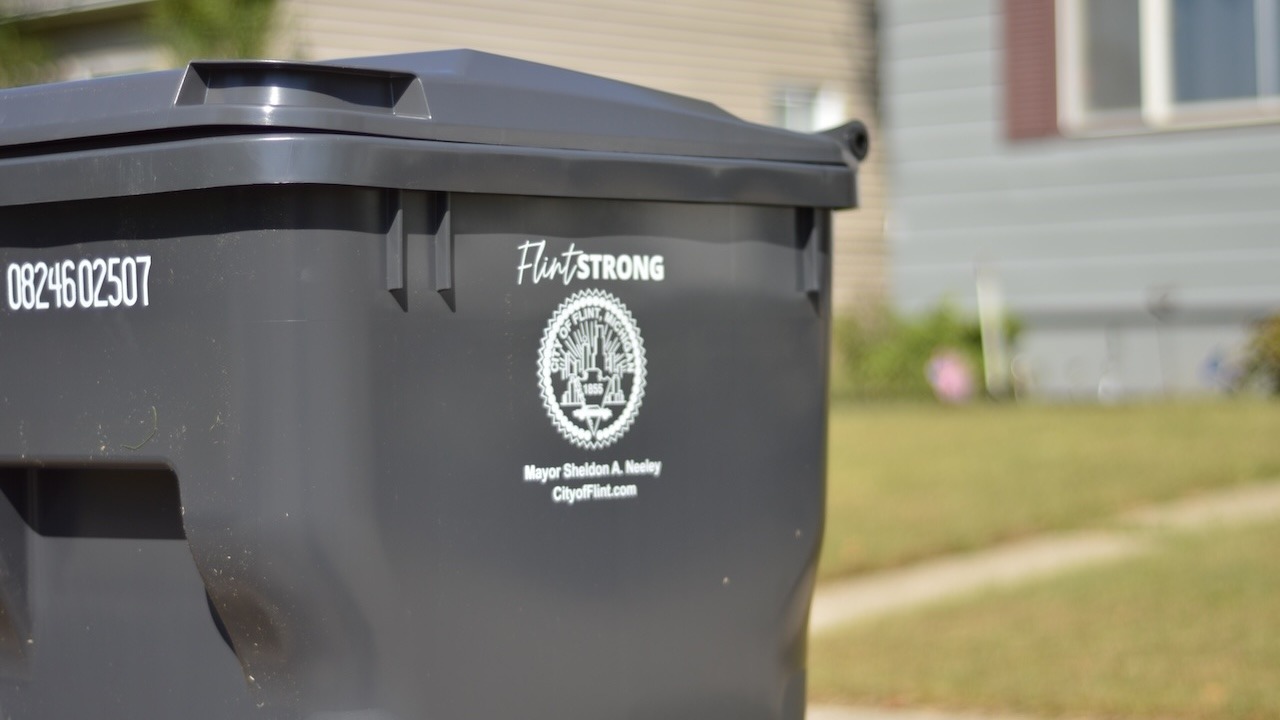
A trash bin outside a house
The volume of materials Michiganders recycled in FY 2024 equals the weight of 10 Mackinac Bridges and combined would fill the football stadiums of the Detroit Lions, University of Michigan and Michigan State University, as well as the hockey stadium of national champion Western Michigan University.

EGLE is also unveiling today its list of a combined total exceeding $11.8 million in grants that will help advance recycling access and further develop the state’s business supply chains.

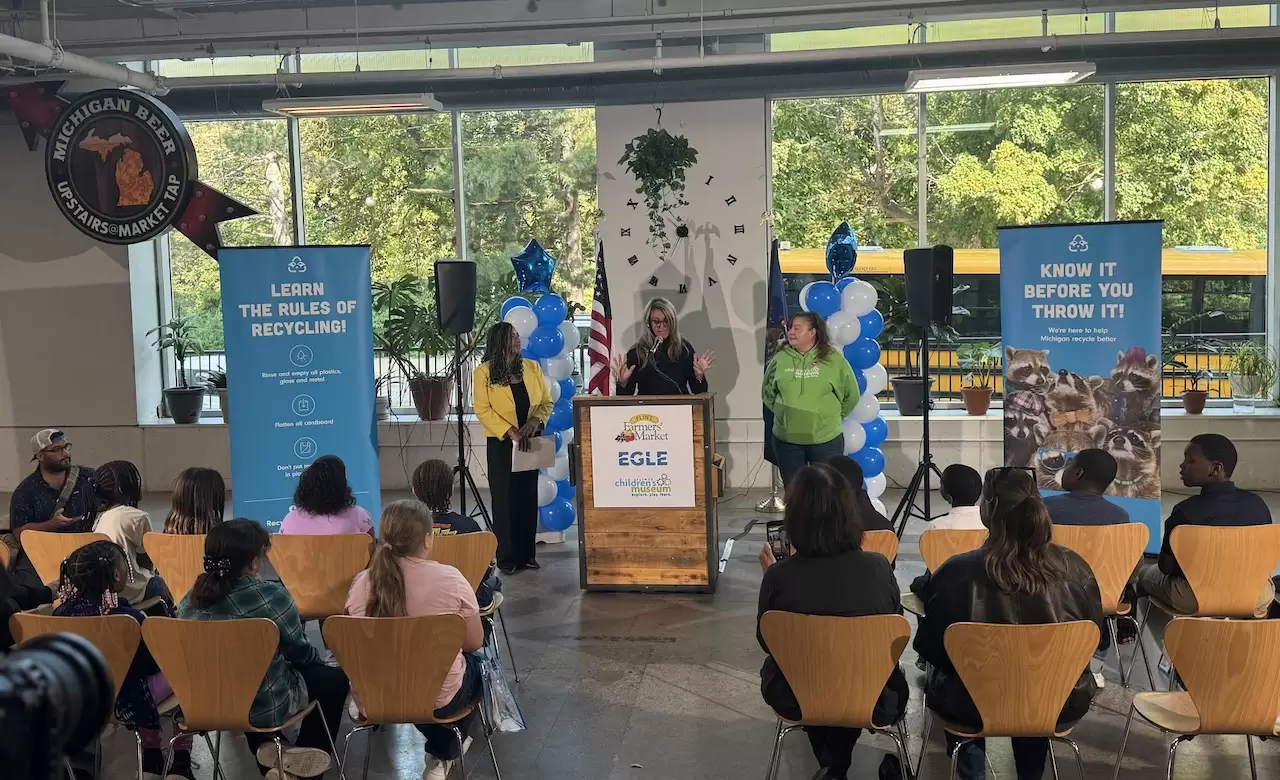
LANSING, Mich. — The recycling rate in the Great Lakes State is at a record high for the fourth consecutive year, according to a new analysis of data that the Michigan Department of Environment, Great Lakes, and Energy (EGLE) announced today on the eve of Earth Day, Tuesday, April 22.

The EGLE research shows Michigan has steadily increased its recycling rate from 14.25% before 2019 to 23% last year and over 25% now. EGLE forecasts that Michigan is on track to achieve the state’s goal of a 30% recycling rate by 2029.

EGLE’s record recycling rate announcement coincides with Michigan officially recognizing Earth Day on Tuesday, as proclaimed by Michigan Gov. Gretchen Whitmer. This annual event is celebrated to raise awareness about environmental issues and promote actions to protect the planet. In Michigan, Earth Day is observed with activities including sustainability initiatives, environmental cleanups and educational events. 
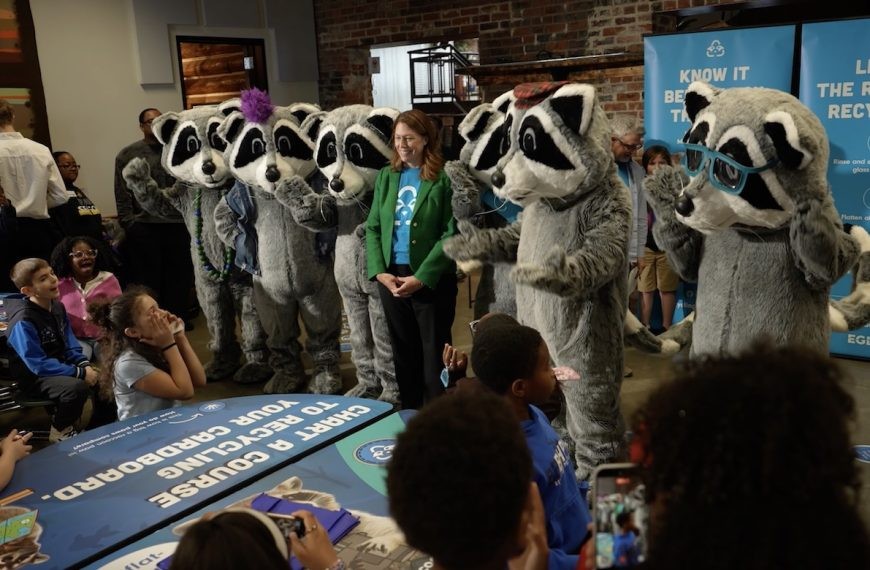
“Michigan’s commitment to recycling is shaping a cleaner, more resilient future. By increasing our recycling rate, we not only conserve natural resources but also generate substantial economic benefits — supporting over 72,500 jobs and injecting billions of dollars into our economy,” said EGLE Director Phil Roos.

“Every bottle, box and can recycled brings us one step closer to a sustainable Michigan where both the environment and our communities thrive.”

In fiscal year (FY) 2024, Michiganders recycled more than 71,000 tons of glass, 329,000 tons of paper and paper products and 56,000 tons of plastics and plastic products. The total amount of residential recycled materials reported for FY 2024 was 723,174 tons — exceeding the year before by more than 19,000 tons. 

This equates to every person in Michigan recycling nearly 143 pounds of cardboard boxes, milk cartons, soup cans, plastic bottles, glass bottles and jars, food waste and other materials over a 12-month span, EGLE researchers found.

“The volume of materials Michiganders recycled in FY 2024 equals the weight of 10 Mackinac Bridges and would fill the football stadiums of the Detroit Lions, University of Michigan and Michigan State University as well as the hockey stadium of national champion Western Michigan University,” said Matt Flechter, EGLE recycling market development specialist.

“Recycling is not only the right thing to do but also the smart thing to do,” said Flechter.

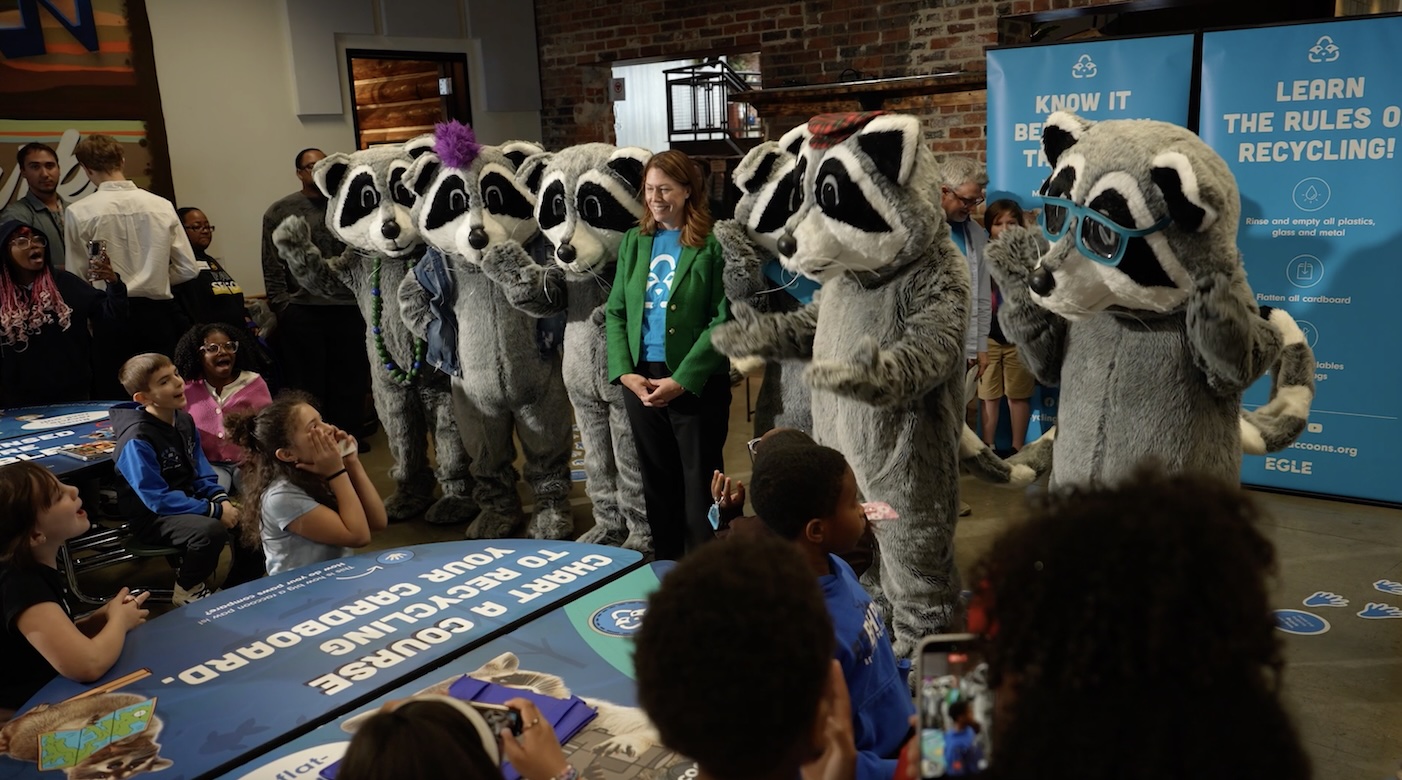
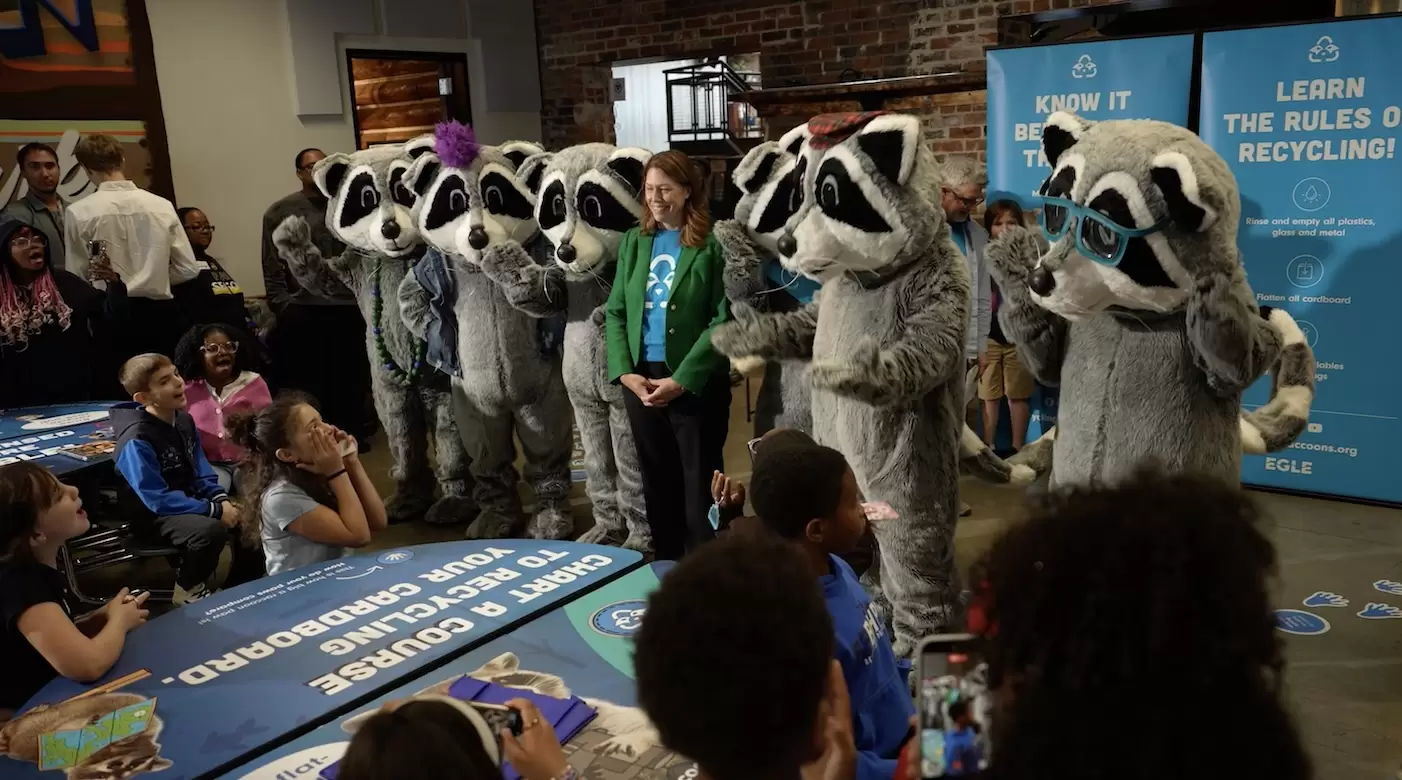
Highlights from a new EGLE-commissioned survey show that since EGLE’s 2019 launch of the ongoing national award-winning “Know It Before You Throw It” recycling education campaign featuring the Recycling Raccoon Squad:

  • Three in 4 Michiganders report taking action and changing their recycling behavior.
  • The number of Michiganders who know that recyclables should not be bagged in plastic when placed at curbside has more than doubled, from 14% to 36%.
  • The number of Michiganders who recognize pizza boxes with a little grease are recyclable has almost doubled, from 26% pre-2019 to 47% now.
  • Nearly 66% of Michiganders now know where to check recycling rules if needed.
  • Michigan residents report they are recycling an average of 44% of their household waste, up from 38% pre-2019.

The EGLE survey of 1,000 Michigan residents was conducted August-September 2024.

The improved recycling performance is helping Michigan advance the goals of the MI Healthy Climate Plan, commissioned by Gov. Whitmer as a road map to a sustainable, prosperous, healthy, equitable, carbon-neutral Michigan economy by 2050. Carbon neutrality is the global science-based benchmark for reducing greenhouse gas emissions to avoid the most devastating and costly impacts of climate change.

Recycling in Michigan supports 72,500 jobs and contributes more than $17 billion a year to the state’s economy, according to an analysis by EGLE’s NextCycle Michigan Initiative.

“Recycling properly saves Michigan taxpayers money by increasing the value of recycled materials, supporting Michigan jobs and improving the health of the environment,” Flechter said.

“We know Michiganders want to recycle the right way, and through our ‘Know It Before You Throw It’ campaign and recycling infrastructure investments, we are providing them with the tools to do just that.”

Recycling access improves

More Michiganders than ever have access to recycling services.

EGLE and national nonprofit The Recycling Partnership since 2019 have together rolled out more than 333,000 new curbside recycling carts in 34 communities statewide, serving more than a combined 1.2 million Michiganders.

To further expand recycling access in Michigan, EGLE also announced today more than $11.8 million in grants (listed below) that will advance recycling and help develop the state’s business supply chains.  These grants are provided under three different EGLE programs.

Recycling Infrastructure Grants

EGLE is unveiling more than $4.6 million in Recycling Infrastructure Grants that will bolster Michigan’s recycling programs. The recipients are:

  • City of Holland: $1 million to promote a new drop-off facility to recycle standard materials and hard-to-recycle items, designed to be used as a model for other communities.
  • Recycle Ann Arbor: $800,000 to expand residential recycling drop-off access and significantly increase capacity for diverting construction and demolition waste in Southeast Michigan.
  • City of Detroit: $780,000 to increase participation in the residential curbside recycling program by providing 24,000 additional recycling carts to households across Detroit.
  • Southeastern Oakland County Resource Recovery Authority (SOCRRA): $696,000 for the materials recovery facility that processes approximately 16 tons of recyclables an hour. SOCRRA plans to install state-of-the-art equipment that uses cameras and software to improve material sorting.
  • Calhoun County Comprehensive Recycling Center: $500,000 to help build a comprehensive drive-through drop-off recycling center.
  • Goodwill’s Green Works, Detroit: $300,000 to increase collection and processing capacity for its existing appliance recycling program through new equipment, vehicles and infrastructure upgrades. Project support from EGLE will provide the initial investment to scale these programs to offer free drop-off and community collection events in Southeast Michigan with plans to scale statewide in partnership with Goodwill Association of Michigan.
  • Ionia Conservation District: $222,622 to construct four recycling drop-off facilities in Ionia County.
  • City of Auburn (Bay County): $94,000 to distribute curbside recycling carts to all single-family homes in the city.
  • Pentwater Township: $93,000 for upgrades to the recycling drop-off facility that will allow it to stay open during the winter.
  • Peaine Township: $45,920 for expansion of the recycling drop-off facility located on Beaver Island.
  • Bay Mills Indian Community (BMIC): $45,000 to help build a recycling drop-off facility that will increase recycling access for community members at BMIC and the surrounding area.
  • Missaukee County: $37,500 to purchase a vehicle that will allow for increased cardboard collection from county businesses.
  • City of Bay City: $14,000 to purchase additional equipment for the city’s recycling drop-off facility.
  • Tuscola County: $10,500 to assist with infrastructure to increase recycling collection from county businesses.
  • Huron-Clinton Metropolitan Authority: $7,680 for additional recycling collection containers in the Huron-Clinton Metroparks.

NextCycle Michigan Circular Economy Grants

Recipients of EGLE’s 2025 NextCycle Michigan grants totaling more than $5.6 million are:

  • Architectural Salvage Warehouse of Detroit: $235,000 to buy equipment, train staff and promote the Community Uplift Program that provides no-cost salvaged building materials like doors, windows, lumber and appliances to low-income residents.
  • Chippin’ In, Detroit: $167,000 to buy equipment and develop collection kiosks for chip bags and other recyclable materials to be processed into warming kits for distribution to homeless populations in underserved communities.
  • Cirba Solutions, Wixom: $193,155 to install an automated battery-sorting line using artificial intelligence technology to improve the efficiency and economics of battery recycling.
  • City of Ann Arbor: $99,630 to engage with frontline communities, businesses and institutions (those affected most by environmental hazards) to create a Circular Economy Action Plan.
  • Design Declassified, Grand Rapids: $250,000 to scale operations to transform locally sourced plastic waste into durable, solid-surface materials for countertops, tables, wall panels, furniture and more.
  • Ed’s Used Parts and Salvage, Hancock: $116,685 to buy equipment to prepare organic materials for composting on-site, establishing the first municipal waste separation and organics recycling facility in the Western Upper Peninsula.
  • Fibarcode, Ann Arbor: $43,000 for research and testing of embedded fabric labeling technologies to improve sorting of textiles for reuse, repair and recycling.
  • Goodwill Industries of West Michigan, Muskegon: $250,000 to develop a process for manufacturing of eco-conscious wood products made from unsellable and scrap wood-based materials received through its donated goods programs.
  • Goodwill’s Green Works, Detroit: $250,000 to expand the appliance recycling program and launch an appliance repair workforce training program to extend the useful life of repairable appliances.
  • Great Lakes Fusion, Durand: $199,760 to establish a residential and commercial organics waste drop-off and material processing site in Durand.
  • Great Lakes Recycling of Oak Park: $155,000 to buy equipment to safely and efficiently dismantle used electric vehicle battery packs and ship them to recycling streams per U.S. Department of Transportation safety regulations.
  • Hendricks Foundation, Harper Woods: $166,541 to buy advanced equipment to expand the ability to recycle electronic waste and train students on electronic diagnostic and repair skills.
  • Llink Technologies, Brown City: $250,000 to buy an upgraded robotic station to increase the capacity of remanufacturing damaged headlights into warrantied headlights that look and function like new.
  • Make Food Not Waste, Southfield: $234,806 to test food scrap collection in multifamily housing locations.
  • Metro Food Rescue, Detroit: $250,000 to pilot a program to rescue produce daily from vendors at the Detroit Produce Terminal to be distributed to community food pantries, shelters and kitchens or to be separated for composting.
  • Michigan Energy Options, East Lansing: $188,000 to buy equipment to collect used but still usable solar panels and install the panels on projects with social impact, such as community organizations and affordable housing complexes.
  • NextEnergy, Detroit: $210,492 to research and field-test an autonomous robotic collection platform and reclaiming process to repurpose commercial organic waste from restaurants into value-added products for use by the same participating restaurants.
  • OkaTerra, Grand Rapids: $218,000 to enhance material prototyping and carry out environmental and safety testing for an initiative focused on commercializing the use of waste wool from Michigan farmers to create innovative products, including sound-absorbing screens for the contract furniture market.
  • PakItGreen, East Lansing: $120,056 to buy equipment to produce and commercialize a packaging product from long-fiber food and agricultural waste in combination with a sustainable, food-safe polymer.
  • Perfect Circle Recycling, Grand Rapids: $155,000 to buy three 10,000-gallon refrigerated tanks to integrate into existing material de-packaging processes, enabling the recovery of surplus milk from suppliers and repurposing it as animal feed for local farms.
  • PLOP, Southfield: $250,000 to source materials, develop product and enter the market by using 3D printing technology to convert mixed-color glass waste into premium architectural tiles.
  • Post Rock, Ann Arbor: $56,000 to scale conversion of waste plastics into durable building materials and secure key safety certification for fire and smoke propagation.
  • Public Thread, Grand Rapids: $210,700 to research and develop capacity growth and processes for material collection and sorting, as well as collaborate with local designers and innovators to upcycle postconsumer apparel and textiles.
  • Ramme’s, Ironwood: $150,000 to buy equipment and hire additional staff to recycle copper from holiday lights, extension cords and many other plastic-coated copper-containing materials.
  • Recycle Ann Arbor: $249,999 to design and install a robotics and recognition system to capture and recover an additional 100-200 tons of valuable recyclables annually.
  • Revolin Sports, Holland: $242,000 for cutting-edge research and machinery to fabricate lightweight, high-performance composite materials made from recycled thermoplastics into products such as pickleball paddles and eventually in industries such as automotive, office furniture and construction.
  • Peaine Township and St. James Township, Beaver Island: $86,000 to buy reverse vending machines and supporting equipment to establish a community redemption center at the Beaver Island Transfer Station and Recycling Center.
  • Takeout Takeout, Lansing: $185,400 to pilot new inventory tracking systems, including the use of smart collection bins, for reusables at venues and restaurant hubs.
  • Veolectra, Farmington Hills: $250,000 to develop a prototype for a portable energy storage system that provides backup power for first responders and in critical natural disaster situations using repurposed EV battery packs.
  • We ReUse, Bloomfield: $200,000 to buy equipment to manufacture reusable stainless steel foodware products to replace single-use paper and plastic products and set up pilot programs in Detroit-area organizations providing food service.

Organics Infrastructure Grants

Organics recycling, also known as composting or food waste recycling, diverts biodegradable waste like food scraps and yard waste from landfills and converts it to valuable resources like compost or energy. This helps reduce greenhouse gas emissions, conserve landfill space and improve soil health. 

Food rescue is the collection of excess food donated by grocery stores, restaurants and farms for distribution to people and animals so that it is not wasted. In Michigan, organic waste accounts for 37% of the total waste generated each year, according to a 2024 study by the Michigan Sustainable Business Forum.

Recipients of 2025 EGLE Organics Infrastructure Grants that total more than $1.6 million are:

  • Sanctuary Farms, Detroit: $210,000 to purchase new processing equipment that will improve materials management, increase overall compost production and extend services to a broader audience.
  • Grand Traverse Band of Ottawa and Chippewa Indians: $205,000 to utilize more fish waste produced in Northwest Lower Michigan to create an organic compost.
  • Iris Waste Diversion Specialists, Saginaw County: $190,000 to expand and improve the collection of food waste in Saginaw, Bay and Midland counties that will benefit at least 12 small businesses and five corporate restaurants, as well as Hidden Harvest in Saginaw, the food bank and distribution nonprofit serving Saginaw, Bay and Midland counties.
  • Detroit Black Community Food Sovereignty Network: $175,000 to improve community-centered composting practices.
  • Partridge Creek Farms, Ishpeming: $144,000 to increase from a small pilot program to a full-scale residential food waste collection program and continue acquiring new restaurant customers and contracts with local schools.
  • Wormies, Grand Rapids: $122,240 for infrastructure that will allow the small business to pursue more customers for the residential and commercial food waste pickup service, as well as increase efficiency at the compost site, offering a compost management service for farmers and ranchers processing over 1,000 cubic yards of feedstock a year.
  • TrueNorth Services, Fremont: $100,000 to purchase a refrigerated food rescue vehicle that will expand the service area by 80 miles and increase food surplus collection volume from 54 tons to 168 tons annually.
  • Scrap Soils, Detroit: $99,662 to support infrastructure needed to grow a larger-scale composting operation for residential and commercial customers in Detroit.
  • Spurt Industries — My Green Detroit: $73,920 for purchasing additional food waste collection containers in order to expand composting services to additional customers.
  • Michigan State University’s Surplus Store and Recycling Center: $59,782 to nearly double the site’s vermicomposting capacity and allow MSU to compost all pre-consumer food scrap on campus.
  • Carter’s Compost, Traverse City: $57,018 to increase food waste collection volume from 21,000 pounds per year to over 200,000 pounds per year.
  • Community Action House, Holland: $53,438 to support the Lakeshore Food Rescue Program, which rescued 3 million pounds of food in 2024. The addition of a refrigerated storage container will increase storage capacity and facilitate handling of full semi-truck loads.
  • Henry Ford Health Systems: $50,000 to expand efforts to divert organic waste from landfills and educate staff, customers and others.
  • University of Michigan-Dearborn: $34,077 to build an on-site composting facility and provide hands-on learning experiences to the community.
  • Hammond Farms, Ingham County: $10,000 for food waste collection and composting services to customers across southern Lower Michigan. Grant funding will expand Hammond Farms’ vermicomposting capacity, using worms to create a higher-quality compost product and reintroduce beneficial microbes into the soil.
  • IHM Senior Living Community Inc., Monroe County: $8,886 to increase composting volumes, allowing IHM to handle the increased food waste production associated with a growing community, as well as organic waste generated by IHM’s organic farm, butterfly garden and vineyard.
  • City of Royal Oak: $5,000 to implement food waste collection at all city events and private city-sponsored events in the future.

Michiganders celebrate America Recycles Day

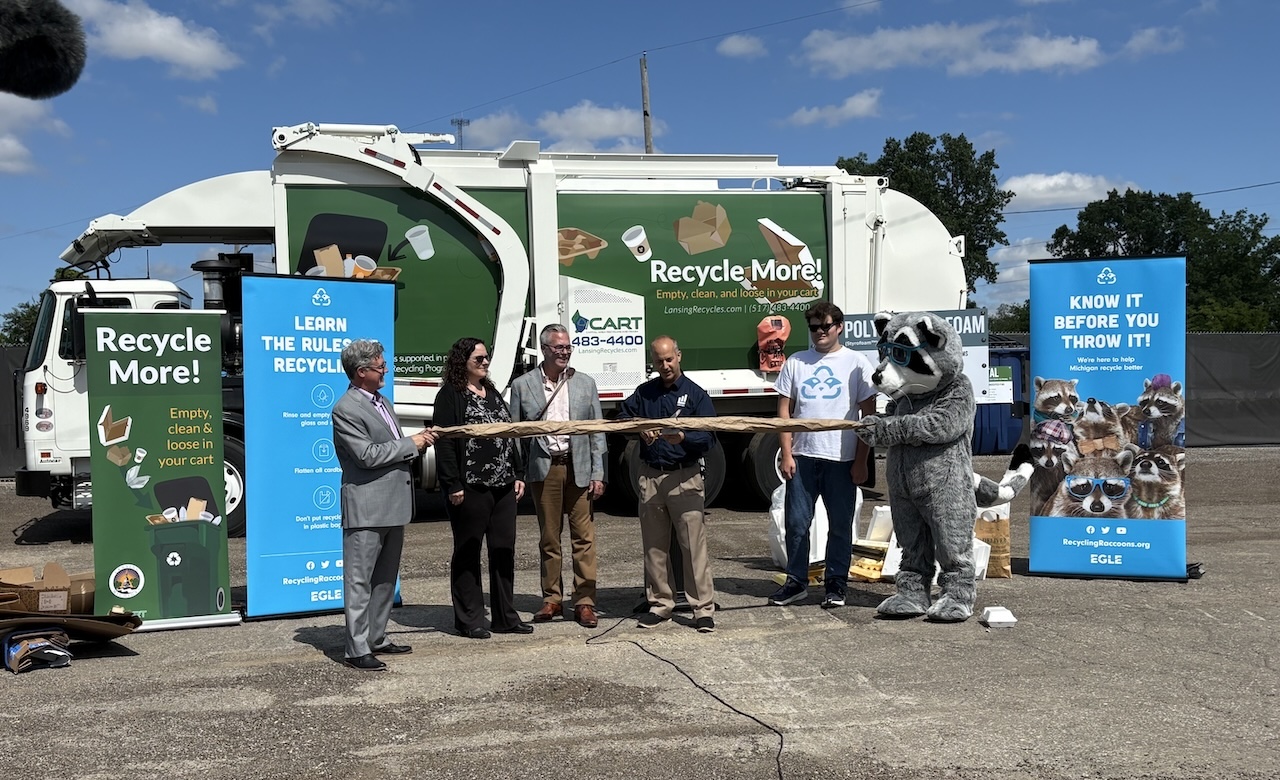
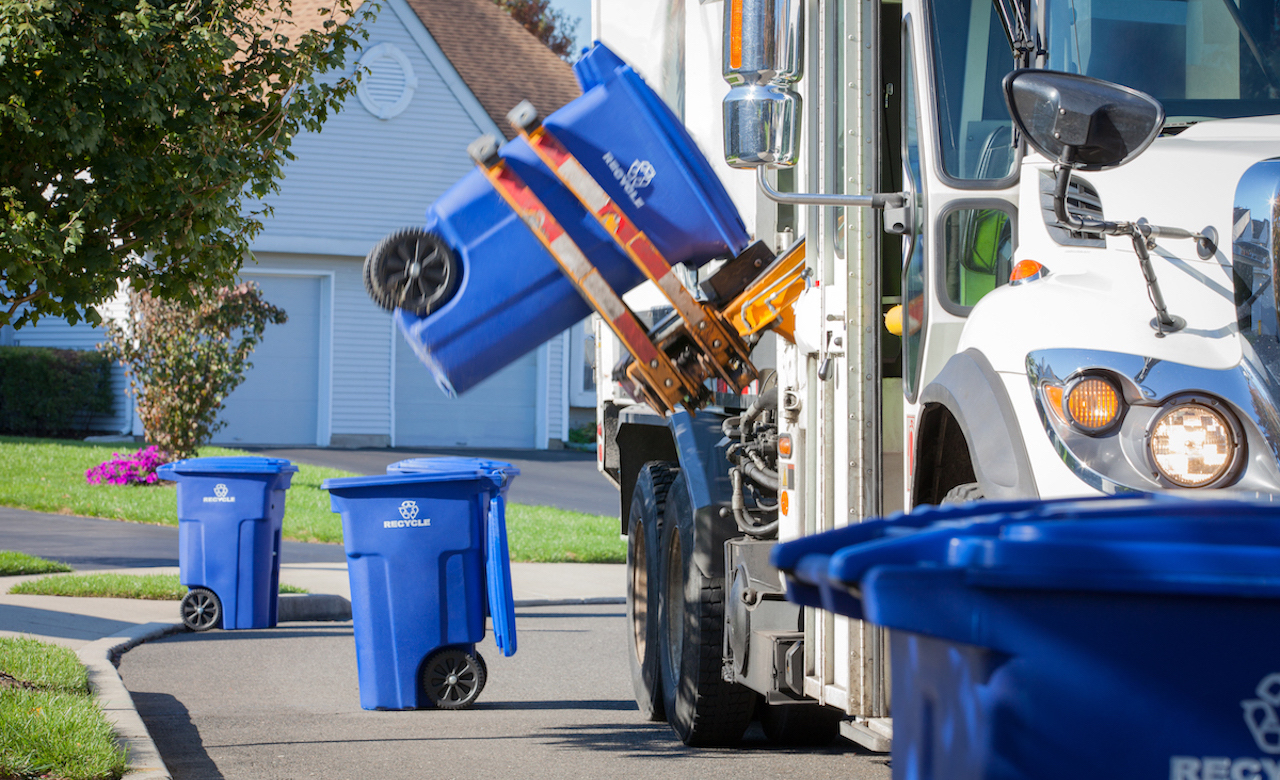
A recycling truck in a residential neighborhood is shown picking up a blue container containing paper materials.

Gov. Whitmer issues proclamation encouraging Michiganders to join America Recycles Day activities on Friday, Nov. 15
Nationwide awareness event helps promote Michigan’s record-setting recycling momentum

LANSING, Mich.Michigan Gov. Gretchen Whitmer has issued a proclamation encouraging Michiganders to commemorate Friday, Nov. 15, as America Recycles Day, and to join the state’s growing recycling efforts.

“Celebrating America Recycles Day in Michigan can help continue increasing recycling in the state and highlight the fact that all Michigan residents can help strengthen the economy while contributing to a cleaner, healthier environment,” said Whitmer in the proclamation.

All 50 states participate in America Recycles Day, also known as National Recycling Day,which is observed annually on Nov. 15. Created by the National Recycling Coalition in 1997, this day is a national initiative to raise awareness about recycling and its benefits, such as reducing waste, conserving resources, and saving energy. 

Gov. Whitmer’s proclamation comes as Michigan’s recycling rate has hit an all-time high for an unprecedented third consecutive year. At its current pace of improvement, Michigan is on track to achieve the state’s goal of a 30% recycling rate by 2029.

Leaders with the Michigan Dept. of Environment, Great Lakes, and Energy (EGLE) attribute the state’s recent success to EGLE’s 2019 launch of the national award-winning “Know It Before You Throw It” recycling education campaign featuring the Recycling Raccoon Squad, as well as EGLE funding and technical support for projects that increase access to recycling services across Michigan.

“Recycling efforts continue to grow across the state and that helps all of us in so many ways,” said EGLE Director Phil Roos.

“America Recycles Day is a great opportunity to make even more people aware of how they can help the state in substantive ways by simply recycling properly.,” Roos said. “Not only does recycling reduce waste, save energy and conserve resources, but it also can have a positive impact on our economy as well by supporting jobs and providing feedstock materials needed by local manufacturers.”

According to EGLE’s most recent analysis, Michigan’s recycling rate has risen from 14.25% before 2019 to 21% last year and over 23% now.

Michigan residents recycled more than 330,000 tons of paper and paper products during fiscal year 2023, over 237,000 tons of metals, more than 67,000 tons of glass, and over 58,000 tons of plastics and plastic products. The record-setting combined total of materials Michiganders recycled in 2023 would fill the football stadiums at Ford Field in Detroit, Michigan State University’s Spartan Stadium in East Lansing and the Big House at the University of Michigan in Ann Arbor.

The total amount of residential recycled materials reported for FY 2023 was 703,369 tons — exceeding the record set the year before by more than 82,000 tons. 

This equates to every person in Michigan over a 12-month span recycling 140 pounds of cardboard boxes, milk cartons, soup cans, plastic bottles, glass bottles and jars, food waste and other recyclable materials, EGLE researchers found.

While Michigan is moving in the right direction, EGLE officials say Michiganders can do more to ensure the state reaches its recycling targets.

A new research effort by the Grand Rapids-based nonprofit Michigan Sustainable Business Forum (MSBF) reveals what Michiganders are doing right – and wrong – with their recycling habits resulting from a hands-on examination MSBF conducted of garbage going into landfills throughout the state.

The MSBF, in collaboration with EGLE and Grand Valley State University, characterized the composition of common garbage from homes and businesses in the state, known as municipal solid waste.

The research shows that material disposed of in Michigan’s municipal solid waste stream each year has an estimated market value of $500 million to $676 million. If this material were collected for recycling, it would have an estimated economic impact of $609 million to $825 million per year, creating as many as 4,500 jobs.

Most importantly,  the MSBF study found that if Michigan does not make more investments in infrastructure, adopt new business practices, provide the necessary education to stakeholders, or advance and execute the public policy needed to increase Michigan’s recycling rate, the state will lose as much as $8.3 billion dollarsof potentially recyclable material for manufacturers, farms and other end markets in the next 10 years.

“By helping Michiganders understand how to recycle and why it is so important, and by continuing to expand access to recycling services, we can help protect our natural resources and enhance the economy of our state,” Roos said.

Additional highlights from 2024 EGLE data include:

  • The state’s improved recycling performance is helping Michigan advance the goals of the MI Healthy Climate Plan, commissioned by Gov. Whitmer as a broad-based road map to a sustainable, prosperous, healthy, equitable, carbon-neutral Michigan economy by 2050. Carbon neutrality is the global science-based benchmark for reducing greenhouse gas emissions to avoid the most devastating and costly impacts of climate change.
  • Recycling in Michigan supports 72,500 jobs and contributes more than $17 billion a year to the state’s total economic output, according to an analysis by EGLE’s NextCycle Michigan Initiative.
  • EGLE and national nonprofit The Recycling Partnership together have rolled out more than 245,000 new curbside recycling carts in over 30 communities statewide serving a combined population of over 1 million Michiganders, with plans to introduce an additional 88,000 new carts in 2024 in four Michigan communities.
  • 80% of Michiganders report taking action and changing their recycling behavior for the better following the Know It Before You Throw It campaign kickoff.

Flint Mayor Neeley, Genesee County state legislators join with EGLE, Cascade Engineering and The Recycling Partnership to announce Flint’s Fall 2024 citywide rollout of 60,000 free curbside carts

The City of Flint selects Grand Rapids-based Cascade to manufacture trash and recycling carts that will be distributed for FREE beginning this fall to 30,000 households; the amount of material recycled in Flint is projected to increase from 624 tons per year to 5,400 tons per year

FLINT, Mich. – Flint Mayor Sheldon Neeley today joined with Genesee County state legislators and leaders with the Michigan Dept. of Environment, Great Lakes, and Energy (EGLE) and national nonprofit The Recycling Partnership to announce the city has selected Grand Rapids-based Cascade Engineering to produce 60,000-plus 96-gallon trash carts and 64-gallon recycling carts that will be distributed for free beginning this fall to 30,000 residential households.

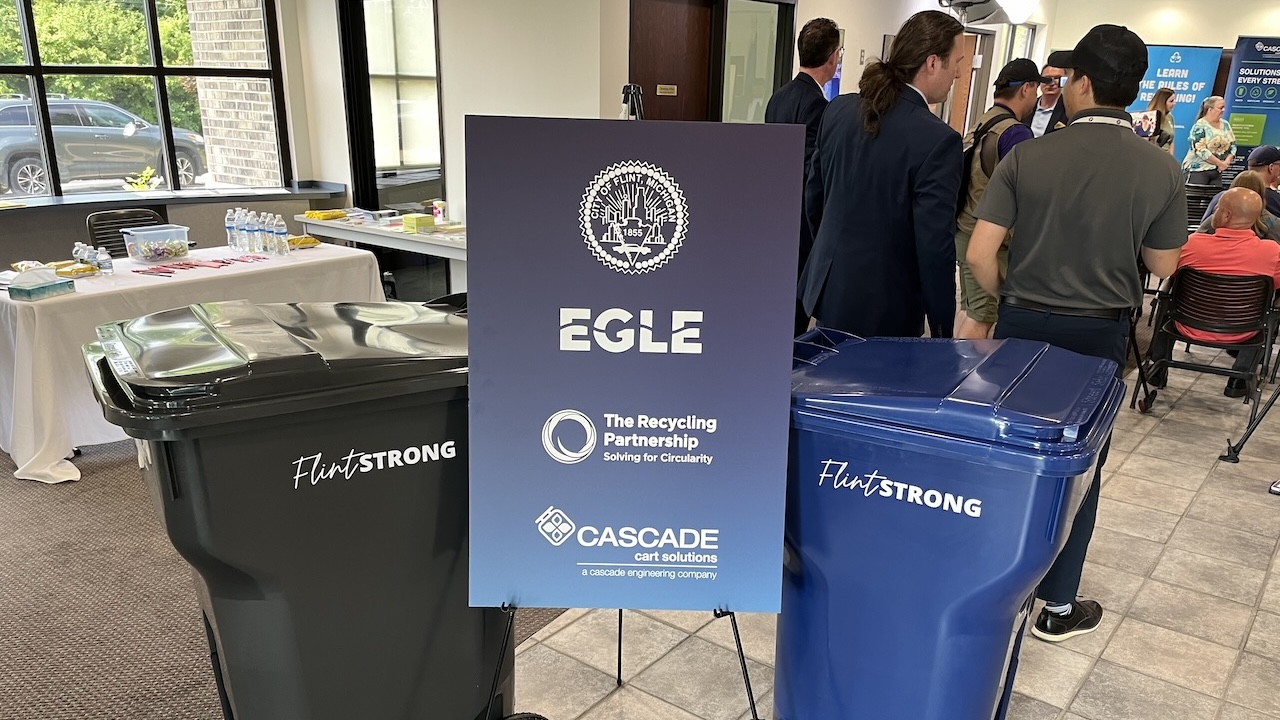
“Today’s announcement is the next step in transitioning Flint to a cart-based recycling program that will promote the largest recycling push in our city’s history,” Mayor Neeley said during a press conference at the Flint Service Center where models of the city’s new dark gray trash containers and blue recycling receptacles adorned with “Flint Strong” logos were on display.

Attending the event with the mayor was state Sen. John Cherry Jr. (D-Flint), state Rep. Cynthia Neeley (D-Flint), Cascade Engineering Sales Manager Brian Miller, Michigan Environmental Justice Public Advocate Regina Strong, The Recycling Partnership Vice President of Grants and Community Development Rob Taylor, and Flint recycling citizen-advocates Renee Harveyand Emily Stetson.

Flint currently requires residents to provide their own trash and recycling receptacles to contain materials at the curbside.

The approximately 60,000 new rolling, lidded recycling carts Cascade is producing for distribution this fall are projected to increase the amount of materials recycled in Flint from 624 tons per year to 5,400 tons per year – a 750% increase – as well as improve recycling access, inspire more resident participation and enhance safety for sanitation workers.

Benefits of the new carts cited by Mayor Neeley include:

  • Carts will help sustain or even lower collection costs over time relative to an un-carted program.
  • Carts reduce litter, help control rodent and pest populations, and enhance community cleanliness.
  • Carts make recycling and garbage service easier for Flint residents

“This is a truly historic achievement for the City of Flint,” Sen. Cherry said. “We all know recycling helps us keep Michigan beautiful. Now, the City of Flint gets to be a larger part of that beautiful story.

“Many conscientious people in Flint have done their best to recycle, but most of the city’s potentially recyclable materials end up in trash containers and go to the landfill because Flint residents don’t have their own recycling containers,” Cherry said. “This campaign we’re announcing today now allows all Flint residents to do their part. Recycling is not only the right thing to do, but the smart thing to do.”

The Flint cart campaign rollout features multiple funding sources. The city is receiving a $1 million EGLE grant to help the city purchase and provide the free recycling carts.

“Expanding and modernizing Flint’s recycling infrastructure is a key goal of EGLE and the State of Michigan,” Strong said. “Our department’s $1 million EGLE grant is an investment in the City of Flint that will help all residents across the city have convenient and equitable access to recycling opportunities.”

In addition, together with its partners including Midland-based Dow Inc., The Recycling Partnership, a purpose-driven organization, is mobilizing voluntary investment to support communities like Flint in modernizing their programs and expanding access to recycling.

The Partnership’s $3.3 million grant to Flint is one of nearly 400 programs and facilities the organization has granted over the past decade. Through national nonprofit The Recycling Partnership, Dow is donating 1.2 million pounds of plastic resin to help manufacture the roughly 70,000 new household waste and recycling carts coming to Flint this fall, which Cascade will manufacture according to national best practices to ensure durability for 10 or more years.

By transitioning to cart-based collection, the City of Flint will be adopting an industry-recognized best management practice that will set up the city for immediate and long-term success.

Of the 821 cities in the U.S. with populations over 50,000 people, 78% are carted. The majority of programs are carted because it is the most efficient and cost-effective way to collect waste and recycling at the curb. Deploying city-owned waste and recycling carts will help keep Flint’s operational costs manageable in the near term and for years to come.

“Flint’s new recycling campaign starting this fall is like going from a horse and buggy to a spaceship in terms of improvement,” Rep. Neeley said.

“We know Flint residents and all Michiganders want to recycle the right way,” Rep. Neeley said. “Through Flint’s education campaign that kicks off this fall and recycling infrastructure investments by EGLE and others, we are providing them with the tools to do just that.”

Cities across Michigan and the entire U.S. have moved to lidded carts for garbage and recycling because manual collection has become increasingly dangerous and expensive. Prominent national and regional haulers have recently stated they will no longer bid on municipal contracts that are not carted.

“The Recycling Partnership is honored to be part of Flint’s citywide recycling transition alongside Michigan EGLE and the City of Flint,” The Partnership’s Taylor said. “We remain fully committed as a partner and resource to the city and state of Michigan to deliver a better recycling system.”

The Recycling Partnership has provided cart grants to local governments since 2014, working with communities as small as 400 homes to cities as large as 200,000 households. The Partnership has teamed with EGLE to deploy recycling carts in more than 30 communities across Michigan. Together, these efforts have placed 245,000 recycling carts into service in communities serving a combined population of over 1 million Michiganders.

As a woman-owned company and the only Michigan-based recycling and trash cart container manufacturer, Cascade has rolled out over 40 million trash and recycling containers nationwide, including over 4 million receptacles in the State of Michigan. 

“Cascade is excited to be a small part of the City of Flint’s curbside trash and recycling upgrades,” Miller said. “Roll carts have a life cycle of 10-20 years or more,” Miller added, “and these new carts will be a part of the Flint community for decades to come, contributing to blight control around the city as well as contributing to the State of Michigan’s recycling goals well into the future.”

Michigan Recycles Paper, Boosts Economy

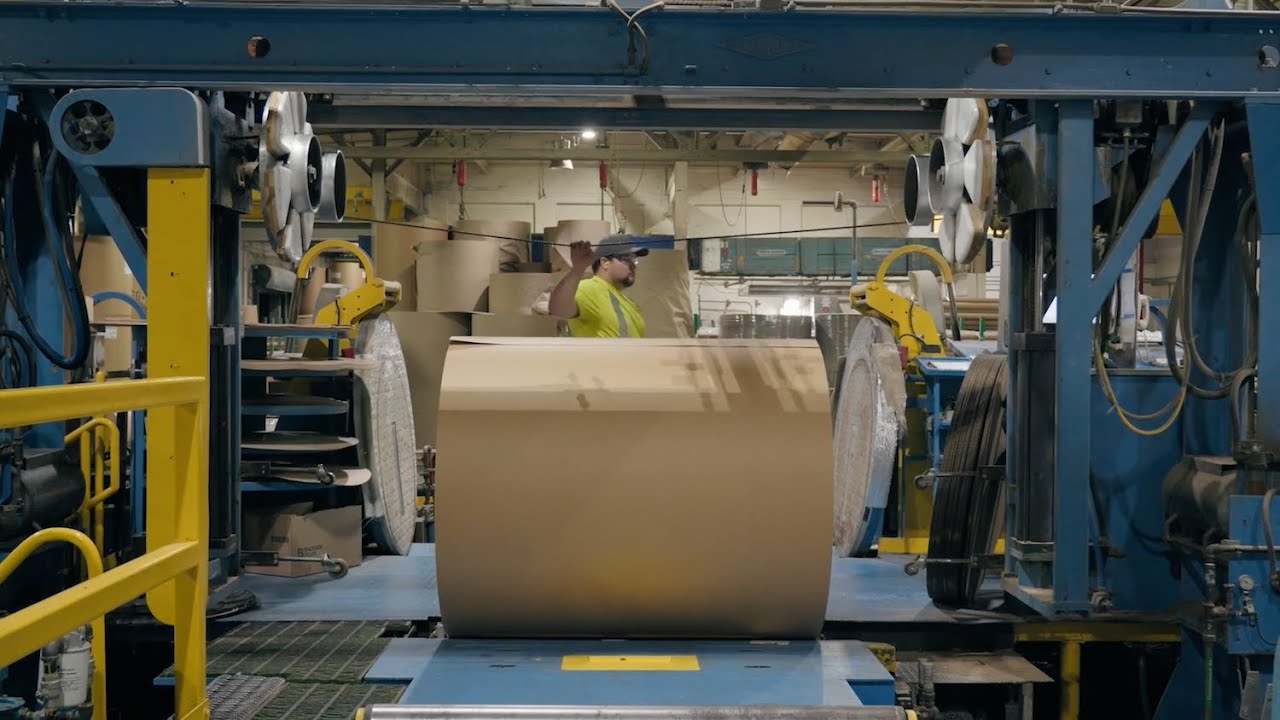
Now more than ever, companies in the Great Lakes State are desperately seeking to include recyclables in the manufacturing of new products, including recycled paper. UP Paper, a paper manufacturing company in Manistique, recycles paper materials that are used to create items like tape, gift wrap, fast food bags and packaging materials.

Paper recycling is a complex system that requires people at every step of the process and companies like UP Paper support Michigan’s economy by providing crucial manufacturing jobs. The Michigan Department of Environment, Great Lakes, and Energy supports Michigan community recycling programs through educational opportunities, infrastructure grants and quality improvement.

Join the Squad!

Help Michigan become a leader in recycling again. Join the squad today. You don't need to be a raccoon – you just need to sign up!

After signing up for recycling news, you will receive occasional updates. We will not sell your email address to any third party at any time. View our privacy policy.

    © Copyright 2026, EGLE. All Rights Reserved.

    This website uses cookies

    We use cookies to personalize ads, to provide social media features, and to analyze our traffic. We also share information about your use of our site with our social media advertising and analytics partners who may combine it with other information that you’ve provided to them or that they’ve collected from your use of their services. You consent to our cookies if you continue to use our website.